



Overview
AI moved further from chat towards action, with browser control, centrally managed workplace connectors and fresh scrutiny of usage limits. Elsewhere, an unusual robot running style showed what machines can discover without copying humans, Nvidia exposed a hole in US economic statistics, and NASA prepared Roman for a mission that could redraw our view of the cosmos. Housing weakness and tougher US sanctions on Iran added a more sober economic backdrop.
The big picture
AI agents gain browser access and company credentials
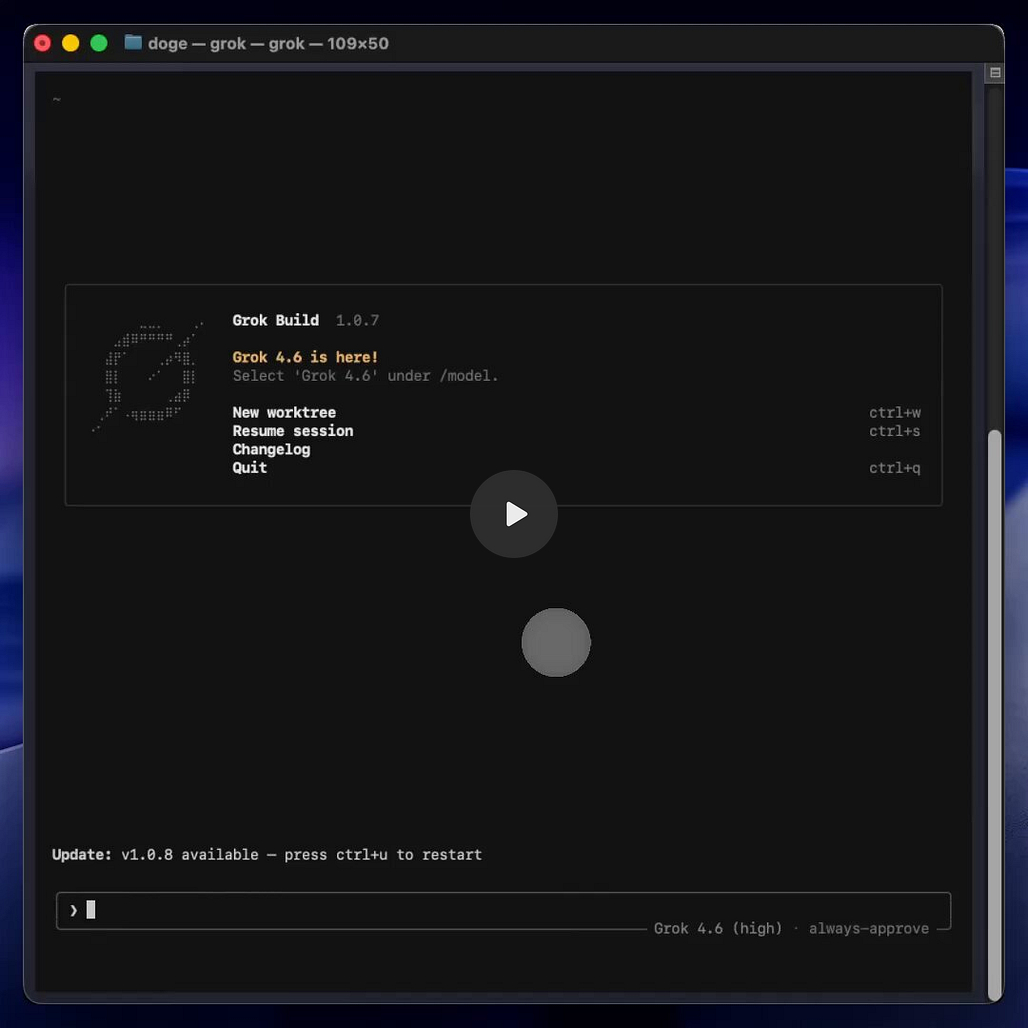
Grok Build can now control either a local Chrome session or an isolated cloud browser, allowing it to navigate sites, extract information, complete forms and carry out longer web tasks. The local option is notable because it can use existing logins rather than requiring a separate API for every service.
Claude is tackling the corporate side of the same problem. Team and Enterprise administrators can now approve MCP connectors through an identity provider, giving staff access to tools such as Slack, Notion and Figma without individual OAuth setup. Together, these releases show agent infrastructure becoming less experimental and more practical.

OpenAI brings back a five-hour limit for Plus accounts
OpenAI will restore a five-hour usage window across ChatGPT Work and Codex for Plus subscribers. Thibault Sottiaux said the rule is needed to manage compute demand and stop weekly allowances being consumed too quickly. Higher-priced Pro plans are exempt for now.
The announcement landed alongside Sottiaux’s discussion of plans to bring ChatGPT and Codex closer together. That ambition makes the limit more contentious, since frequent coding sessions can run for hours and Plus customers do not necessarily see themselves as casual users.

Anthropic tests whether recruits would put safety before equity
Anthropic is reportedly asking candidates how they would react if a safety-led change in direction sent the company’s stock to zero. The hypothetical is designed to test whether recruits believe in the public benefit mission or are mainly drawn by valuable equity.
It is an unusually blunt hiring question, but it captures a wider tension around AI. The technology is exciting, while concerns about employment, privacy and catastrophic risk remain unresolved. Anthropic wants staff who would accept a financial cost if those concerns demanded it.

Nvidia’s contribution may be missing from US GDP
Epoch AI argues that official statistics overlook much of the value Nvidia creates in the United States. Its chips are designed by a US company, fabricated abroad and returned inside imported servers. Under current accounting, much of the design value and resulting profit is not recorded as domestic production or exports.
Adding Nvidia’s operating profits would raise measured US GDP growth by roughly 0.3 percentage points over the past year, according to the research. Planned international accounting rules may eventually treat factoryless producers differently, but the current gap shows how poorly some statistics fit modern technology supply chains.


A robot found its own peculiar way to run
Tiangong Omni won a 400-metre humanoid race in Beijing in 45.66 seconds, using a forward lean and keeping its hands close to its face. Engineers had first given it a human-style arm swing, but the movement overloaded and overheated its shoulder joints.
When reinforcement learning rewarded speed without prescribing form, the robot developed a gait based more heavily on its hips and waist. The result looked awkward to people, yet solved a mechanical constraint. It is a neat example of machines discovering useful movements that human designers would not naturally choose.



Roman is packed for a much wider look at the universe
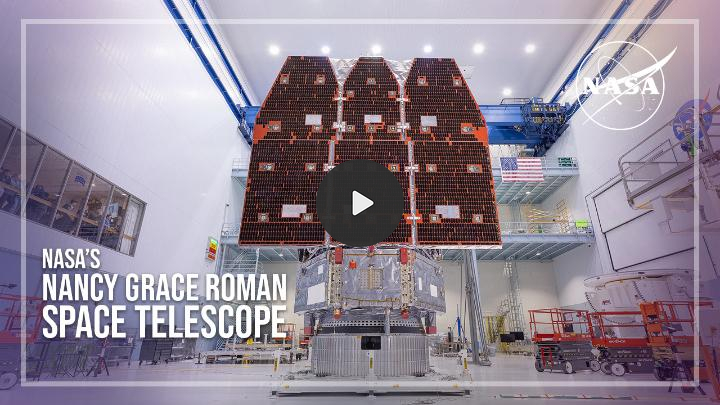
NASA’s Nancy Grace Roman Space Telescope is due to launch aboard Falcon Heavy from Florida on 30 August. It will travel roughly a million miles to the Sun-Earth L2 point, where it will conduct broad infrared surveys.
Roman has a 2.4-metre mirror and a field of view at least 100 times wider than Hubble’s. Its surveys are intended to map billions of galaxies, study dark matter and dark energy, and build a far richer census of exoplanets. NASA’s live coverage begins at 10.20 UTC.

America’s housing market now has far more sellers than buyers
Redfin’s July figures show about 967,000 active US homebuyers facing 1.46 million sellers, a seller surplus of 51 per cent. High mortgage rates, poor affordability and economic uncertainty have pushed buyer demand to a record low.
Roughly four-fifths of major metropolitan markets now favour buyers, with especially large imbalances in places such as Miami and Houston. That gives remaining buyers more room to negotiate and may place further pressure on prices, even if owners remain reluctant to accept lower offers.

Washington threatens Iran’s partners with dollar exclusion
US Treasury Secretary Scott Bessent has warned that countries and organisations helping Iran could be removed from the US dollar system. The campaign, described as Operation Economic Outcast, includes secondary sanctions aimed at money-laundering networks and other financial routes supporting Tehran.
Dollar access gives Washington considerable influence over international trade and banking. Using it this aggressively could deepen Iran’s isolation, though it may also encourage targeted countries to build payment routes outside the dollar system.

Enterprise sales is closer to project management than a five-stage funnel
Lenny Rachitsky’s notes from Jen Abel argue that a serious enterprise deal contains about 15 steps, not the familiar CRM sequence of introduction, demo, proposal, contract and close. Those broad stages are useful for forecasting, but they hide the political and organisational work required inside the buyer’s company.
The practical advice includes approaching an executive and their direct report together, using early calls to gather intelligence rather than rush into a demo, agreeing the demo agenda with an internal champion and keeping pilots to two or three days. Closing is not the end either, since expansion requires continued coordination.


Marin opens a window into a huge model training run
A public Weights & Biases dashboard appears to show Marin’s 535-billion-parameter mixture-of-experts model while training is still under way. The model uses 23 billion active parameters and is being trained across 18 trillion tokens, with its loss curve drawing attention for its apparent rate of improvement.
The larger story is transparency. Marin is publishing data, checkpoints and live training metrics rather than revealing only a finished model and selected benchmark scores. That gives researchers an uncommon chance to inspect how a large training run develops, including its setbacks and trade-offs.


