



Overview
Today’s conversation centred on what happens when AI leaves the demo stage and meets real systems. Model quality is improving, but reliability, memory and error recovery now matter just as much. Elsewhere, automated financial decisions raised uncomfortable questions for banks, SpaceX’s plans pointed to a huge expansion in orbital capacity, and debates continued around housing, cognitive fatigue and the environmental cost of data centres.
The big picture
AI developers confront the reliability gap
OpenAI has fixed a bug that had damaged image understanding in GPT-6 Sol and Luna, with Luna’s visual grounding score rising from 28.8% to 60% after the repair. Anyone using image inputs, computer control or visual tests may want to run their evaluations again.
The episode supports a wider point raised by Larsen Cundric about Grok 4.7: raw model intelligence is no longer the only constraint. A capable model still needs stable browser sessions, sound memory, retries and the ability to finish work without human rescue.
https://x.com/OpenAIDevs/status/2104252025978658890
UFO takes aim at persistent, collaborative agents
GitHub Copilot co-creator Alex Graveley has introduced UFO, an open-source runtime for teams running multiple agents. People can assign tasks through chat, while agents read files, execute commands and work on existing infrastructure.
The notable feature is its focus on shared work and long-term memory. Those are becoming central concerns for agent-led companies, where the hard part is often keeping context intact across people, tools and repeated tasks.


AI assistants could drain banks’ cheapest deposits
Apollo Global Management has warned of an “agentic bank run” in which AI assistants automatically move household cash from low-interest current accounts into products paying 3.3% to 5%. No panic or queue outside a branch would be required, just software making a better financial choice for millions of customers at once.
Matt Parlmer widened the argument: much of the economy depends on customers overlooking fees, accepting poor rates or failing to compare options. If AI gives ordinary households constant, detail-focused advice, businesses built around that inattention could face a sharp reckoning.

AI-built 3D worlds are becoming more ambitious
Bindu Reddy demonstrated a system combining GPT-6 Astra and Claude Opus 5.5 to create 3D games and applications. The platform chooses a model for each prompt and can produce multiplayer environments, payment features and persistent hosted projects.
The demonstration included a navigable 3D house reconstructed from property photographs. It is a useful example of AI coding moving beyond flat websites towards spatial software that combines design, logic and online services.


Steven Pinker rejects the myth of limitless intelligence
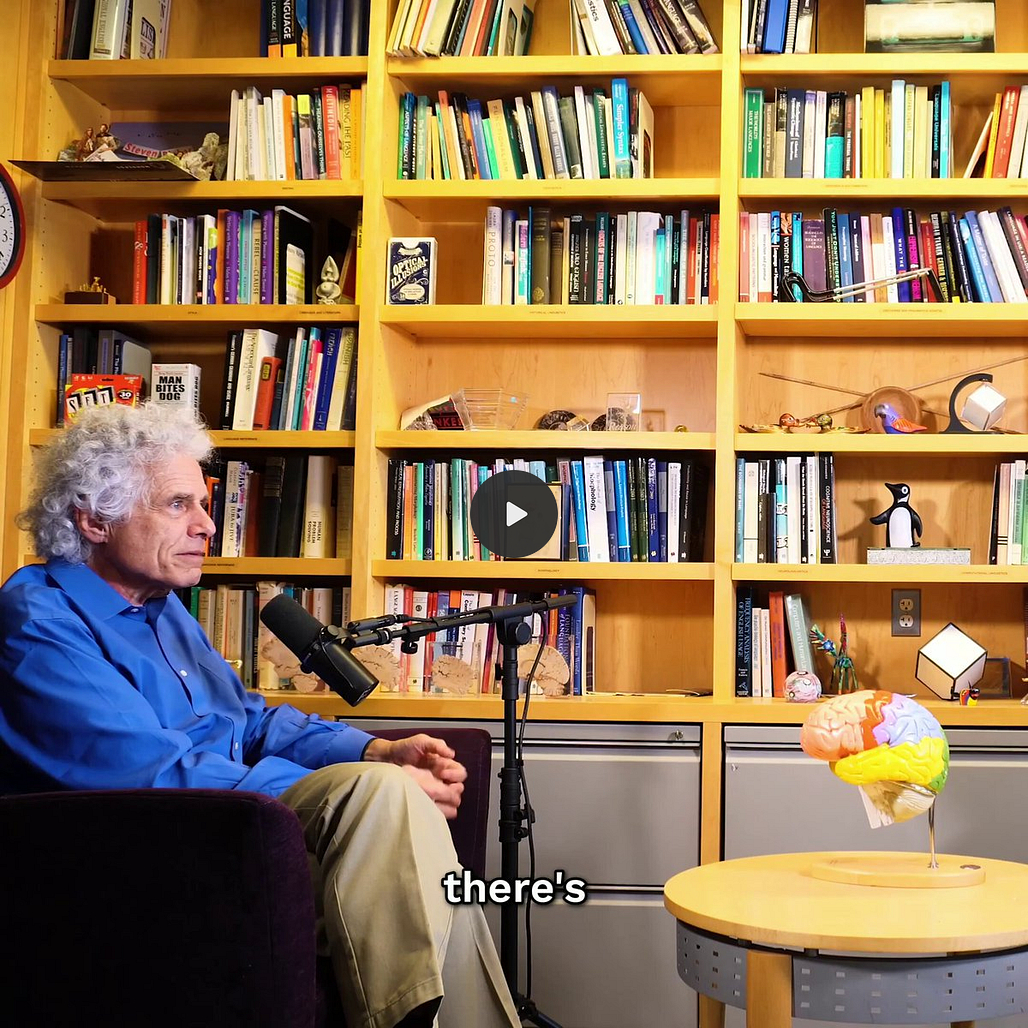
Steven Pinker expects AI to keep improving, but dismisses the idea that it will become omniscient or omnipotent. Intelligence remains bound by physics, available information and the practical cost of computation.
His argument challenges the popular image of a sudden superintelligence threshold. Progress may still be profound, but greater competence in some areas does not amount to unlimited knowledge or universal control.

Starlink V3 could transform orbital internet capacity
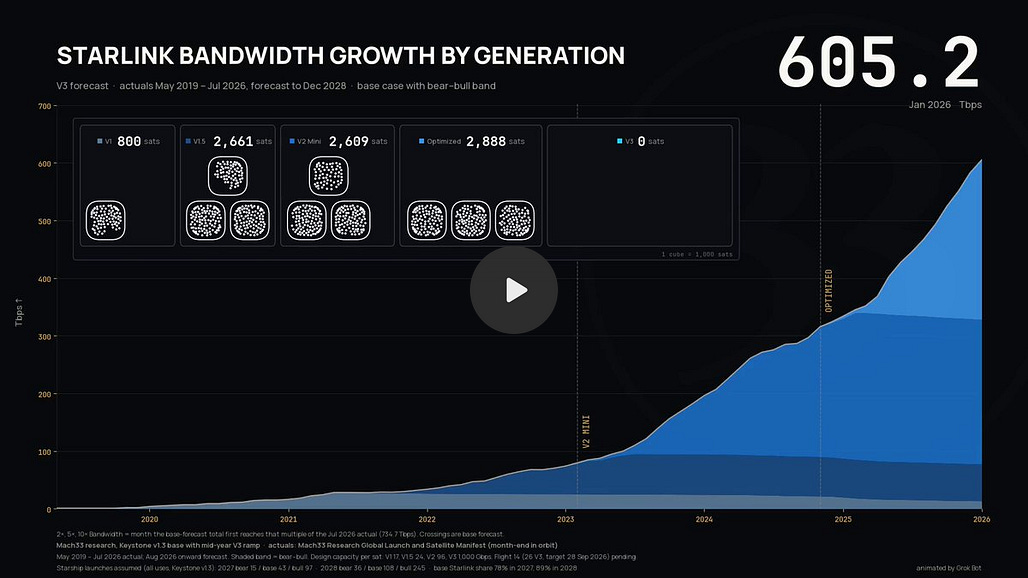
Aaron Burnett estimates that Starlink could place 8 petabits per second of bandwidth in orbit by the end of 2028, based on 151 Starship launches. His forecast has capacity climbing from roughly 600 terabits per second in early 2026 to more than 8,000 terabits per second.
The estimate is speculative, but it captures the scale promised by Starlink V3 and Starship. If launch rates and satellite performance meet expectations, the network could carry a substantial share of global internet traffic rather than serving mainly as an alternative for poorly connected regions.


A bronze Prometheus rises beside Starbase
A 50-foot bronze statue of Prometheus is being assembled on private land near the entrance to Starbase in Texas. French foundry Atelier Missor funded and cast the sculpture near Paris before shipping it across the Atlantic in sections.
The work is not a SpaceX commission, though its symbolism is hard to miss. Prometheus holds a torch towards the sky, tying the ancient story of stolen fire to the modern ambition of carrying people beyond Earth.


Post-work inertia may be chemical, not moral
Tim Denning drew broad attention to an explanation for why exercise, reading and personal projects can feel impossible after a mentally demanding day. Prolonged concentration may cause glutamate to accumulate in the prefrontal cortex, reducing self-control and making easy distractions more appealing.
The practical advice is refreshingly modest: choose low-demand recovery such as a quiet walk or familiar music. Trying to force productivity through willpower can fail because willpower depends on the same tired region of the brain.

Will ageing owners flood the housing market?
A widely shared post argued that baby boomers may need to sell millions of homes to fund later-life care just as high mortgage rates weaken demand. The fear is a wave of distressed sales meeting buyers who cannot afford current borrowing costs.
Research offers a calmer outlook, with estimates suggesting roughly 250,000 extra homes a year rather than a sudden national glut. Younger buyers may absorb much of that supply, while institutional landlords and overseas investors could also keep prices from collapsing in desirable areas.


Data centres become the focus of a wider climate argument
KeyTryer criticised the tendency to portray data centres as the main environmental cost of modern technology while giving less attention to agriculture and fossil fuels. Recent estimates put data centres at about 0.5% of global carbon dioxide emissions, compared with roughly 30% for agrifood systems.
That does not make computing infrastructure free from scrutiny. Water use, electricity demand and local grid pressure still deserve attention. The dispute is about proportion, and whether dramatic AI imagery is drawing public anger away from larger, older sources of pollution.


