

Overview
AI assistants are taking on more everyday tasks, from calling broadband providers to talking through personal finances. Developer tools are getting more capable too, but faster coding leaves teams with harder questions about testing, security and keeping software running. Today’s posts also bring large funding rounds, research into verifying model outputs and a much-discussed Elder Scrolls announcement.
The big picture
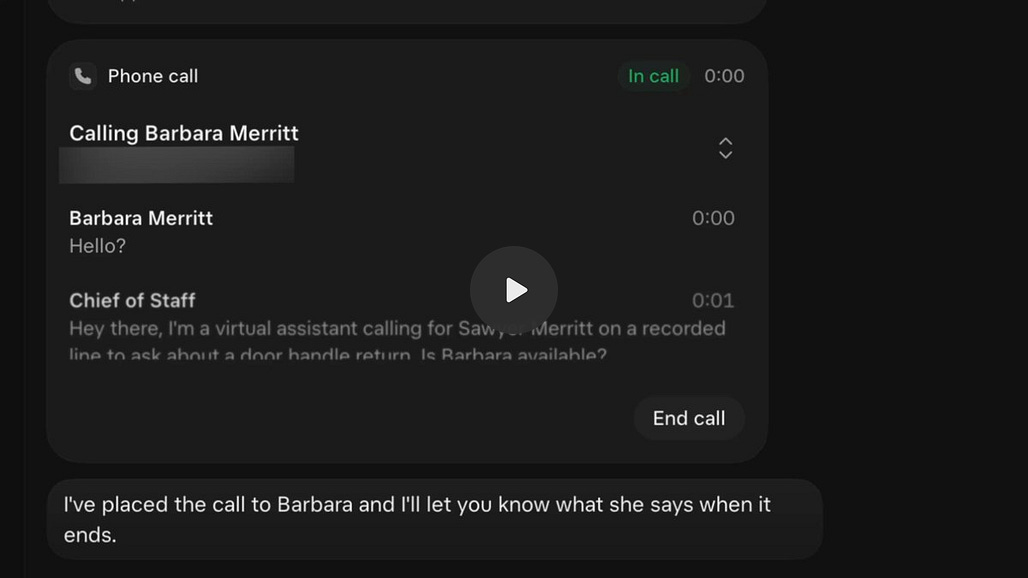
Grok takes phone calls on your behalf
Sawyer Merritt, @SawyerMerritt, describes a new Grok calling feature: tell it whom to call and what you need, then follow a live transcript. If it needs more information, an answer box lets you step in without taking over the conversation.
Peter Yang, @petergyang, offers a practical example. He says his bot negotiated a lower Comcast bill plus faster internet after citing a competitor’s offer. Its response to small talk was less polished: “I don’t actually have eyes on the sky.” It is an encouraging account of delegated admin, though a single successful call is not a guarantee of results.

Anthropic introduces FlashProve to verify model origins
@AnthropicAI announced research into FlashProve, a cryptographic method intended to let developers check whether a response came from a particular AI model. That tackles a specific trust question: did the system use the model it claimed to use?
It is not the same as proving an answer is correct. The supplied announcement also stops short of giving performance details, so the cost and practical limits remain open questions here.

Claude Code recaps its October releases
@ClaudeDevs rounded up a month of updates, including mods, better support for running desktop sessions side by side and clearer information about usage. These are practical changes for developers juggling several tasks or trying to understand where their allowance goes.
In a related workplace update, Boris Cherny, @bcherny, says Team and Enterprise admins can now configure company plugins so colleagues connect automatically on first use. Less repeated setup should make those integrations easier to adopt.


Govi launches terminal-mac for AI agents
@kirtandopamine introduced terminal-mac, a free, open-source project presented as a macOS environment inside an existing terminal. The pitch is straightforward: give an agent its own Mac, keep your own workspace free and watch its actions live.
The announcement lists MCP, command-line and skill support for computer use. A separate environment with visible actions is an appealing setup for experimentation, though the post alone does not establish its security boundaries.


Traversal raises $120 million for production reliability
Anish Agarwal, @_anish_agarwal, says Traversal has raised $120 million at a $1 billion valuation to build software that keeps itself running. His argument is that AI lets teams ship more code faster, leaving fewer people with a clear understanding of how production systems fit together.
Claire Vo, @clairevo, makes a related point: once building gets easier, teams run into limits elsewhere, including product decisions, code review and verification. Faster code generation does not remove the work on either side of it.


Fal announces $1.65 billion across two funding rounds
@fal announced a combined $1.65 billion from its Series E and Series F rounds. Sequoia led the Series E, Bessemer Venture Partners led the Series F, and Nvidia continued investing.
That is a substantial amount of capital, but the post gives little detail about how it will be spent. For now, the concrete news is the size of the funding and the investors backing it.


Vercel starts rolling out device-bound sessions
Malte Ubl, @cramforce, says Vercel is beginning to roll out Device Bound Session Credentials on its website. The aim is to bind login sessions to a device, preventing stolen session cookies from becoming a reusable route into an account elsewhere.
That addresses a familiar account-takeover risk, including theft through malicious software. It should not be read as a claim that an infected computer becomes safe: protecting a session from theft is narrower than protecting the whole device.

ChatGPT adds Voice to Finances
@ChatGPT announced that Voice now works with its Finances feature. People can connect financial accounts, then ask spoken questions about spending, savings and other money matters.
Talking through a budget may feel more approachable than sorting through transactions. The sensitive part is the account connection, so permissions and data handling deserve attention before convenience becomes the deciding factor.


OpenAI puts ChatGPT search volume at a fifth of Google’s
Hayden Field, @haydenfield, reports an OpenAI announcement that ChatGPT’s search query volume now equals 20% of Google’s. It is a striking comparison, but it needs a clear definition of what counts as a search query on each service.
The supplied post does not include that methodology. Treat it as a reported volume comparison, not proof that ChatGPT has captured 20% of the search market.


Bethesda announces a name reveal for the next Elder Scrolls
@BethesdaStudios says it is sharing the name of the next Elder Scrolls title, prompting the strongest engagement in this collection. The supplied text does not contain the name itself, so there is no basis here to repeat a title or infer further game details.
For fans waiting for news, the official post is the place to look. The reaction makes clear how much attention even a brief update can draw.