



Overview
AI tools are getting easier to talk to, better at producing visuals and more complicated to budget for. Today’s posts cover local voice input, agent design tools and reports of shared ChatGPT and Codex allowances. Behind those product updates sit bigger questions about investment, productivity and jobs. Outside tech, The Ocean Cleanup puts a specific price on its next ambition: another $40 million a year.
The big picture
OpenCode releases its local voice tool hex
OpenCode says hex now has a stable release, with local voice input across macOS, Windows and Linux. It is a standalone app that works across the computer, rather than an input option confined to a particular agent. @thdxr says it has become his most-used app, ahead of OpenCode itself.
The interface debate extends beyond voice. @Yuchenj_UW cites Andrej Karpathy’s use of the Claude Code desktop app for Mac to argue for desktop apps over terminals. Neither preference settles the question, but both put the way people direct agents under closer scrutiny.


Benji Taylor introduces Stageshow for agent-made visuals
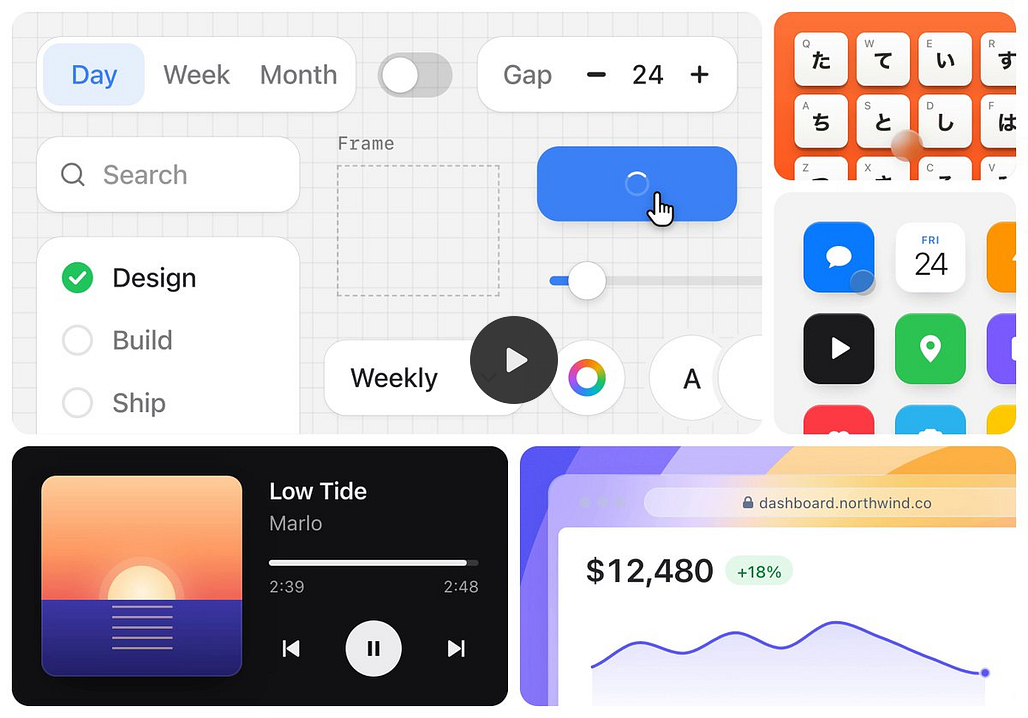
Benji Taylor’s Stageshow skill helps agents create mock interface stills, animations and bento grids. The installation command is npx skills add benjitaylor/skills --skill stageshow.
This is a focused addition rather than a new general-purpose model. It gives an agent guidance for a particular kind of output, which could be useful when the code works but the presentation still needs attention.

Greg Sky claims 64GB and 96GB 5090 modifications are confirmed
@regsky_ says 64GB and 96GB 5090 configurations are confirmed. A related post from @LLMJunky describes firmware changes enabling memory upgrades, so these claims concern specialist modifications, not an announced NVIDIA retail range.
Extra graphics memory could make larger local AI workloads possible. The posts do not establish pricing, availability or reliability, though, so there is still a gap between an intriguing hardware claim and a practical buying option.

Token Gremlin reports shared ChatGPT and Codex limits from December
@TokenGremlin reports that an updated OpenAI help page puts Plus, Pro and Business usage into shared allowances across ChatGPT and Codex from December. According to the post, usage will be measured in tokens, with larger models and harder tasks consuming more of the allowance.
For subscribers using both products, the practical question is how much coding work leaves room for ordinary chat. The supplied excerpt does not give the full allowances or exceptions, so it is worth checking those details before judging the cost.


Unusual Whales reports a $1.25 trillion OpenAI valuation
@unusual_whales reports that OpenAI’s latest funding round values it at $1.25 trillion, below a reported $1.4 trillion target. The account says OpenAI had sought $30 billion at that higher valuation and reports annualised revenue of $50 billion.
Those figures describe enormous investor expectations, even below the stated target. The post does not establish the final amount raised, so the fundraising ambition and the reported valuation should not be mistaken for a complete account of the deal.

Nima Owji previews Grok posting directly to X
@nima_owji reports that Grok Bot is being developed to draft posts inside chat and publish them after a tap. The preview also includes reply drafts, X Chat messages and options to copy or discard text.
That publishing step still leaves a person in control. Placement is another question: @markpinc objects to Grok being pinned at the top of his message inbox. Making an assistant useful does not require making it unavoidable.


Deedy finds fund pedigree tops his venture funding analysis
@deedydas says he examined roughly 60 attributes across 5,000 startups to identify those most associated with investment from top-tier venture firms. Prior affiliation with a top-tier fund ranked first; an MBA was negatively associated with funding.
It is a finding about access to investment, not proof of which founders build stronger businesses. Without the full methodology, it is also hard to separate the role of networks, selection and founder experience.


Ernie Tedeschi questions the AI explanation for US productivity gains
@ernietedeschi asks why countries with access to the same language models have not seen the same productivity gains. He suggests AI-related capital spending, or factors unrelated to AI, could help explain the US figures.
Shared access does not mean equal adoption or equal use. Still, the distinction is important: spending on AI infrastructure and getting more useful work done with AI are different claims, and the evidence for each needs separate attention.

Thorne asks for help finding a stable tech role
@ExistentialEnso says they remain unemployed despite 30 years of coding experience and a previous CTO role at a Y Combinator company. They are seeking a stable tech job and say they can work in most programming languages.
A personal appeal cannot describe the entire hiring market. It does put a human face on the uncertainty behind discussions of engineering productivity: substantial experience does not guarantee a quick route back into work.

Boyan Slat puts The Ocean Cleanup’s annual funding gap at $40 million
Boyan Slat says The Ocean Cleanup needs another $40 million a year to pursue its goal of stopping up to a third of the plastic flowing into oceans by 2030. He compares that gap with less than 1% of annual US spending on Halloween decorations.
The comparison makes the sum easier to grasp, but the target remains an ambition rather than a guaranteed outcome. The useful detail is the annual funding gap: a concrete figure against which supporters can assess the plan.


