

Overview
AI companies are competing to handle more of the work around the conversation: planning, spreadsheets, job hunting and long-running coding tasks. Claude’s new workspace tools drew the biggest response in this batch, Google introduced Gemini 4 Carbon, and Mercor announced a $750 million funding round. But the practical questions are getting harder to ignore: where does the data go, who can access it, and how much checking does the output need?
The big picture
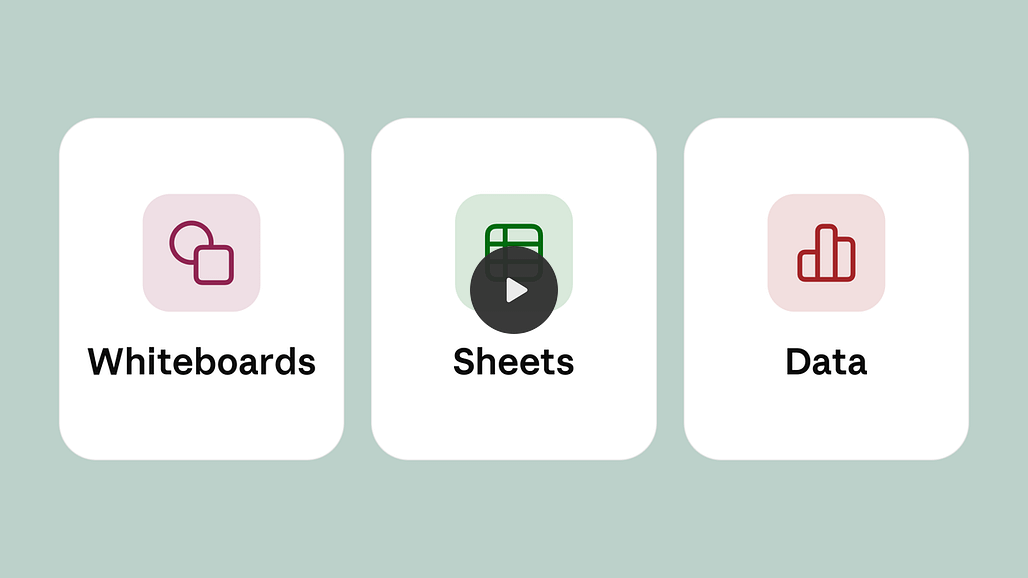
Anthropic adds whiteboards, sheets and data tools to Claude
Claude announced the rollout of Claude Whiteboards, Claude Sheets and Claude Data, covering planning boards, trackers and work with data. The announcement drew more than 42,000 likes, comfortably the largest response among these posts.
Sean Strong also described support for interactive websites inside Claude through MCP apps, using frame_domains for verified plugins. Together, these additions give people more ways to work inside Claude rather than carry answers into another application. Claims in the reactions that entire jobs have now been automated go well beyond what the announcement establishes.

Google rolls out Gemini 4 Carbon for longer technical tasks
Sundar Pichai introduced Gemini 4 Carbon as a model for sustained work in software engineering, cybersecurity and scientific research, with access through the Gemini API, Google AI Studio, Gemini for business and Ultra.
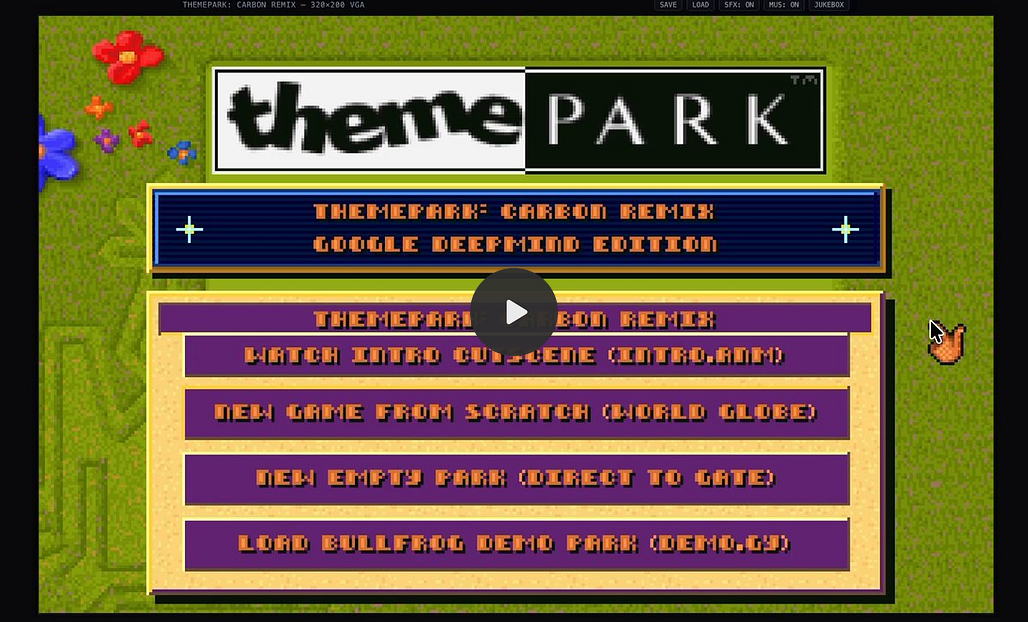
Demis Hassabis supplied the more memorable demonstration: he says Carbon reverse-engineered his original Theme Park binaries, added a DeepMind-themed ride and ported the game to the web in a single attempt. That is a striking example, though it does not settle questions about reliability or cost. @ishuagra02 questioned both performance and pricing at different reasoning settings, without enough detail in the supplied post to judge the comparison.


Mercor raises $750 million at a $20 billion valuation
Brendan Foody announced Mercor’s Series D, naming Benchmark, General Catalyst, Nvidia, Salesforce and Zoom as backers. He says the company grew from $1 million to $3 billion in run-rate revenue in 27 months.
The scale is striking for a business focused on organising human intelligence for AI work. It is worth keeping the measure straight, though: run-rate revenue projects a current pace, rather than reporting revenue earned over a completed year. Foody’s claim that this is the fastest such growth in history is also his characterisation.


Apple is reportedly building Harbor for local AI
@aaronp613 reports that Apple is developing Harbor, an app that would turn a Mac into a private AI inference server. The post describes running open-weight models on Apple silicon, keeping data on the hardware and connecting multiple Macs through Thunderbolt 5 to pool resources.
This is a report, not an Apple announcement in the supplied material. If the described features arrive, they could offer a useful option for people who want local models without sending their data to a cloud service.


Cybersecurity account reports exposed Grok Build apps
@IntCyberDigest alleges that more than 35,000 Grok Build apps were publicly accessible. The account says exposed material included 3,784 worker medical exams, a Tesla technician scorecard, a Navy contractor’s roster and sales plans belonging to SpaceXSI.
These are serious claims, but the supplied post does not independently establish their scope or include a response from the organisations named. The basic lesson needs no speculation: an app that handles confidential records needs access controls checked before anyone relies on it.


Firecrawl brings job-search tools into ChatGPT and Claude
Firecrawl introduced a plugin that it says can match a CV against more than seven million open roles, find hiring managers within a database of more than 250 million people and help research their priorities before making contact.
That puts vacancy searches and outreach preparation in the same conversation. The database counts sound substantial, but applicants still need to check whether a role is current and whether the suggested contact actually handles hiring.

Mustafa Suleyman promotes transcription at $0.10 per audio hour
Mustafa Suleyman introduced MAI-Transcribe-2 with a price of $0.10 per hour of audio. He claims it is ten times faster than GPT-Transcribe and five times faster than Gemini 3.5, alongside a broader claim of leading accuracy.
Those are vendor claims, with no testing conditions included in the post. At that price, it is worth testing on real recordings, especially accents, overlapping speakers and specialist terms, before choosing it on speed alone.

OpenAI previews customer cybersecurity tools
OpenAI says it is turning lessons from defending its own systems into tools for customers, with announcements planned for Thursday’s Cyber at the Frontier keynote. It also says its frontier models have helped identify and resolve important vulnerabilities.
The post is a preview rather than a detailed product release. The useful questions for the keynote are what customers can deploy, how findings are checked and where human approval remains necessary.

Emil Kowalski recommends generating several UI prototypes
Emil Kowalski says he uses the /prototype skill multiple times a day because agents rarely produce a great interface on the first attempt. His advice is straightforward: generate options, then choose a direction.
It is a useful counterpoint to single-attempt demos. Producing a screen quickly is not the same as finding the right design, and comparing alternatives gives the person making the decision something concrete to judge.

Panos Panay introduces Ring’s flying indoor camera
Panos Panay introduced the Ring Drone Cam, an indoor security camera that flies custom routes to reach places a fixed camera cannot see.
The appeal is clear: coverage without mounting a camera in each spot. The unanswered questions are just as practical, including noise, navigation around people and pets, and how households control where and when it records. The supplied announcement does not give those details.