



Overview
Today’s posts put AI’s promises next to its practical limits: faster solo development, more work checking agents’ mistakes, and questions about what premium subscriptions actually provide. There’s also a reported record Chrome bounty, a launch target for Starship Flight 15, and a founder facing a visa deadline despite raising $8 million.
The big picture
Rebane reports a $1.33 million Chrome bounty
@rebane2001 says a Chrome vulnerability they discovered earned $1,333,337, which they describe as the largest award in Google’s Vulnerability Rewards Programme. The post does not explain the flaw, so there is little basis here for judging its scope or technical impact.
The payout is striking on its own. Browser security depends partly on researchers finding problems and reporting them, and an award this size puts a substantial price on that work.


Anthropic faces claims over Claude Max usage advertising
According to @IntCyberDigest, a US judge has allowed claims to proceed over how Anthropic advertised its $200-a-month Claude Max plan. The dispute concerns the promise of “20x more usage than Pro”: the post says that multiplier applies within five-hour sessions, but weekly caps leave subscribers with roughly six times Pro’s weekly usage.
Allowing a claim to proceed is not a finding that Anthropic broke the law. Still, the distinction between session allowances and weekly limits deserves a clear explanation before someone pays for a subscription.


Google introduces agents that test specifications before coding
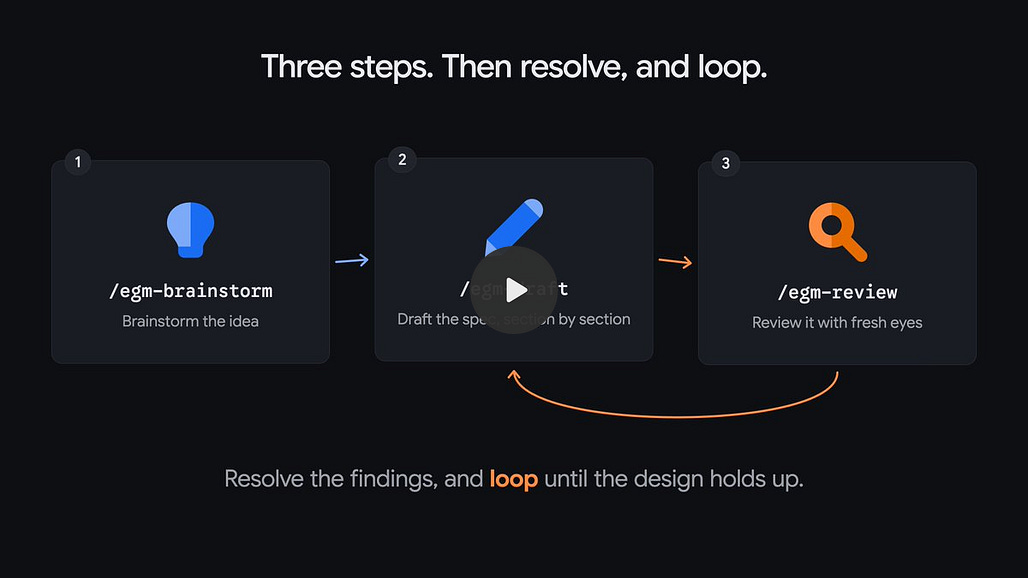
@GoogleCloudTech has introduced the open-source Elephant-Goldfish Model plugin. Its approach pairs agents with deep project context, which draft specifications, with subagents given no prior context, which stress-test those specifications before code is written.
The developer keeps control of architectural decisions and approves the specification. Asking a fresh reader to challenge a plan is a familiar engineering habit; this plugin gives that habit a place in an agent-based process.

Gergely Orosz builds his own Substack search in three hours
@GergelyOrosz says frustration with Substack’s search led him to build a replacement for his article archive. He loaded the articles into turbopuffer, added search and Jev categorisation, and says the result took three hours.
This is a useful, bounded example of fast development: a known collection of articles, a specific annoyance and a result the author can judge against his own needs. It tells us more than a broad claim about coding speed.


Meta reportedly scales back plans to replace staff with agents
@unusual_whales, citing The Guardian, reports that Meta reduced plans for staff cuts and greater reliance on AI agents after employees spent more time fixing agents’ technical and security problems. The supplied post is incomplete, so the detail behind that account remains limited.
It is a useful counterpoint to the prediction attributed to Demis Hassabis by @RoundtableSpace that AI-skilled founders will run companies with a tenth of today’s headcount. Faster output and lower staffing needs are not the same thing, particularly when checking and repairs consume the time saved.

Richard Sutton argues that more computation is not enough
@RichardSSutton makes a short, direct argument: brute-force computation alone will not produce intelligence, new methods are needed, and AI science remains unfinished.
That is not a detailed research proposal, but it draws a useful distinction. Better products built with current models do not settle the scientific question of what further progress requires.

SpaceX targets 13 November for Starship Flight 15
@SpaceX says Starship is preparing for a catch, with Flight 15 targeting launch as early as Friday, 13 November, subject to regulatory approval.
The date is a target, not a confirmed appointment. The catch preparations are the detail to watch as SpaceX continues testing how to recover and reuse its hardware.


Th0rgal shares an open-source in-flight Wi-Fi workaround
@thomasmc says a BBR multiplexer costing $0.03 an hour delivered roughly four times faster internet without connection resets on a flight without Starlink. The post describes bypassing a split-TCP proxy and says the tool is being open-sourced.
Those are results reported by the author, not a guarantee for other aircraft networks. Even so, it is a concrete example of someone investigating a connection problem rather than simply accepting poor Wi-Fi.


Tony Chang says his O-1 visa application was denied
@tonychang430 says his O-1 visa application was rejected and that he has roughly six months before he must leave the country. He says Instabox entered Y Combinator and raised $8 million, but remains optimistic about continuing to build.
Funding and accelerator acceptance do not guarantee immigration approval. His post does not provide the reasons for the decision, but it makes the personal uncertainty behind a startup’s public milestones plain.


Josh Barzon shares a timeline spanning 5,000 years
@JoshuaBarzon shares a zoomable timeline covering five millennia of world history. It offers a quieter change of pace from model forecasts and product disputes: a chance to explore events across a much longer timescale.


