



Overview
AI research, consumer products and real-world agents set the pace today. OpenAI published machine-generated mathematical results, Google released two new multimodal models, and a home experiment turned Grok into a printer-based morning assistant. Elsewhere, SpaceX showed Starlink V3 satellites leaving Starship, Apple prepared a broad smart-home push, and fresh stories highlighted both the promise and limits of automated decision-making.
The big picture
OpenAI publishes mathematical work from a frontier model
OpenAI has released a broad collection of mathematical results produced by an internal frontier model, including formal proofs written in Lean. The company also published compute figures, reasoning summaries and statistics on failed attempts, giving researchers more context than a polished final answer alone.
The Institute for Advanced Study’s independent mathematics and AI advisory group helped shape the disclosure process. The release will draw close scrutiny from mathematicians, particularly around whether the work contains genuinely new ideas and how reliably those ideas can be checked.

Google gives compact models a wider range of senses
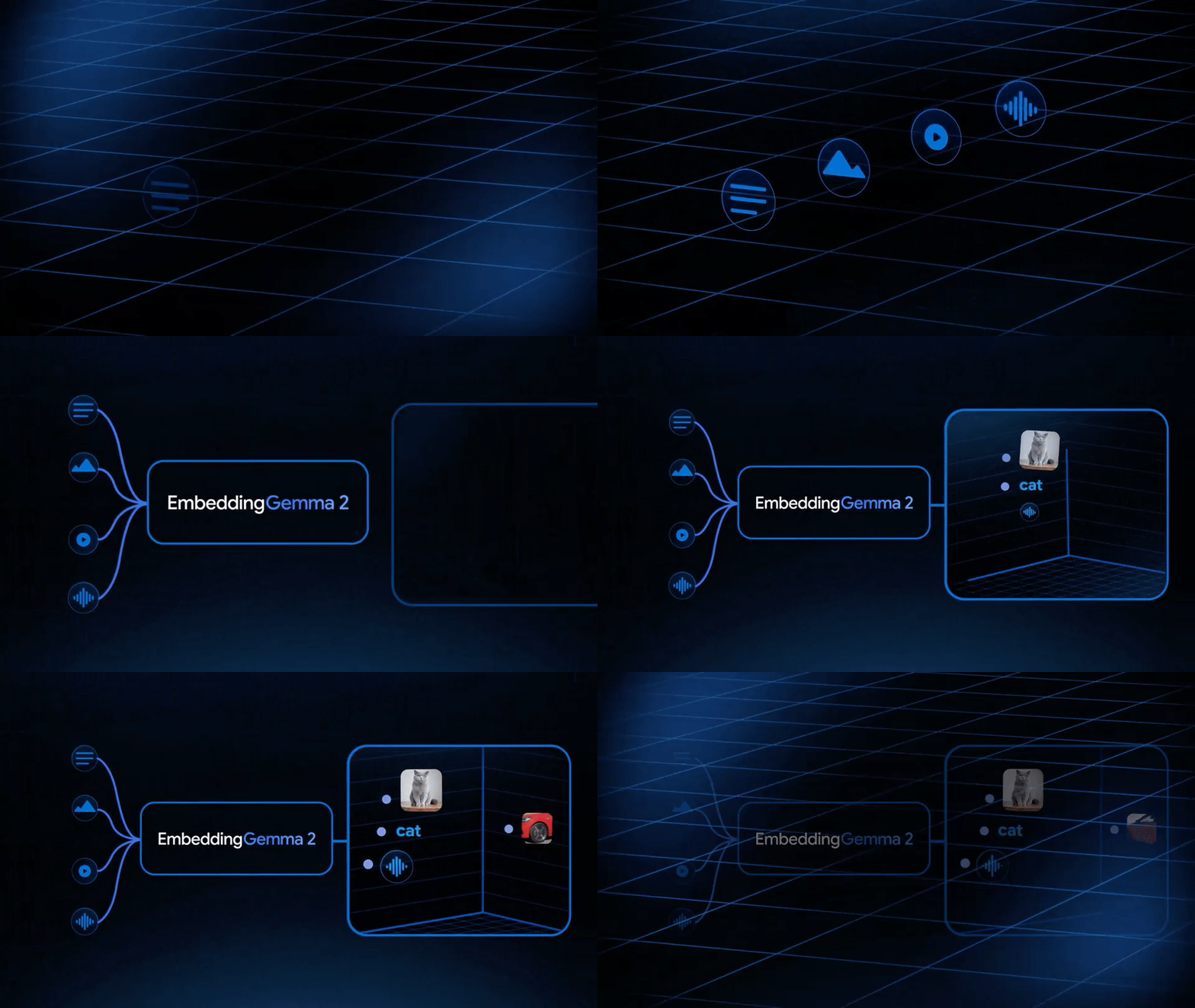
EmbeddingGemma 2 is a 740 million parameter open model that places text, code, images, audio and video within a shared embedding space. It is designed for on-device tasks such as private retrieval, voice-based video search and local content matching, with weights released under Apache 2.0.
Google also introduced Nano Banana 2.1, an image generation and editing update with stronger mask editing, visual design and subject consistency. Together, the releases show Google putting capable smaller models across phones, creative tools, search and enterprise software.

Starship deploys Starlink V3 as orbital safety concerns grow
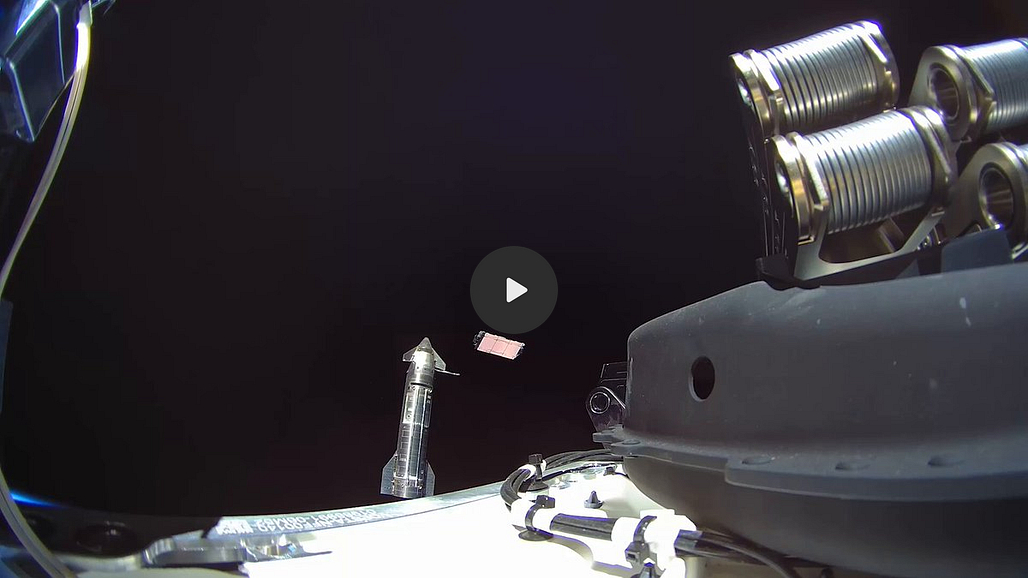
New footage from SpaceX shows 26 operational Starlink V3 satellites leaving Starship during Flight 14, with Earth filling the background. Each satellite is designed for roughly 1 Tbps of downlink capacity, making Starship a much larger constellation deployment vehicle than Falcon 9.
Starlink also used the occasion to press operators to share predicted trajectories before orbital manoeuvres. Its warning is blunt: autonomous collision avoidance cannot account for an unreported burn, even when spacecraft publish frequent position updates and remain in constant contact with the ground.

Apple prepares a broad smart-home reboot with LG
Apple is reportedly working with LG on a doorbell, deadbolt, thermostat and several indoor and outdoor cameras. The range would sit alongside a new display-based home hub, an updated HomePod mini and a refreshed Apple TV.
This is a wider hardware commitment than Apple has previously made to the home. Deep integration with Siri and Apple’s privacy framework could provide a clear point of difference, but the company will still need to match the mature device ranges already offered by Amazon and Google.


A printed morning brief gives an AI agent a physical role
Matt Palmer connected Grok Bot to a desktop printer and built an automated daily brief using his calendar, X activity and workout data. The resulting sheet includes appointments, health tasks, affirmations and journalling prompts, creating a screen-free start to the morning.
ElevenLabs is pursuing a related idea for business agents. Its new ElevenAgents Architect can inspect conversation transcripts, recommend changes, run simulations and prepare versioned drafts for approval. Both projects point towards agents that complete practical tasks rather than remaining inside a chat box.


Anthropic and OpenAI compete for the next generation of builders
Anthropic has expanded its Claude Startups programme with a year of Claude Team, API credits, technical office hours and partner offers worth up to $45,000. The package targets young companies choosing the tools that may shape their products for years.
OpenAI, meanwhile, has reduced its paid API structure from five tiers to three. The Grow tier now opens after $500 in total payments rather than $1,000, giving smaller teams earlier access to higher rate limits.


Coinbase turns short-term crypto calls into tradable markets
Coinbase now lets eligible customers trade on whether a cryptocurrency will finish above or below a target over periods as short as 15 minutes. The product is structured through its regulated derivatives business, though participants can lose their full stake and access varies by state.
The launch arrives amid renewed bullish claims around digital assets. Michael Saylor is highlighting long-run returns from Bitcoin, MicroStrategy and Nvidia, while former UBS banker Joseph Chee argues that a future reopening in China could fuel another crypto cycle. For now, China’s restrictions remain in place and any relaxation would probably be gradual.


Higher borrowing costs put commercial property deals under strain
Commercial property buyers are seeking lower prices or threatening to walk away from agreements signed when financing was cheaper. In some cases, borrowing costs have risen by more than 0.6 percentage points, enough to undermine deals that only recently appeared workable.
The report concerns commercial rather than residential property, an important distinction lost in some social posts. Even so, renegotiations in apartment and other investment properties show how quickly higher bond yields and mortgage rates can feed into transaction prices.

A mountain rescue exposes the limits of AI route planning
A 16-year-old hiker was rescued by helicopter after reportedly asking Claude to plan a route on Crown Mountain in British Columbia. The suggested path led him onto the technical Widowmaker route, through steep off-trail ground and towards a cliff headwall beyond his experience.
He carried a headlamp and battery pack, but the incident is a reminder that general AI tools are not substitutes for official maps, local guidance or backcountry judgement. A plausible written route can still omit terrain, weather and skill requirements that determine whether a hike is safe.


Tesla shares an FSD intervention at a dark intersection
Tesla posted dashcam footage showing FSD Supervised braking from 36 mph when another vehicle ran a stop sign at night. The Tesla stopped in the intersection and avoided a likely side-impact collision.
A short clip cannot establish broad safety performance, but it does illustrate where automated monitoring can help: spotting cross-traffic that a driver expects to stop. The system remains supervised, so such examples sit alongside the continuing requirement for drivers to stay attentive.


