



Overview
Claims of two Riemann hypothesis proofs dominated the conversation, but the posts offer no independent verification. Markets provided a harsher backdrop, with reports of broad losses and accounting scrutiny at Nvidia. Elsewhere, cheaper AI models raised practical questions about what small teams can build, how much computing they need and what makes good work worth doing.
The big picture
Kevin Hartnett reports a second claimed Riemann proof
Kevin Hartnett, posting as @KSHartnett, says Alessandro Masullo has announced a purely human proof of the Riemann hypothesis. Separately, @Polymarket reports that mathematician Levent Alpöge claims he and Claude may have proved it. The problem, connected to the distribution of prime numbers, dates to 1859 and carries a $1 million prize.
These are proof claims, not confirmed solutions. The supplied posts contain no independent mathematical assessment. Amjad Masad’s suggestion that the two approaches could be compared for elegance is intriguing, but correctness has to come first. A chatbot accepting an argument is not a substitute for expert scrutiny.

Watcher Guru reports losses across stocks, gold and Bitcoin
@WatcherGuru reports gold below $3,550, the S&P 500 below 7,100, the Nasdaq below 25,800 and Bitcoin below $59,000. Those figures describe a sell-off spanning assets that investors often hold for different reasons, rather than weakness confined to AI shares.
Apple supplied the striking contrast. @ecommerceshares put its valuation at $5 trillion, up 27% for the year, alongside a complaint that Siri needed 12 seconds to set a timer. Adam Kobeissi offered a political interpretation of the wider losses, arguing that investors could no longer count on the support he calls the “Trump Put”. That remains an interpretation, not an established cause.


The Kobeissi Letter reports an SEC accounting probe into Nvidia
@KobeissiLetter reports that the SEC is investigating potential accounting issues at Nvidia, with shares down more than 8% that day and 45% since 6 October. @DeItaone separately posted a similar report, citing sources.
The supplied material contains no SEC statement or Nvidia response, so the scope and status of any investigation remain unclear. An investigation would not, by itself, establish wrongdoing. For a company so central to AI spending, however, questions about financial reporting deserve close attention.


HeyGen introduces Decision 1 for fast questions about mixed media
HeyGen Research announced Decision 1, which it says answers questions about video, audio, images and text in roughly 100 milliseconds, with up to 400 questions per call. Listed input pricing is $0.07 per million tokens, or $0.042 for the Turbo option.
HeyGen claims four times Gemini’s speed and the best calibration among five tested models. Calibration concerns how closely a model’s confidence matches its accuracy. Those comparisons need testing details to be meaningful, but the proposed combination of speed, price and confidence estimates is worth watching.

DHH argues AI gives small software teams a better chance
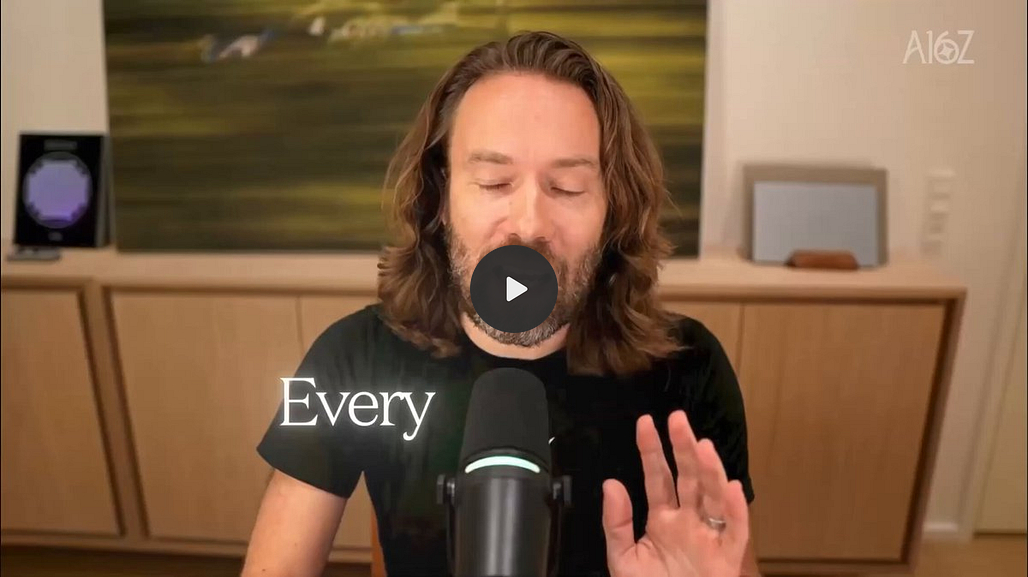
David Heinemeier Hansson’s conversation with a16z centres on a straightforward argument: cheaper, faster software development lets small teams challenge products built by thousands of developers. His emphasis is on taste and craft, not simply producing more code.
David Cramer made a related point through a smaller example: fixing a bug with a single pull request can be more productive than opening 100. Together, the posts pose a useful question for AI-assisted development: are teams making better software, or just generating more activity?

Pietro Schirano praises an unnamed model running on 16GB of RAM
@skirano describes an unnamed model as offering Sonnet 5.5-like capability on 16GB of RAM. In a separate post, @0x0SojalSec claims a Nano Banana 2.1-level model can run locally on a 16GB MacBook.
Neither post provides enough detail to establish those comparisons or identify whether they concern related releases. Still, the appeal is clear: capable local models could reduce dependence on cloud subscriptions. Model names, benchmarks and actual running speeds would make these claims easier to judge.


Wall St Engine reports Trump’s threat to tax overseas data centres
@wallstengine quotes Trump saying companies will face heavy taxes if they build data centres outside the United States. The post provides no detail on which companies would be covered, the legal mechanism or a timetable.
That leaves a large gap between the reported statement and an enforceable policy. Data-centre projects depend on electricity, land, equipment and local approvals, so any restriction would need to address commitments already made across several countries.

Exec Sum reports lender objections to SpaceX’s orbital AI chips
@exec_sum claims SpaceX’s lenders want to prevent it from sending $40 billion worth of AI chips into space because the hardware could not be recovered as collateral after a default. The post supplies no lending documents or company response.
If accurate, it is a plain financial obstacle to an ambitious technical proposal: valuable equipment is less useful as security when a lender cannot repossess it. The financing question would remain even if the engineering worked.

Yun-Ta Tsai calls for more meaningful factory work
@yunta_tsai argues that supporting working-class people means more than creating jobs. Factory work should offer purpose and pride, rather than leave people feeling they are simply following orders.
Motivation also surfaced in Tim Sweeney’s argument that achievement can outlast money’s appeal, and in @unusual_whales’ account of a New York Times report alleging Jensen Huang discussed humiliation as a way to motivate wealthy Nvidia staff. These are different claims, but they expose the same management question: what gives people a reason to care about their work?

Kalshi highlights Frontier’s reported $399 annual flight offer
@Kalshi says Frontier Airlines is selling unlimited flights for 2027 for $399. It is an eye-catching headline price, but the post does not include the booking conditions.
Before treating that as a year of unrestricted travel, check Frontier’s terms for availability, booking windows, taxes, fees and baggage charges. Those details determine whether a flight pass is useful for the trips someone actually wants to take.


