
Overview
New models grabbed the headlines, but the more interesting thread was what people want them to do: coordinate coding agents, handle life admin, use paid data and remember personal preferences. OpenAI’s GPT-6.2 launch drew sharply different early reactions. Elsewhere, Tesla introduced new electricity hardware, and ComputeDesk raised funding to tackle the financial risks behind access to computing capacity.
The big picture
OpenAI releases GPT-6.2 Astra and Sol
OpenAI announced Astra and Sol, with access through Codex and the API alongside a rollout to ChatGPT Work. Greg Brockman described lower per-task costs for professional work and scientific research. Tibo also reported that ultrafast access for Sol now extends to Pro 200 plans.
The early verdicts were far from unanimous. Matt Shumer called his testing experience “essentially unusable” and declined to write a full review. That is a personal assessment, not a benchmark, but it is a useful counterweight to the launch claims. The posts offer little detail to explain the gap between those experiences.


Clement Delangue shares a Qwen model adapted for pi
Clement Delangue announced Qwen3.8-27B-pi-adapted, developed for the pi coding agent using reinforcement learning and a LoRA adapter. Reported first-attempt success rose from 29.4% to 62.7% on SWE-bench Pro’s Hard 51 subset, and from 39.5% to 55.8% on Terminal-Bench 2.1.
Those are substantial reported gains from adapting a model to a particular agent. Independent testing would help establish how well they carry over to unfamiliar repositories and ordinary development work.


Cognition introduces Devin Bots to coordinate coding agents
Cognition says its new Devin Bots lead teams of agents on engineering tasks, with examples ranging from firmware development to merging thousands of pull requests a week. The emphasis is on coordinating work rather than just generating code. At that scale, review quality, testing and permissions deserve as much attention as the number of changes completed.


Google expands free Gemini Tasks to six countries
Sundar Pichai announced that Tasks in Gemini is expanding free of charge to hundreds of millions of people across six countries. The feature uses Gemini 4 Hydrogen to handle everyday admin. The practical test is whether delegating a task takes less effort than doing it yourself, including the time spent checking the result.


Google AI Studio adds Android app distribution
Logan Kilpatrick announced that developers can build an Android app in AI Studio and download it to their phone through Google Play, initially in the US. The update also adds custom domains, including direct purchases inside AI Studio, plus tools for securely adding AI to Android apps. It gives builders more of the steps between a working prototype and something they can actually use.


Tesla introduces its Powercore electricity hardware
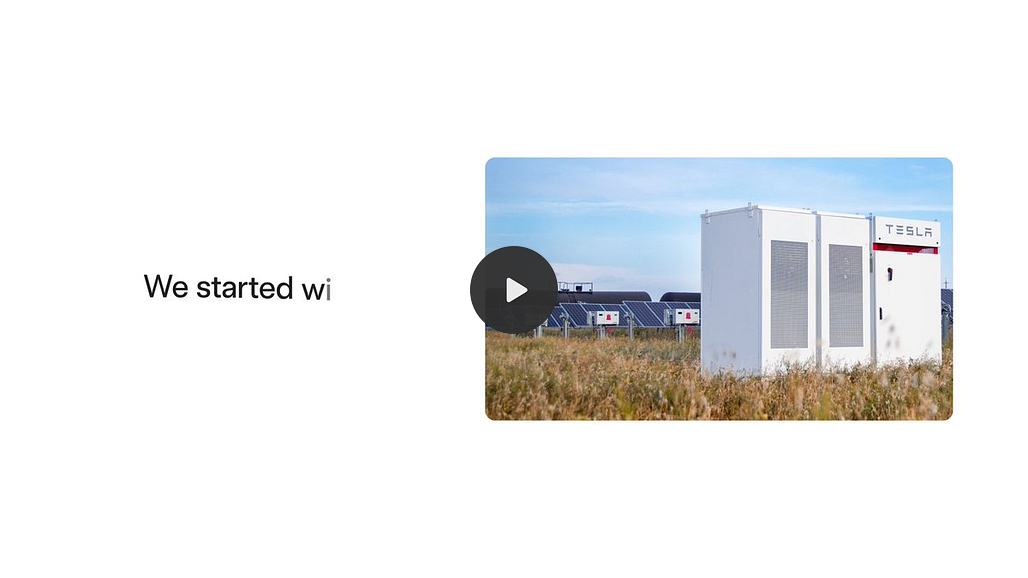
Tesla’s Megapack account introduced Powercore, a solid-state medium-voltage transformer, inverter and breaker in a single unit. Tesla lists continuous output of 7.4 MW/9 MVA at 34.5 kVac, with grid-forming support for 10 MVA of peak power. It says the US-made product will begin operating in 2027.
Combining those functions could simplify installations connecting batteries and other DC equipment to AC systems. Claims that it enables fully off-grid data centres need more context: conversion equipment still requires a source of electricity and a system designed to keep supply reliable.

ComputeDesk raises $45 million for compute clearing infrastructure
Andrawes Bahou announced a $45 million round for ComputeDesk, led by Lightspeed. He says the company has assembled quantitative specialists and GPU infrastructure engineers to build clearing infrastructure for compute. The announcement focuses on managing compute risk, though it leaves the mechanics of that service largely unexplained.



Christian Pickett launches a data marketplace for agents
Christian Pickett announced a Data Marketplace for Agents with more than 100 providers, offering access on a per-call payment basis. The premise is straightforward: useful information is not always available on the public web. Making paid sources accessible to agents could widen their reach, though licensing terms, data quality and spending controls will determine how useful that access becomes.


Second raises $10 million for personal models
Ken Liu introduced Second with a $10 million seed round led by a16z. The company proposes a personal model that people own and their agents can access through an API, covering work habits, motivations and relationships rather than just messages. That makes ownership a central promise, with practical questions about access permissions, deletion and how much personal context an agent should receive.


David Walker launches Scout for sales teams
David Walker introduced Scout, a sales assistant that works through Slack and text messaging. It is designed to review accounts, recommend whom to contact and draft the next action in the salesperson’s voice. The appeal is fewer decisions before making contact; the test is whether its recommendations reflect genuine account knowledge rather than simply producing more outreach.