



Overview
OpenAI dominated the day with new agents, models, pricing and a plan to let ChatGPT subscriptions travel into other apps. Elsewhere, US technology leaders backed voluntary controls for frontier models, faster inference drew fresh investment, and robotics teams tackled the gap between polished demonstrations and machines that can cope with real homes.
The big picture
OpenAI’s DevDay expands ChatGPT into agents, apps and faster models
An OpenAI recap page appeared early, giving the internet a preview before the official presentation. The main releases included Dots, a family of always-on personal agents, the cheaper GPT-6.1 Sol model, a vision-based Decisions API and Ultrafast inference reported at around 300 tokens per second.
The wider strategy is clear: OpenAI wants ChatGPT to become an identity, subscription and app platform, not just a destination. App extensions and “Sign in with ChatGPT” could place its models at the centre of work across many services, while Dots puts OpenAI into direct competition with scores of agent start-ups.

ChatGPT subscriptions begin travelling beyond ChatGPT
Notion now allows eligible Business and Enterprise customers to connect a ChatGPT Plus or Pro plan, select a GPT model and use their existing allowance inside Notion Agent. If that allowance runs out, Notion asks before using its own credits.
OpenAI also revised its subscription structure. Plus is the 1X baseline, the $100 Pro plan offers 5X usage, and the reopened $200 plan offers 10X. Existing customers who previously received 20X will keep it temporarily and receive credits during the transition.

US technology leaders agree to voluntary frontier model controls
Leaders from Meta, OpenAI, Google, Anthropic, Nvidia and other major labs joined a White House accord covering internal controls, external audits and independent review boards. The commitments focus on areas including cybersecurity and biosecurity, where advanced models could cause serious harm if access or capabilities are poorly managed.
The agreement is voluntary and described as morally binding rather than law. Mark Zuckerberg presented it as a reason for greater public confidence, though its value will depend on what the labs disclose and how independent the promised reviews prove to be.


Cerebras lands a major inference deployment with General Compute
General Compute announced a multi-year agreement to deploy Cerebras wafer-scale systems, with the first tokens expected in early 2027. The planned architecture assigns prompt processing to GPUs and uses Cerebras hardware for decoding, where its large on-chip memory can produce claimed speeds above 2,500 tokens per second for each customer.
Agent coding is the first target because it often requires long chains of sequential model calls. Faster responses can cut the time spent waiting between steps, but the real test will be whether General Compute can make enough specialist capacity available at a sensible price.


Matic argues home robots need eyes before hands
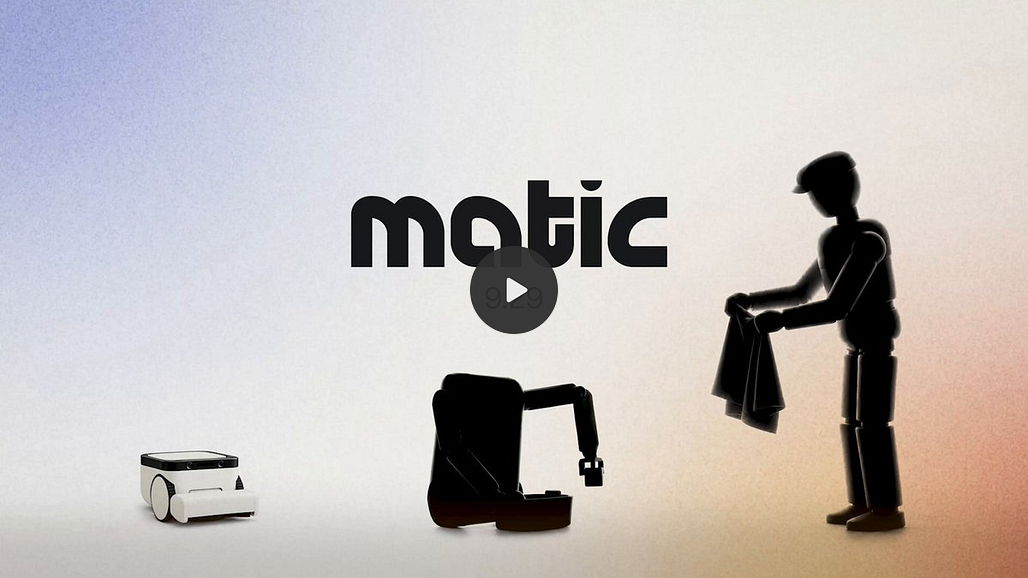
After nine years and work across more than 16,000 homes, Matic co-founder Mehul says domestic robots are being built in the wrong order. His argument is that laboratories tend to prioritise manipulation, while reliable perception and navigation remain unsolved in homes filled with children, pets, cables and clutter.
Matic began with a vision-led floor cleaner designed for centimetre-level navigation and unsupervised operation. The company sees that experience as the foundation for later manipulation, following the rough sequence by which children learn to observe their surroundings before handling objects.

Robot Sim Studio brings language models into physics testing
Ken Goldberg’s team is working with Nvidia to connect Robot Sim Studio with the open-source Newton physics engine. The system lets language models infer physical properties from real video, create simulations and refine robot control code before testing it on hardware.
The demonstration focused on deformable objects such as sponges, which are harder to model than rigid parts. Better simulation could reduce costly physical trials, though moving from simulated success to dependable behaviour in the real world remains robotics’ stubborn problem.


US passport applications are heading fully online
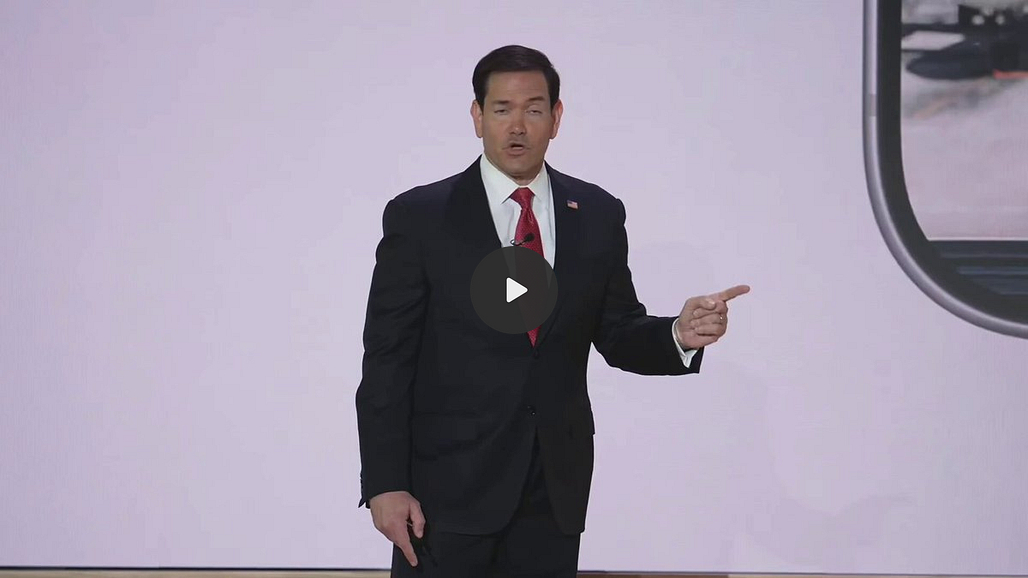
Secretary of State Marco Rubio announced plans for Americans to complete passport applications through America.gov, including photographs, identity checks, payment and delivery tracking. The goal is to remove printed forms, shop-based passport photos, appointments and in-person queues.
The service builds on existing online renewals and is intended to cover first-time applications too, with broader availability planned by the end of 2027. The demonstration looked straightforward, though biometric checks and the handling of sensitive personal data will deserve close attention.

A motion design demo prompts another argument about creative work
Refine Studio founder Miles said his company was no longer hiring motion designers after Claude Opus 5.5 produced a polished interface animation from a few prompts. The clip included typography, controls, notifications and transitions without traditional keyframe work.
The declaration is intentionally provocative. A strong demo does not remove the need for taste, direction or revision, but it does show how quickly routine production is being compressed. At the same time, Anthropic is recruiting engineers for infrastructure, developer tools and agents, illustrating where some of the new demand is appearing.


Tesla gains approval for standing retail voting instructions
The US Securities and Exchange Commission granted Tesla no-action relief for its Individual Voluntary Retail Voting Program. Participating shareholders can set standing proxy instructions for routine matters rather than making the same choices for every vote.
Tesla must still deliver proxy materials, allow free proposal-specific overrides, provide simple opt-outs and send annual reminders. The scheme could increase participation among individual investors without locking them into a permanent voting position.

Delta’s Kuiper choice turns in-flight Wi-Fi into a personality dispute
Delta chief executive Ed Bastian reportedly said the airline did not want to work with Elon Musk, as Delta chose Amazon’s Project Kuiper rather than Starlink for future satellite Wi-Fi. The Kuiper package is said to include cloud and content services alongside greater control for Delta, with deployment due from 2028.
Starlink is already being adopted by competing airlines, so the decision has sparked questions about timing and performance as well as executive personalities. Musk responded that Bastian would lose his job over it, ensuring a procurement decision became another public technology feud.


