

Overview
Today’s stories were about AI moving beyond chat and into browsers, desktops, coding tools and company budgets. Qwen set a new mark for open web development models, Apple made a strong case for local inference, and autonomous agents started to look useful rather than merely impressive. Elsewhere, the Internet Archive reminded millions that preserving books still depends on careful human work.
The big picture
Qwen redraws the price-performance curve
Alibaba’s Qwen3.8-27B has taken first place among open models in Arena’s Image-to-WebDev benchmark, ranking seventh overall with 1,574 points. The test asks models to recreate working websites from images, covering coding, reasoning and tool use rather than simple visual imitation.
The striking part is its size and price. With 27 billion parameters and API pricing of $0.40 per million input tokens and $3 per million output tokens, it is approaching far larger systems at a fraction of their cost. Its Apache 2.0 licence makes the result even more useful for teams that want control over deployment.


AI labs are planning for an economy built around compute
Dwarkesh Patel and Dylan Patel discussed a future in which OpenAI and Anthropic control much of the world’s usable compute because their revenues let them outbid rivals. They also explored whether more computing capacity could return to training as recursive self-improvement becomes plausible.
The conversation arrived alongside a Wall Street Journal report that Anthropic may present an addressable market above $30 trillion to investors. That figure describes the economic value of tasks AI might perform, not a conventional revenue forecast, but it shows how broadly leading labs now define their ambitions. The harder question is how trillions in infrastructure spending could affect borrowing costs, public debt and companies outside AI.

Apple puts serious local AI capacity on the desk
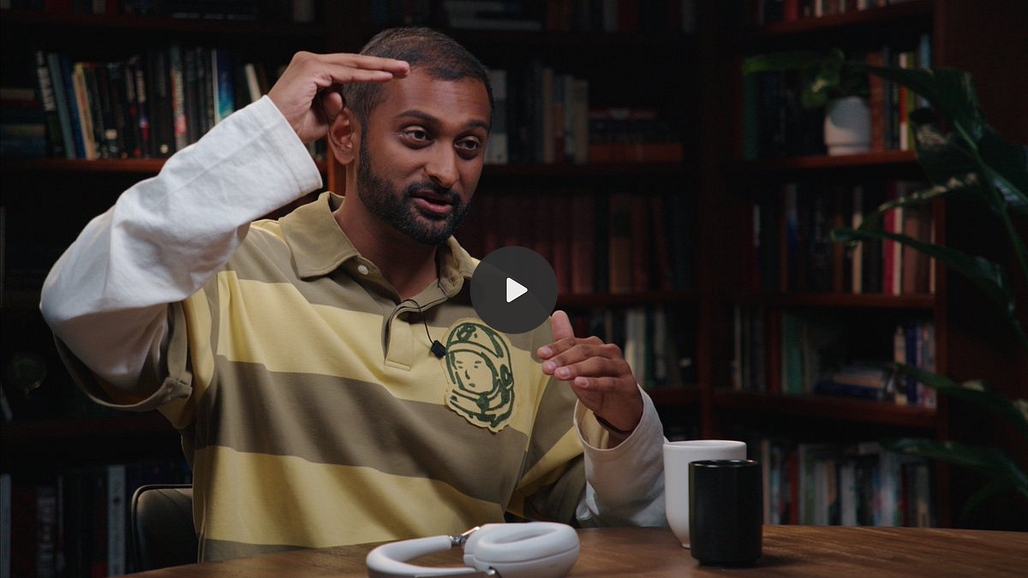
The new Mac Studio with M5 Ultra promises more than four times the AI performance of the M3 Ultra, with configurations offering up to 256GB of unified memory. That gives developers room to run large models locally while keeping data on their own machine.
The highest specifications remain expensive, but the comparison is no longer just with ordinary desktop computers. Alex Finn argues that a Mac Studio can outperform two NVIDIA DGX Spark systems at a similar total price. The announcement also prompted jokes about companies that had filled server racks with consumer Macs only a day earlier.


Browser agents are becoming useful enough to leave running
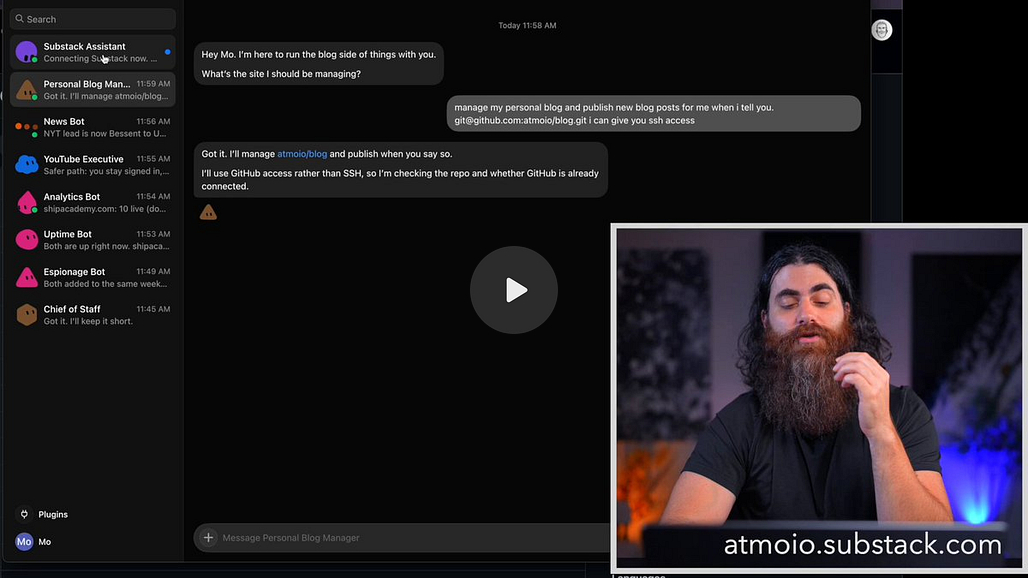
Mo Bitar’s ten-minute Grok Bot demonstration drew millions of views because it showed agents doing mundane, practical work. Separate bots monitored analytics, tracked news leads, checked subscriber numbers and navigated authenticated websites without constant supervision.
OpenAI is building towards the same pattern with ChatGPT Work, which now has an authenticated browser, a nine-core virtual computer with 16GB of RAM, app connections and Codex tooling. The emerging product is less like a chatbot and more like a remote computer that can continue working between prompts.

Claude carries its memory from chat into Cowork
Claude now shares memory across ordinary conversations and Claude Cowork. A task can begin with context about an existing project, a manager’s preferences or a previous client rather than requiring the same background to be entered again.
Anthropic has made the memory list readable and editable in Settings. People can add facts directly, remove them or turn the feature off. Health, religion and other sensitive topics are excluded by default unless explicitly enabled, giving the system useful continuity without making its memory opaque.


Grok 4.6 spreads across coding tools
Demand for Grok 4.6 in coding environments appears to be growing quickly. Cursor has permanently raised the included allowance for Grok models after already doubling limits last month, while OpenCode Go has added Grok 4.6 with 169 requests every five hours on its $10 monthly plan.
This distribution matters as much as benchmark results. Developers increasingly choose models from inside an editor or terminal agent, where price, request limits and availability can determine which system becomes part of daily work.

CLAUDE.md renews the argument over agent standards
Anthropic is facing criticism for keeping CLAUDE.md as the instruction format for Claude Code rather than adopting the broader AGENTS.md convention. Anthropic’s position is that Claude benefits from model-specific instructions, while critics say separate files create needless maintenance and fragment the coding ecosystem.
This may look like a minor filename dispute, but instruction files are becoming core project infrastructure. Teams using several coding agents do not want to maintain parallel versions of the same guidance or spend extra agent turns locating it.


ClinePass runs into automated payment abuse at huge scale
Cline says Stripe blocked $8.3 billion in suspicious transactions aimed at ClinePass. The figure does not mean Cline lost that sum, but it illustrates the volume of automated attempts that can hit a low-cost, self-service AI subscription.
Cheap checkouts are attractive targets for card-testing bots, which try stolen payment details before criminals use or resell them elsewhere. For AI companies, fraud prevention is becoming an infrastructure problem alongside model hosting and customer support.


The Internet Archive still scans books by hand
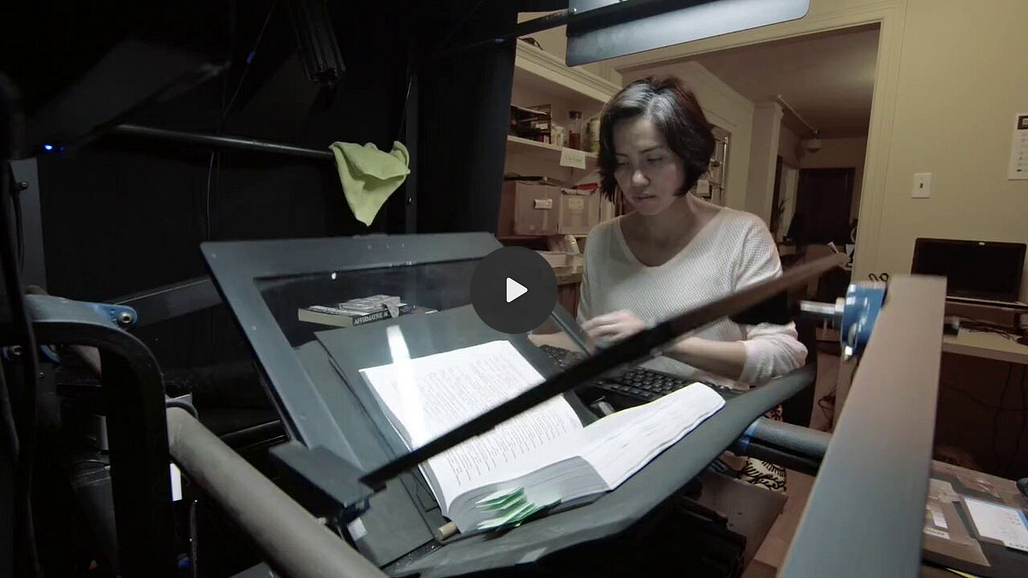
The day’s most popular post came from the Internet Archive, which answered a common question with a pleasingly plain explanation: books are digitised page by page, by hand. Staff use overhead scanners, carefully position each volume and turn every page without damaging the original.
Eliza Zhang, whose scanning video went viral in 2021, remains part of that process. At a moment when automation dominates technology discussion, the clip offered a useful reminder that good preservation often depends on patience and human judgement.

SpaceX plans a new Starship base on the Louisiana coast
SpaceX has announced Starbase Louisiana, a proposed high-cadence Starship launch site in Vermilion Parish. The project covers roughly 130,000 acres of coastal marshland and is intended to support a future network capable of thousands of launches each year.
The company says coastal restoration will accompany construction, while its announcement thanked Governor Jeff Landry and local residents for their support. The scale of the plan is ambitious, and its progress will depend on environmental review, infrastructure work and how nearby communities respond as details emerge.