
Overview
Today had two clear threads running through it: a proper spaceflight moment as Artemis II came home, and a noisy, tense debate about what powerful AI models mean for cybersecurity, markets, and public trust. In the background, the day also nodded to the basics, from the Sun’s role in nearly everything we do to the small tools and design choices that shape daily work in code.
The big picture
Artemis II’s return put human spaceflight back in the centre of the conversation, not as nostalgia, but as a live operational test with real engineering stakes. On Earth, Anthropic’s Mythos talk continued to spark arguments about risk messaging, while traders tried to price in what “AI for finding vulnerabilities” might do to established security firms. Elsewhere, there was a quieter reminder that progress is often mundane: better planning tools, cleaner editor themes, and old Apollo kit still doing useful science decades later.
Artemis II comes home and the internet watches
NASA’s own updates kept things calm and procedural, but the wider feed turned re-entry into a shared live event. The mix was familiar: awe, nerves, and that strange feeling of seeing a high-stakes technical sequence treated like a headline sport.
PopBase’s clip of the capsule glowing during re-entry did what public-facing space posts always do, it pulled new audiences into something that normally lives behind checklists and flight rules.


Return burn clearance: the step that makes it real
Before the drama of plasma and parachutes, there was the simpler milestone: mission control giving the go for the return burn. It is an unglamorous phrase for a decision that locks in the path home, and it reminded people that “historic” is often just disciplined execution.
The clearer explainer posts also helped, laying out separation, re-entry attitude, heat shield loads, blackout, and the slow-down to splashdown.

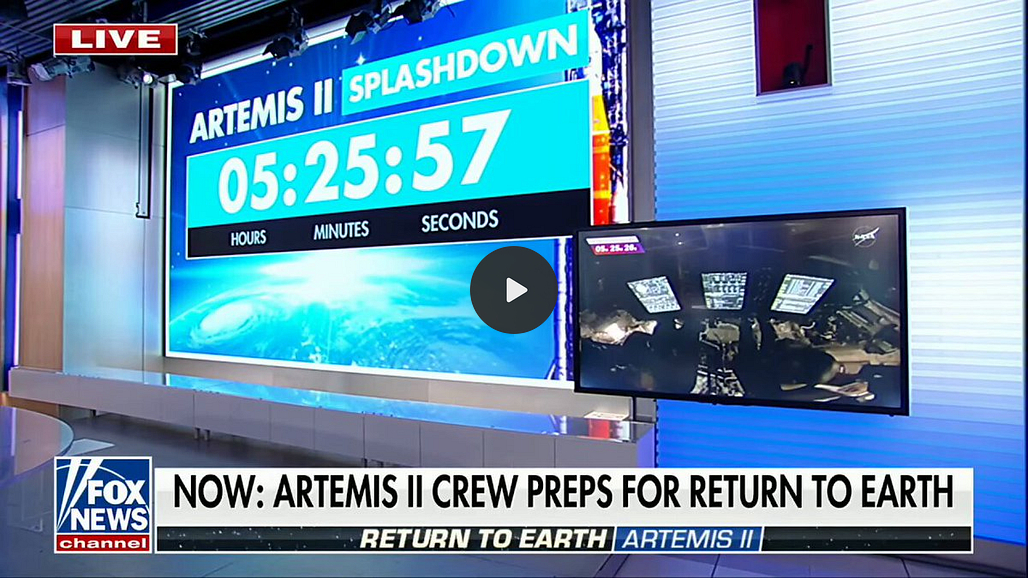
NASA’s last-day-in-space note, complete with a wake-up song
NASA leaned into tradition with the wake-up music detail, which is small but human, and that’s the point. It framed the final day not as a spectacle, but as another workday for the crew, with a schedule, routines, and a job to finish cleanly.
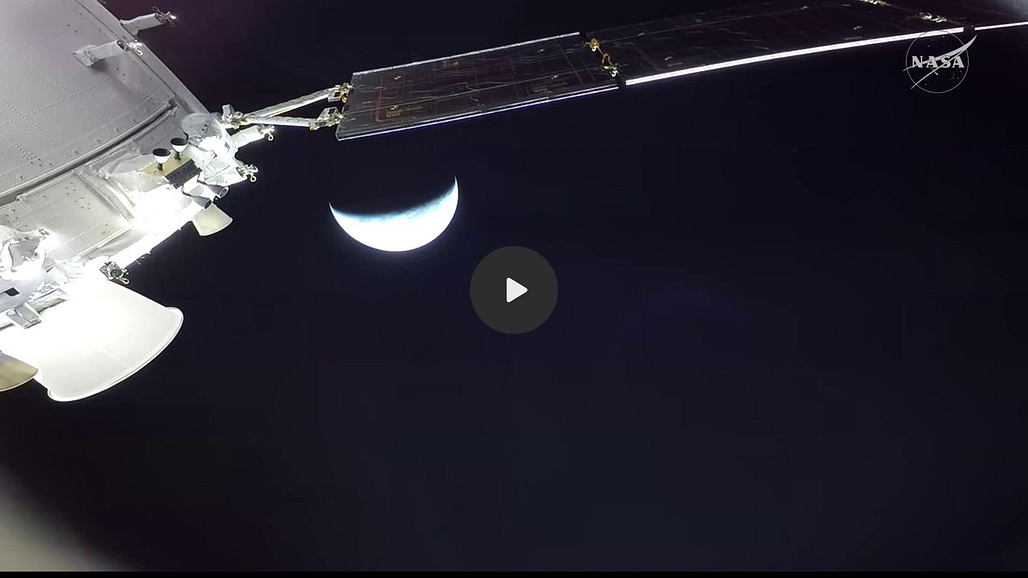
The external Orion views with Earth hanging there in the background did the rest.

Apollo’s “no-maintenance” science still paying rent
Aakash Gupta reminded everyone that some of the best space engineering is boring in the best way: a passive mirror left on the Moon in 1969, still reflecting lasers back to Earth. No batteries, no firmware updates, just years of measurement showing the Moon inching away from us.
It is also a neat counterpoint to today’s big missions: the lasting value can come from the simplest payloads.


The Sun as the hidden source behind nearly all Earth’s energy
XFreeze posted a clean, useful reframing: much of what we call “energy sources” are just different forms of sunlight, either captured in real time (wind, hydro, biomass, solar) or stored over geological time (fossil fuels). It is the sort of perspective that makes both climate arguments and engineering trade-offs easier to talk about without getting lost in slogans.
Also, the raw numbers are still mind-bending: the Sun’s output makes human history’s total energy use look small.


Dutch regulators approve Tesla FSD (Supervised), with strict driver monitoring
Sawyer Merritt highlighted an RDW statement backing Tesla’s FSD (Supervised) in the Netherlands, pointing to continuous driver monitoring as a safety advantage over other assistance systems. The emphasis matters: this is not framed as autonomy, it is framed as supervision with the human still responsible.
If the provisional approval holds and expands, it could become a key reference point for how Europe treats advanced driver assistance when the monitoring is more than a steering-wheel nag.


Mythos and the cyber fear cycle: serious capability, messy messaging
David Sacks captured the ambivalence many people seem to feel: yes, vulnerability discovery at scale is a real problem, but some don’t trust the tone of the warnings coming from companies that benefit from being seen as responsible gatekeepers. That tension is now part of the product story, whether firms like it or not.
Underneath the arguing is the practical point: if models can find bugs faster, defensive security has to change its pace.


Markets react: Cloudflare drops on “AI cyber model” headlines
Watcher.Guru pointed to Cloudflare taking a sharp hit after the Anthropic news, a reminder that investors sometimes treat capability announcements like immediate competitive threats. Whether that fear is justified is another question, but the market reaction showed how jumpy the security space is about AI-native tooling.
It is also a neat example of narrative driving price: a model preview can move a stock before the industry has even seen real-world deployment.


Hacker pushback: “zero-days are easy”, until they are scaled
Pedro Domingos summarised the George Hotz line of attack on AI cyber warnings: that zero-days are not rare because they are hard, but because the incentives and legality keep most people out of the game. It is a provocative claim, and it lands because there is a grain of truth about messy software and shallow bug surfaces.
The uncomfortable follow-up is obvious: if capability and incentives change, the “rare” part might not hold.


Tools and taste: Claude Code planning mode and VS Code’s new defaults
On the practical side of building software, Thariq’s post about Claude Code’s /ultraplan points to a real workflow: plan first, edit, then execute. The replies about re-running plans to catch missed edge cases also felt honest, these tools can help, but you still need to review like you mean it.
Meanwhile, VS Code refreshed its default themes, a small change that still matters when you stare at an editor all day.