



Overview
Today’s feed had two speeds: the nuts-and-bolts of how compute gets built (from logic gates to TPUs), and the messy human systems around it, from grading and visas to how Big Tech ranks and repurposes people. In the background, the AI arms race kept doing what it does best: getting cheaper, getting better, and pulling in eye-watering sums of capital.
The big picture
We are watching compute become both more legible and more contested. On the technical side, there’s a renewed appetite for first principles, plus a growing obsession with cost per task rather than vague “model quality”. On the social side, institutions seem to be tightening up, whether that’s universities rationing top grades, governments making immigration harder, or companies squeezing productivity in ways that fray trust. The through-line is simple: when capability accelerates, everything around it gets stress-tested.
From logic gates to brains, a chip lesson worth your time
@dwarkesh_sp posted a blackboard lecture with @reinerpope that starts at the ground floor, basic gates, multiply-accumulate units, muxes, registers, then climbs up to why GPUs, TPUs, and FPGAs end up looking the way they do. The neat reminder is that “compute” is rarely the main cost, moving data around is, and so architectures keep evolving to keep things local.
If you have ever nodded along to “systolic arrays” without feeling you could explain them, this looks like a solid reset.


Open-source deep research, packaged as a drop-in skill
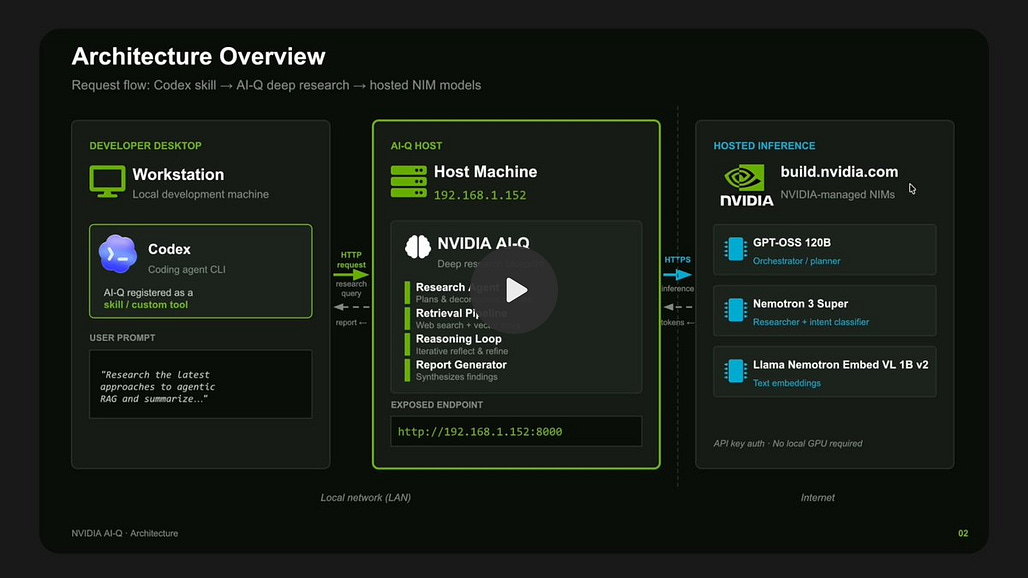
@NVIDIAAI is pushing AI-Q, an open-source “skill” you can plug into an agent harness to run a research pipeline and get back a structured report with citations. The pitch is less about magical agents and more about not rebuilding the same plumbing every time you want search, retrieval, synthesis, and iteration.
It also speaks to a quieter trend: teams want agent workflows, but with control over where the data goes and how the process gets audited.

“Intelligence is getting cheaper”, and the bill still goes up
@a16z shared charts showing inference costs falling hard over the past few years. The punchline is familiar: when something gets cheaper, people use more of it. Tokens explode, usage patterns change, and suddenly “AI spend” can rise even as unit costs drop.
If you are trying to plan a budget for AI products, this is the tricky bit, price curves help, but demand curves can bite.


Cost per task is becoming the metric that matters
@ArtificialAnlys put numbers to a point many teams feel in practice: the model that “wins” is often the one that finishes the job with fewer tokens and less time. Their benchmarking claims Cursor Composer 2.5 is multiple times cheaper per coding task than comparable setups with Claude Opus 4.7 and GPT-5.5, helped by lower token usage.
This kind of framing is likely to push toolmakers towards tighter scaffolding, better context control, and smaller waste, not just bigger models.


Developers notice when the pecking order changes
@dhh says GPT-5.5 has jumped ahead for complicated agentic work, to the point where going back to Opus 4.7 feels like a step backwards. Beyond the model-war chatter, it is a reminder that these rankings are fluid, and hands-on users often spot the change before any benchmark write-up lands.
Also worth noting: the claim is grounded in real project work, not a toy prompt, which is where these tools either hold up or fall apart.

Anthropic’s rumoured mega-round shows investor appetite is still roaring
@KobeissiLetter flagged Bloomberg reporting that Anthropic may close a funding round topping $30B at a valuation above $900B. If true, it is a staggering marker of how quickly frontier AI has become a capital game as much as a product game.
The obvious question is not just “is it worth it?”, but “what business models can even grow into numbers like that without distorting the market around them?”

Meta morale, stack ranking, and engineers sent to label data
Two threads converged into the same story. @Polymarket amplified a laid-off employee describing Meta’s culture as “Squid Game”, a grim shorthand for forced competition. Then @GergelyOrosz added colour on the operational reality: engineers reassigned into data labelling style work to improve AI coding models, not laid off, but not exactly inspired either.
Put together, it reads like a company retooling at speed, and paying a human cost in status, autonomy, and trust.

Harvard’s A-grade cap sparks a fight over what education is for
@AndrewYNg pushed back on Harvard voting to limit A grades to about 20% of a class. His argument is straightforward: keep standards high, but measure success by how many people you help reach them, not by how few you allow to “win”.
It is also a timely reminder that GPAs are a blunt instrument in hiring, while practical skills checks and interviews often tell you more.

Visa rules and the risk of pushing talent into a queue outside the US
@reidhoffman raised concerns about a DHS policy that could require some temporary visa holders pursuing green cards to leave the country and apply from home, then wait through backlogs. Whatever you think about immigration politics, the operational detail matters, forcing people to pause their lives and jobs can turn “recruiting talent” into “losing talent”.
In fast-moving fields like AI, delays are not just inconvenient, they can end careers or move teams across borders.


Tesla says you don’t have to drive anymore, and the internet does what it always does
@Tesla’s post is short, and intentionally provocative: “You don’t have to drive anymore.” Fans read it as a milestone, sceptics read it as overclaiming, and the replies split into triumph stories and edge-case complaints.
Regardless of where you land, this sort of messaging shows how consumer autonomy is being sold as a product feature, not a research demo.


