



Overview
Today’s feed splits neatly down the middle: big-money bets on the AI and space boom, and the quieter, messier realities underneath, like cloud reliability, dependency risk, and how we judge what is human-made. There’s also a sprinkle of culture and politics, from gaming strategy at Microsoft to a long-running debate about mental health treatment.
The big picture
It feels like we’re entering a new phase where the most influential tech firms are being priced and treated like national infrastructure, whether that is AI labs heading towards public markets or satellite networks turning into everyday utilities. At the same time, the supporting systems are showing strain: cloud governance that can take down production without warning, and software supply chains that are still harder to secure than they should be.
OpenAI’s IPO drumbeat gets louder
WatcherGuru flags a WSJ report that OpenAI is preparing an IPO filing soon. If this lands, it is not just another listing, it is a referendum on how investors price frontier AI, massive capex, and a company that has travelled a long way from its original structure.
In the background, Sam Altman is talking up “personal AGI” and research acceleration, which reads like a reminder of the story OpenAI wants markets to buy into: science, productivity, and tools for everyone, not just chatbots.

SpaceX files an S-1 as Starlink marches on
The Kobeissi Letter says SpaceX has filed its S-1, with Nasdaq plans and headline financials that will get debated for months. If the filing is real and the timetable holds, it drags the space economy further into the same spotlight as AI, with the same questions about valuation, control, and long-term profitability.
Meanwhile, SpaceX keeps doing what it does best: launching. The business case is hard to separate from the cadence of operational proof, and Starlink’s expansion is a steady drumbeat behind the IPO chatter.

Starlink’s pitch: internet that keeps up with you
Starlink posts a simple flex: high-speed connectivity while on the move. It is the kind of demo that lands because it is mundane, not futuristic, a fast drive through somewhere with patchy mobile coverage, and the connection does not blink.
This is also a neat reminder that “space tech” is increasingly just consumer infrastructure, sold on whether it works in the boring places people actually live and travel.


Google Cloud account suspensions spark a reliability row
Gergely Orosz calls out GCP for automated suspensions of production accounts without warning, including Railway’s. The core complaint is not that mistakes happen, it is that the process looks indifferent to the blast radius when it does.
If you are a customer, the takeaway is uncomfortable but practical: assume you can lose access, assume it can be automated, and keep an escape hatch to another cloud if the stakes are high.


Fork the dependency, stop chasing updates, says Mitchell Hashimoto
Mitchell Hashimoto argues for a hard-nosed approach to dependencies: fork, trim to your use case, and only update when users are harmed. It is a view that will annoy people who live by “keep everything current”, but it taps into a real fear that routine updates can be the riskiest change you ship.
The replies will no doubt fight about technical debt and security patches, but the post lands because it speaks to a reality teams face: you rarely have time to audit an entire transitive tree properly, yet you are expected to trust it.

VS Code makes diagrams and web previews easier inside the editor
Visual Studio Code adds Mermaid rendering directly in Markdown previews, which is the sort of “small” feature that quietly changes habits. Diagrams stop being an extra step, so teams document systems as they build them, not months later.
The Integrated Browser upgrades are also telling: more of the workflow is moving inside the editor, including pulling page elements straight into chat context. The editor is becoming the hub, not just a text box.

Agents for images and video get a practical course treatment
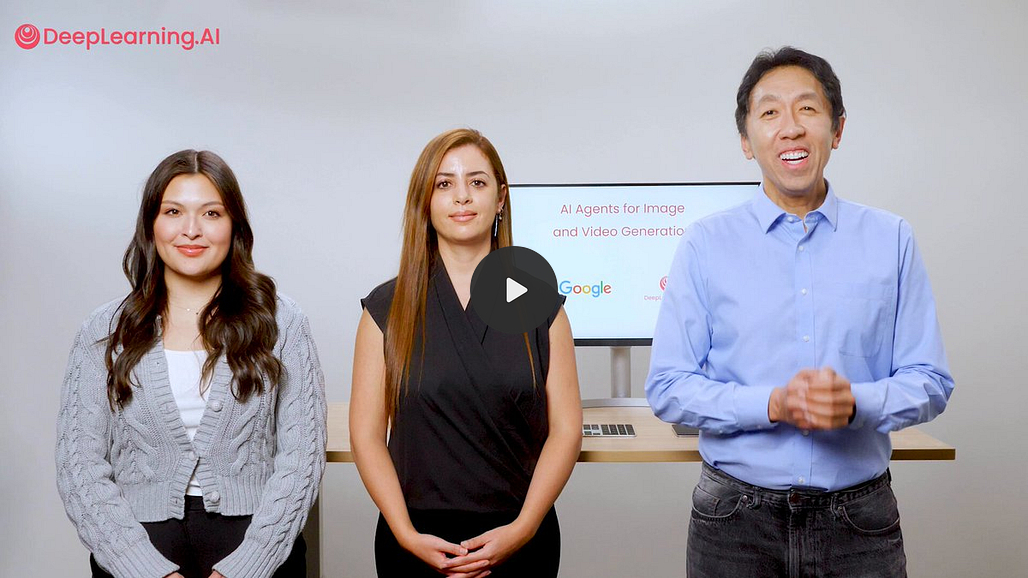
Andrew Ng is pushing a short course on building agents that generate images and video, with an emphasis on self-checking loops. That focus matters because the biggest weakness in visual generation is not making something, it is knowing when it is good enough, on brand, and consistent from frame to frame.
It is also another sign that “agents” are settling into a more grounded meaning: systems that plan, critique their own output, and iterate, rather than a single prompt and a miracle.

AI models get better at spotting AI-written text
Roon notes that Claude and GPT-5.5 have become reasonably good at identifying AI writing, and that this improvement is recent. If that holds up, it changes the tone of online trust: not because detection is perfect, but because it becomes a normal feature people expect.
You can already see where this goes: people will try to write to evade detectors, detectors will adapt, and the whole thing becomes less about truth and more about pattern matching and incentives.


Microsoft hires Matthew Ball to steer gaming strategy
Tim Sweeney points to Matthew Ball joining Microsoft as Chief Strategy Officer for gaming. Ball has been influential in how the industry talks about the metaverse and the future of interactive media, so this reads like Microsoft wanting a sharper long-range narrative to match its sprawling portfolio.
In a market where consoles, subscriptions, creators, and platforms keep colliding, strategy hires can matter as much as a new exclusive.


Tax politics: scrap income tax for the bottom half?
Chamath Palihapitiya backs the idea of taking federal income tax for the bottom 50% down to zero. It is the sort of proposal that sounds simple and humane, then instantly runs into arguments about deficits, fairness, and whether people need “skin in the game” to care about spending.
The replies tend to reveal what side you are on before you even touch a spreadsheet.


From Avatar regret to Nolan faith
Trung Phan jokes that Matt Damon, still haunted by turning down Avatar and its box office upside, has decided never again to hesitate when a director like Christopher Nolan calls. It is a fun reminder that Hollywood’s biggest “what if” stories never really die, they just get recycled whenever someone picks their next role.
If Nolan’s The Odyssey hits, the joke becomes part of the film’s mythology before the trailer even drops.
Episode #407: 21 May 2026


