



Overview
Today’s feed had two main moods: hard tech optimism and uneasy reality checks. There’s a serious thread about safety, security, and who gets to trust the software running our lives, from self-driving stats to 3D printing tools. Alongside that, the AI chatter is turning into a tug of war between building bigger futures and just cutting costs, with a side helping of consumer culture taking a quick bow after an unpopular design choice.
The big picture
The common theme is control: control of risk on the roads, control of your data in toolchains, control of compute and infrastructure, and control of your own direction in a noisy world. The stakes feel higher because the tools are getting stronger, and the gaps between what’s possible and what’s trustworthy are getting easier to spot.
Tesla FSD framed as a public health play, not a party trick
@XFreeze argues the point of FSD is safety, not convenience, and anchors it in a blunt stat: road crashes are a leading killer of healthy young people. The punchline is data and outcomes, with Tesla’s mileage scale and claimed collision rates used to make the case that supervised autonomy can beat the human baseline by a wide margin.
It’s also a reminder that this debate is no longer only about feature lists, it’s about what regulators accept as proof, and how quickly that proof can translate into fewer deaths.


Codex workflows that treat your laptop like a thin client
@gdb spotlights a way of working that feels like the start of a new normal: persistent coding sessions running on an always-on machine, picked up from phone, laptop, wherever you are. The appeal is continuity, your context follows you rather than being trapped on a single device.
The replies read like a product roadmap written by users, with the obvious ask being broader OS support so this is not a Mac-only club.


GPT-5.6 rumour fever and the craving for practical gains
@VraserX captures the current pattern of AI releases: speculation stacks fast, and the wish list is telling. People are not just asking for higher scores, they want sturdier coding, reliable front-end work, agents that can actually finish tasks, and lower costs so experimentation is not a luxury.
Whether or not the version number lands soon, the expectations are clear: fewer demos, more dependable daily output.


“Boil the ocean”, Garry Tan’s pushback on cost-cutting AI narratives
@garrytan takes aim at the idea that AI’s main job is to make incumbents cheaper to run. His argument is that the ceiling has moved up, and that the real risk for established firms is a small team using AI to build something structurally better, not just leaner.
It’s a classic fork in the road: use AI as a discount tool, or use it as a capability multiplier.


Bargain-bin FPGAs and the strange economics of surplus cloud gear
@lauriewired points out a pricing glitch in the real world: old Chinese cloud accelerator cards turning up on resale sites with serious Xilinx UltraScale FPGA silicon for around $50, while the bare chip is priced in the thousands through official channels.
It’s a neat glimpse of how secondary markets quietly re-route advanced hardware to hobbyists and small labs, for better or worse, depending on what gets built with it.


Inside the cooling wars: air vs water in dense data centres
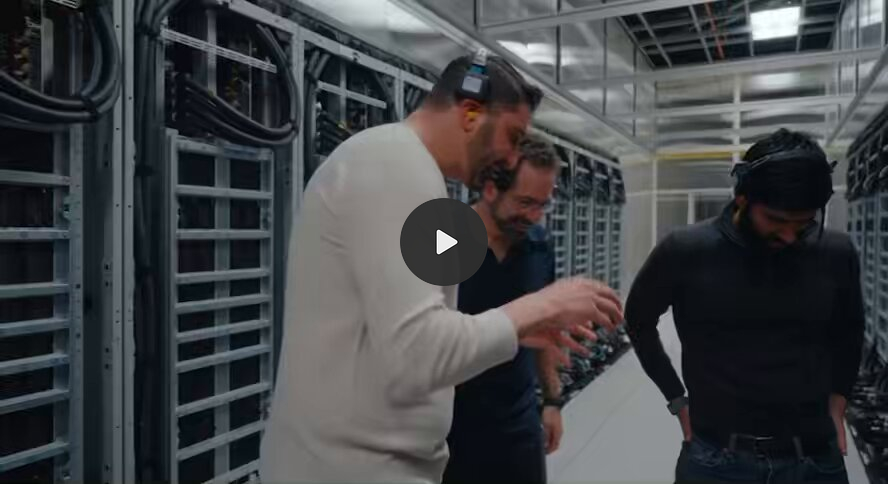
@TrungTPhan shares the nerdy bits from a Jane Street data centre tour, where the most interesting story is not racks or branding, it’s heat. Flow balancing, filtration, monitoring, and carefully managed coolant mixtures underline how much modern compute is an HVAC problem wearing a software hat.
As AI workloads thicken, this kind of engineering detail is turning into a competitive edge.

Open-source trust issues: Prusa calls out Bambu Studio’s “black box” plugin
@Pirat_Nation reports Josef Prusa’s warning about Bambu Studio, a PrusaSlicer fork, shipping with a closed-source networking component that can be updated remotely. The worry is simple: slicers touch sensitive design files, and an unauditable plugin is a security and compliance headache, even before you get into licensing arguments.
The reaction splits along a familiar line, convenience versus assurance, with some people ready to block domains and go offline, and others shrugging and printing anyway.


Everlane’s ending: acquired by SHEIN after the “ethical basics” bet
@pitdesi sums up the irony with minimal fuss: Everlane was pitched as the anti-SHEIN, raised venture money on the promise that people would pay extra for cleaner basics, then ended up bought by the thing it positioned against. The price tag makes it feel like a tough lesson in the economics of mid-market consumer brands.
It reads like a warning that values alone do not create margin, and “transparent” cost structures can expose how little room there is to manoeuvre.


Spotify ditches the glitter, logo backlash wins in a week
@Polymarket flags Spotify’s quick retreat from the disco ball icon, with the company admitting glitter is not for everyone. It’s a small story, but it’s also a tidy example of how tiny UI choices can spark disproportionate annoyance when they mess with recognisability.
Brands can celebrate anniversaries all they like, but people mostly want their home screen to stay legible.


Getting pitched fake engagement on X, by someone who did not read the bio
@nikitabier posts a screenshot exchange with a promoter offering shill services across social platforms, then mocks the approach by pointing out it’s like offering contraband to a police officer in uniform. The humour lands because it’s also true: spam is not clever, it’s just persistent.
The post ends with the neatest possible moral: the seller’s account gets suspended.


