



Overview
Today’s feed had a clear thread running through it: ambitious engineering meeting real-world scale. SpaceX showed another clean Starship endgame, while talk around Starlink’s orbital solar capacity pointed to just how big “infrastructure in space” has quietly become. On the ground, AI tooling keeps getting cheaper and stranger, markets are reshuffling around semiconductors, and a handful of posts captured the growing gap between hype, craft, and what people actually want.
The big picture
We are watching three races happen at once. Space hardware is inching from spectacle to routine, AI is racing to the bottom on cost while teams argue about quality, and finance is being dragged around by chips, deficits, and big claims. Meanwhile, design and hiring culture keep getting punctured by the internet’s favourite test: “does this actually make sense?”
Starship’s endgame keeps getting less dramatic, in the best way
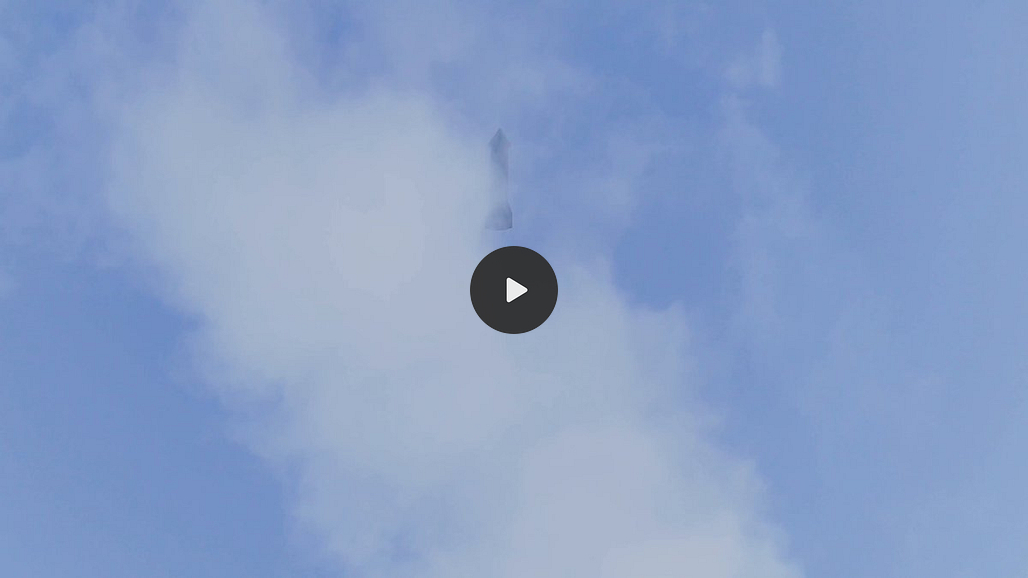
SpaceX posted footage of Starship’s flip and two-engine landing burn at the end of Flight Test 12, finishing with a precise splashdown in the Indian Ocean. It is the sort of clip that looks like a stunt, but it is really a progress update on the hardest part of the whole plan: controlling a huge vehicle through re-entry and then doing something purposeful at the bottom.
With V3 in the mix and data coming down through Starlink even with an engine issue, this is starting to look like a programme learning how to repeat itself, not just prove a point once.

Starlink as a giant solar deployment programme hiding in plain sight
DavidSHolz did the back-of-the-envelope maths that makes you blink: the constellation has gone from roughly 10 MW (Gen1) to about 100 MW (Gen2), with talk of 1 GW territory as Gen3 ramps. Even if you want to quibble the assumptions, the direction is hard to ignore.
It reframes Starlink a bit. Yes, it is broadband, but it is also mass production of space power generation at a scale no one else is close to.

DeepSeek pricing is turning serious workloads into pocket change
0xSero shared a screenshot that will make anyone paying model bills sit up: deepseek-v4-pro running 0.45B tokens for $6.74. Not a demo, not a free tier flex, just a month’s usage with thousands of requests.
When numbers like that are real, the conversation changes from “can we afford this?” to “what do we build when cost stops being the constraint?”


“Which model made this?” is becoming a design game
LexnLin teased a side-by-side of landing pages generated one-shot with Claude Opus 4.7 versus GPT-5.5, framed as a guessing game. The interesting bit is not the dunking, it is the idea that you can enforce taste through strict layout and typography rules and then see where each model still diverges.
It is a reminder that UI work is not just “make it pretty”, it is constraint, hierarchy, and judgement, and the gaps show up quickly when you put outputs next to each other.



Claude Code’s CLI glitch: the most human moment in dev tools
vasuman posted a screenshot of Claude Code seemingly “auto encrypting” terminal output, a joke that landed because it looks like security theatre when it is really just a rendering bug. Anyone who lives in terminals has seen some version of this: resize the window, update the tool, carry on.
It is small, but it captures the current state of AI coding assistants well: powerful enough to depend on, rough enough to annoy you daily.


Taiwan edges past India as chips keep rewriting the league table
zerohedge flagged Taiwan’s market cap hitting $4.95 trillion, just above India’s $4.92 trillion. The subtext is obvious: TSMC and the semiconductor supply chain are still setting the tempo for global equities, especially with AI demand refusing to cool off.
It is also a reminder that “country markets” can sometimes be a proxy for a single industrial bet.

Massie says the US is locking in interest costs that do not go away
RepThomasMassie warned that a $2 trillion 2026 deficit means debt financing costs that can overtake entire categories of federal spending, like roads and bridges. Strip out the partisan framing and the point is simple: interest is the bill you keep paying after the argument is over.
With war costs and big domestic packages in the mix, this is the kind of pressure that turns into policy fights later, even if markets ignore it for now.

Anthropic and the Vatican: an endorsement that changes the vibe
kimmonismus argued that Anthropic’s appearance alongside Pope Leo XIV for an AI encyclical is an enormous reputational win. The claim is not that it sells subscriptions overnight, it is that it grants legitimacy in rooms where “AI safety” is not a technical debate, it is a moral one.
If the next phase of adoption depends on trust, not novelty, then this sort of alignment matters more than most product launches.


LeetCode “party tricks” and the interview theatre people are tired of
yacineMTB shared a story about solving an LC hard in an interview, then stopping to ask whether the interviewer truly wanted the optimal solution. It is funny, but it hits a sore spot: hiring loops that reward puzzle performance while missing how engineers actually work.
The replies read like a quiet revolt against outdated processes, especially as teams claim they want builders, not contestants.


Ferrari’s first EV design gets roasted, and AI mock-ups join the pile-on
pitdesi posted ChatGPT-generated alternatives to Ferrari’s new four-door EV, joking that the AI concept might be more popular than the official direction. This follows a familiar pattern: a big brand takes a design risk, the internet reacts, and suddenly “what if it looked like this instead?” becomes a rapid-fire sport.
Whatever you think of the Luce, it is hard to ignore how quickly generative tools have become part of public design criticism, not just the studio process.


