



Overview
Today’s posts had two loud threads running through them: AI tools getting faster and more capable in the real world (from game ports to “one-shot” app builds), and the social knock-on effects, from how students spend their summers to what founders look like now. In the background, platforms are being remade too, with Ethereum talking up its next big redesign and Google Search’s AI summaries winning over sceptics.
The big picture
The centre of gravity keeps moving from “can it do the thing?” to “can it do the thing quickly, safely, and in a way people will actually use?” That shows up in the hype around token speed, the fascination with long context windows, and the less glamorous work of onboarding, change management, and product surfaces like search. At the same time, there’s a growing sense that institutions, especially education, are still behaving like none of this has happened.
Onboarding that pays you back
RhysSullivan called out Exa AI Labs for a simple trick that works: turn setup into a small quest, then reward completion with credits. It is a neat reminder that people do not hate onboarding, they hate wasted effort.
What stands out is how the flow nudges you into making concrete choices (tools, integrations, use cases), then hands you something copyable at the end. It feels less like admin, more like progress.


Claude Fable 5 gets a serious public flex
kimmonismus shared what might be the best kind of endorsement: Google AI Studio’s Ammaar Reshi praising Anthropic’s Fable 5, then showing it off by porting an old Command & Conquer engine to iOS with native ARM64 compilation. Not a toy demo, a chunky legacy codebase doing real work.
If this is the direction travel, “AI for coding” is becoming less about snippets and more about wrestling entire systems into new shapes.


Abacus AI sells the dream of one-prompt builds
bindureddy posted a bold claim: Fable can one-shot complex builds on the Abacus AI SuperComputer, including 3D games and full SaaS apps. The demo angle is important here, because “agent builds an app” only lands when people can see a finished thing with menus, controls, and polish.
There’s also a platform play tucked inside the post: hosting, auth, compute, and databases bundled in, so the “build” is closer to “ship”.


Tencent’s Hy3 and the open source licensing tell
teortaxesTex flagged Tencent’s Hy3 as a potential jump into the open source top tier, not just on reported results but on licensing. Apache 2.0 matters because it changes who can adopt it without legal gymnastics.
The subtext is familiar: architecture tweaks get attention, but data and training choices tend to decide whether a model is genuinely good in practice.


Faster inference, more believable in-game companions
Angaisb_ pointed to GPT-5.6 Sol reportedly running at 750 tokens per second on Cerebras. That sort of speed is not just a benchmark brag, it changes what can feel “real-time” in interactive settings.
Gaming is the obvious beneficiary: companions stop being a laggy gimmick and start behaving like something you can actually rely on mid-play.


Long context windows sound wild, but compute is the wall
rohanpaul_ai resurfaced a Dario Amodei quote: 100 million words of context is already possible in principle, with inference support as the bottleneck. That framing matters, because it suggests we are not stuck on “the model can’t”, but on “the hardware bill is painful”.
There’s also the reminder that models can adapt within a session without weight updates, which is a different kind of learning than people expect, but still changes how products can behave.


Chain-of-thought leaks and the urge to peek behind the curtain
mark_k shared screenshots claimed to be an internal Fable 5 reasoning trace. Whether it is a true leak, a UI bug, or a reconstruction, the reaction is the point: people are hungry to understand what “thinking” looks like inside these systems.
It also highlights a practical tension. The more verbose and human-like the trace, the more expensive it gets, and the more likely companies are to keep it hidden.


Education still hasn’t caught up to ChatGPT era reality
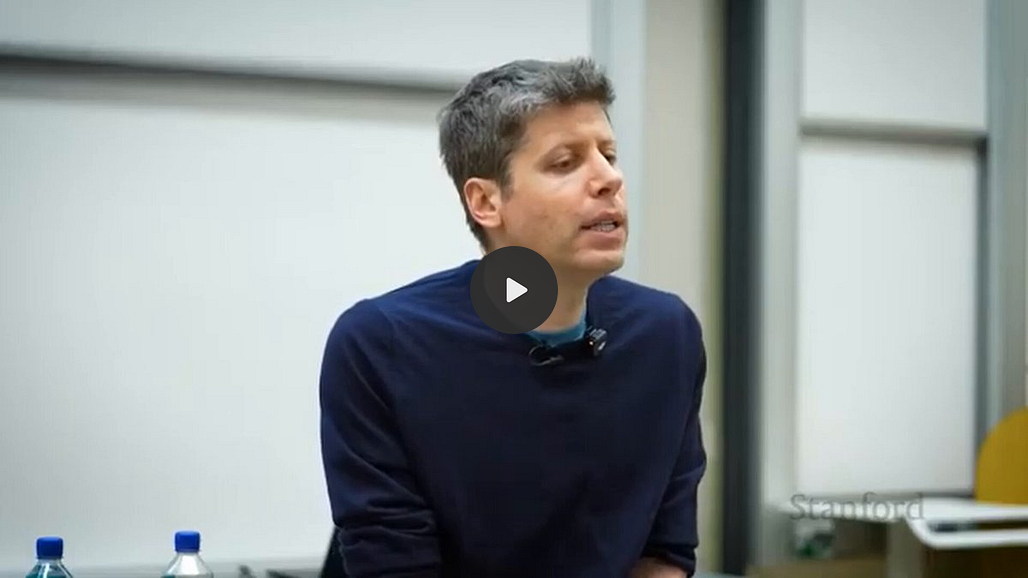
Hesamation shared a clip with Sam Altman questioning why schooling looks much the same post-ChatGPT, warning that teaching as if we are still in a pre-AGI world can hollow out critical thinking.
Even if you disagree with the framing, it is hard to ignore the gap between what tools can do and what classrooms are designed to reward.


Students skipping internships to build AI startups
Polymarket claimed more students are choosing summers of building over internships. It makes sense in a world where a small team, plus decent models and APIs, can get to a working product quickly.
The trade-off is less visible: you miss out on being shaped by strong teams and good managers, and you also take on the emotional cost of failure earlier. Still, the direction feels telling.

Ethereum talks up its next big rebuild
WatcherGuru posted that Vitalik Buterin is pushing “Lean Ethereum”, described as the biggest overhaul since The Merge. The headline promise list is huge: quantum-resistant crypto, privacy features, simplification, better throughput, and faster finality.
Ambition is cheap, delivery is not, but it is a clear sign Ethereum wants to keep its claim to being the serious long-term platform, not just the incumbent.


