



Overview
AI infrastructure dominated the conversation, from Stripe’s $7 billion-plus OpenRouter purchase and DeepSeek’s price rises to agents gaining credit and persistent computers. Elsewhere, developers showed what these systems can already do, while debates about public trust, national debt and delayed gratification added a more sceptical note.
The big picture
Stripe’s OpenRouter deal draws praise and doubt
Stripe is buying OpenRouter for more than $7 billion, a striking outcome for a company founded in 2023 and valued at $1.3 billion only months ago. OpenRouter gives developers a common API for hundreds of models, handling cost, availability and fallbacks while taking a cut of spending.
The price also prompted a fair question: how durable is model routing as a business? Critics argue that better models may make manual selection less useful. Stripe appears to be betting that billing, access and provider choice will remain valuable even as the models change.


Grok Bot makes the case for persistent agents
Lee Robinson highlighted the design choices behind Grok Bot: a minimal text interface, most work handled on the server, persistent cloud computers and browser control. The persistent computer is important because an agent can retain files, sessions and progress instead of starting again with each request.
Yun-Ta Tsai offered a practical example hours later. After requesting support for his Matic robot vacuum, he was able to send cleaning and docking commands through Grok from anywhere. It is a small household task, but a clear demonstration of chat becoming a control layer for software and physical devices.

AI companies face a harder test than persuasive essays
Mark Zuckerberg’s vision of personal AI agents has met scepticism rooted in Meta’s history with advertising, social media and grand promises. Questions about access, hardware costs and wider social consequences remain unresolved.
Anthropic chief Dario Amodei offered a blunt answer to the wider trust problem: produce major public benefits, such as curing cancer. His argument is that confidence will return through measurable scientific progress, not corporate messaging. That sets a daunting standard, especially while concerns about data centres, copyright and employment continue.

DeepSeek’s low-cost era becomes more expensive
DeepSeek has raised API prices for V4-Flash and V4-Pro, with some token categories increasing by between 50 and 1,100 per cent depending on the time and tier. OpenCode has adjusted its usage limits in response, showing how quickly model costs travel through the developer ecosystem.
The company also teased “Operation Cheepseek”, apparently aimed at finding cheaper routes for coding workloads. Price was central to DeepSeek’s appeal, so developers will be watching whether performance still justifies the new bill.

AI agents can now borrow money for tools
Vaya AI is giving agents a line of credit based on a developer’s GitHub record. The agent can then pay for metered access to more than 1,400 tools, including Exa, Firecrawl and Modal, without separate subscriptions or upfront balances.
Payments use Coinbase’s x402 protocol, which turns the HTTP 402 “Payment Required” code into a method for stablecoin micropayments. The broader idea is simple: agents need a way to buy data, computing time and services while completing work, but credit also introduces questions about permission, limits and liability.

Codex offers huge context, but OpenAI prefers compression
Noam Brown praised Codex’s automatic context compaction, which condenses long working histories before they exceed the model’s limits. OpenAI invested early in this approach rather than relying on ever-larger context windows for routine work.
A 1 million-token option is available for tasks that need it, with compaction beginning around 900,000 tokens. Brown still advises against changing the default, suggesting that careful compression can be more useful than carrying an enormous transcript through the whole task.


Xynova’s robotic hand moves from render towards reality
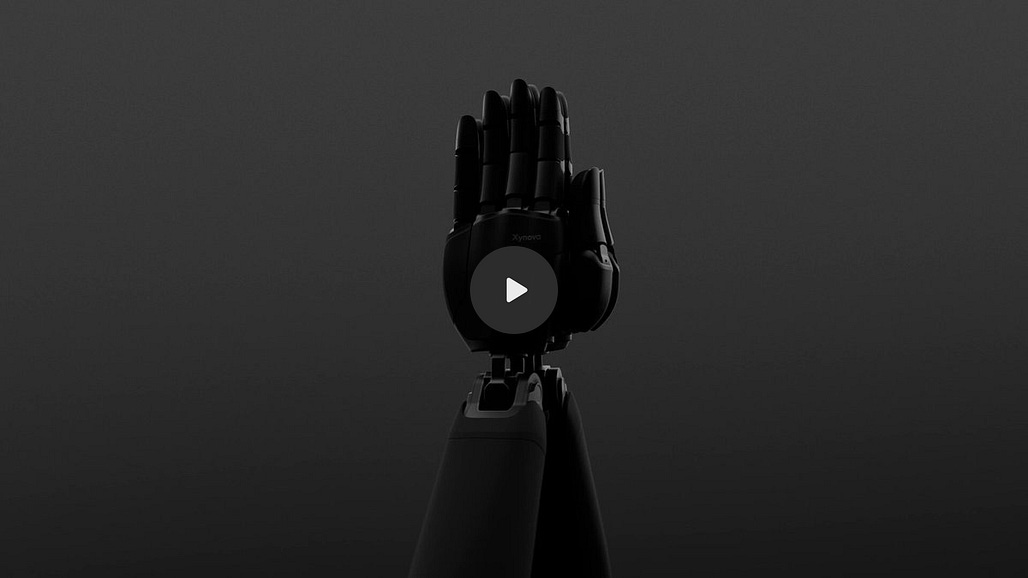
Xynova’s Prima1 robotic hand has 22 degrees of freedom, tactile sensing and precise force control. Its direct-drive design appears aimed at industrial work where speed, repeatability and controlled grip matter more than human-like appearance.
The footage is a polished CGI presentation rather than a physical demonstration, so the World Robot Conference showcase will be the real test. Xynova has already explored tendon and hybrid mechanisms, making Prima1 the latest attempt to balance flexibility, strength and precision.


Three.js puts cinematic oceans in a browser
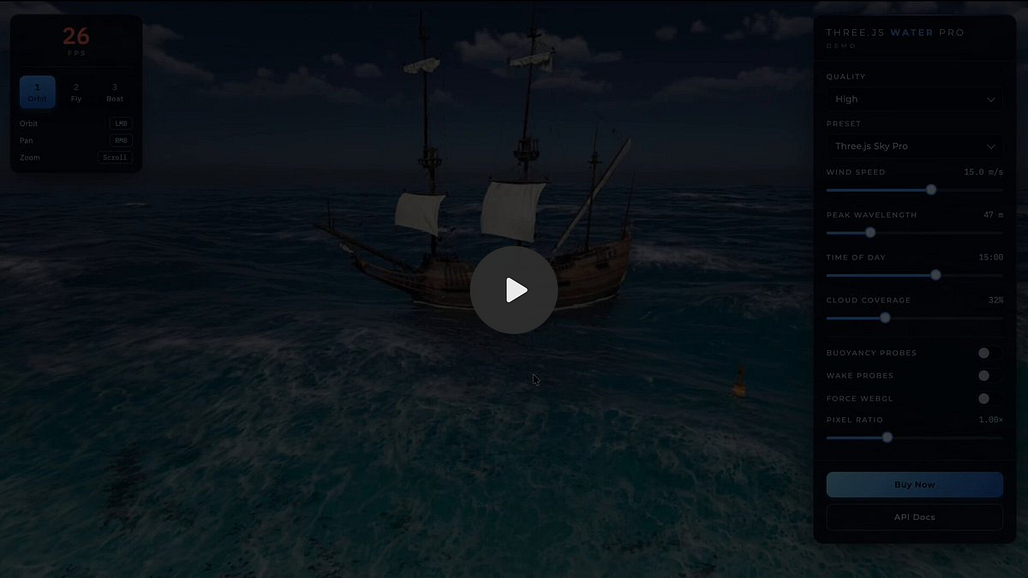
A Three.js Water Pro demonstration sent a detailed pirate ship across dynamic waves, complete with underwater views, an island and volumetric clouds. It ran at roughly 20 to 28 frames per second on an 8GB M1 MacBook Air under demanding settings.
That performance is imperfect, but the scene shows how far browser graphics have come without specialist desktop software. Lower presets run better, and memory was not the main constraint. For creators, the striking part is that this entire scene lives inside a web page.

Ray Dalio issues another stark US debt warning
Ray Dalio says the United States has passed the point of no return on debt, pointing to roughly $7 trillion in government spending against $5 trillion in revenue. His concern is that rising borrowing, weaker demand for Treasuries and higher interest costs could reinforce each other.
The phrase is dramatic, but the underlying arithmetic deserves attention. Dalio expects greater pressure on the Federal Reserve and Treasury to contain yields, while investors may continue favouring gold and other hard assets as protection against currency weakness.

Delayed gratification can become permanent postponement
Alex Hormozi captured an uncomfortable downside to discipline: once postponing pleasure becomes a habit, the promised reward can keep moving into the future until it never arrives. Saving, building and planning are useful, but they can also become excuses for avoiding the present.
The point is not to abandon long-term thinking. It is to decide what the sacrifice is for, and to recognise when the time has come to enjoy what the work was meant to provide.


