



Overview
AI agents moved further into everyday work, from coding and competitor research to inbox clean-ups and background meeting preparation. Yet the day’s biggest announcement concerned restraint, with OpenAI pausing some advanced training while its safeguards catch up. Elsewhere, Claude designed protein binders, Vercel released a tiny coding agent, and the debate over which AI products can survive platform competition grew louder.
The big picture
OpenAI pauses advanced training as capabilities outrun safeguards
Sam Altman said OpenAI has paused some frontier reinforcement learning runs while it reviews alignment, security and monitoring. Near-term releases will continue, but longer-range projects may be delayed.
The announcement is notable less for what it reveals than for what it leaves open. OpenAI has not shared the capabilities that prompted the pause, nor the tests required before training resumes. That gap will fuel both praise for caution and suspicion that the message is managing expectations around a major technical advance.

Claude’s protein designs produce promising results and sharp criticism
Anthropic says Claude independently designed new protein binders for 14 of 15 biological targets after receiving a detailed prompt from a human expert. Tests by Adaptyv Bio and Twist Bioscience found binding success rates of 22 to 35 per cent, above the field’s usual 10 to 15 per cent range.
The work remains an early research result rather than a drug discovery breakthrough. Martin Shkreli argued that the affinities were modest and the designs were limited to extracellular targets already served by monoclonal antibodies. Even so, Claude’s ability to organise the design process and produce candidates that survived laboratory testing is a meaningful step. Anthropic has published the report, prompts and data for scrutiny.


Claude Cowork reaches every paid plan while demand strains capacity
Claude Cowork is now available on mobile and web across all paid plans. It lets people assign multi-stage tasks that continue in the cloud, with access to connected files and apps, persistent sessions and notifications when work is ready.
Anthropic is also extending its 50 per cent increase to weekly Claude Code limits until 31 August. The company hopes to keep the higher allowance, though it warned that strong demand could leave capacity tight. Together, the updates show Claude moving from a chat window towards a service that remains active while people are away from their desks.


Vercel’s tiny coding agent joins a new wave of terminal-first AI
Vercel Labs has open-sourced fx, a coding-agent harness and command-line tool written in Zig. It starts in around 10 microseconds, ships as a 6.3 MiB binary, uses little memory and stores sessions locally without telemetry. It is provider-agnostic and can return structured JSON, connect to editors or run in a browser through WebAssembly.
The release sits within a wider push to make agents feel native to the developer environment. Omarchy 4.1 now offers a Quake-style drop-down console for its default agent, while Grok’s cheerful running commentary has won fans in statistical work. The command line is becoming a place where personality and interface design matter alongside model quality.


Personal agents find a useful job in neglected life admin
Todd Saunders shared a practical list of tasks he has handed to an AI bot: clearing archived marketing emails, finding unwanted subscriptions, reviewing recurring meetings, checking return deadlines and locating unused credits. He is also asking it to find forgotten promises, overdue appointments and bills that may be open to negotiation.
None of these jobs is glamorous, which is precisely the appeal. The clearest case for a personal agent may be handling small obligations that sit across email, calendars, purchases and files until they become digital clutter.

The autonomous company analyst becomes a credible first agent
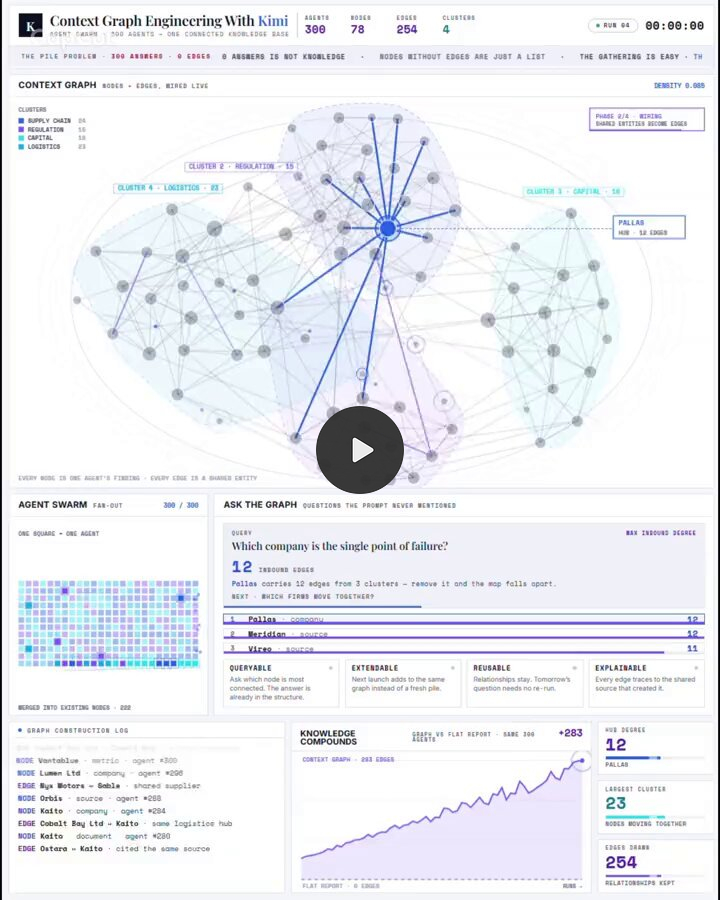
J.B. argues that companies should begin with an autonomous analyst that watches competitors, tracks product launches and pricing, and briefs the team each morning. The example uses Kimi K3, Moonshot AI’s open model with a million-token context window and support for visual input.
This is a sensible starting point because the work is continuous, evidence-heavy and easy for humans to postpone. The hard part will be separating consequential changes from routine noise, then preserving enough history to explain why a competitor’s latest move deserves attention.

Lenny’s Jobs takes aim at ghost listings and generic job boards
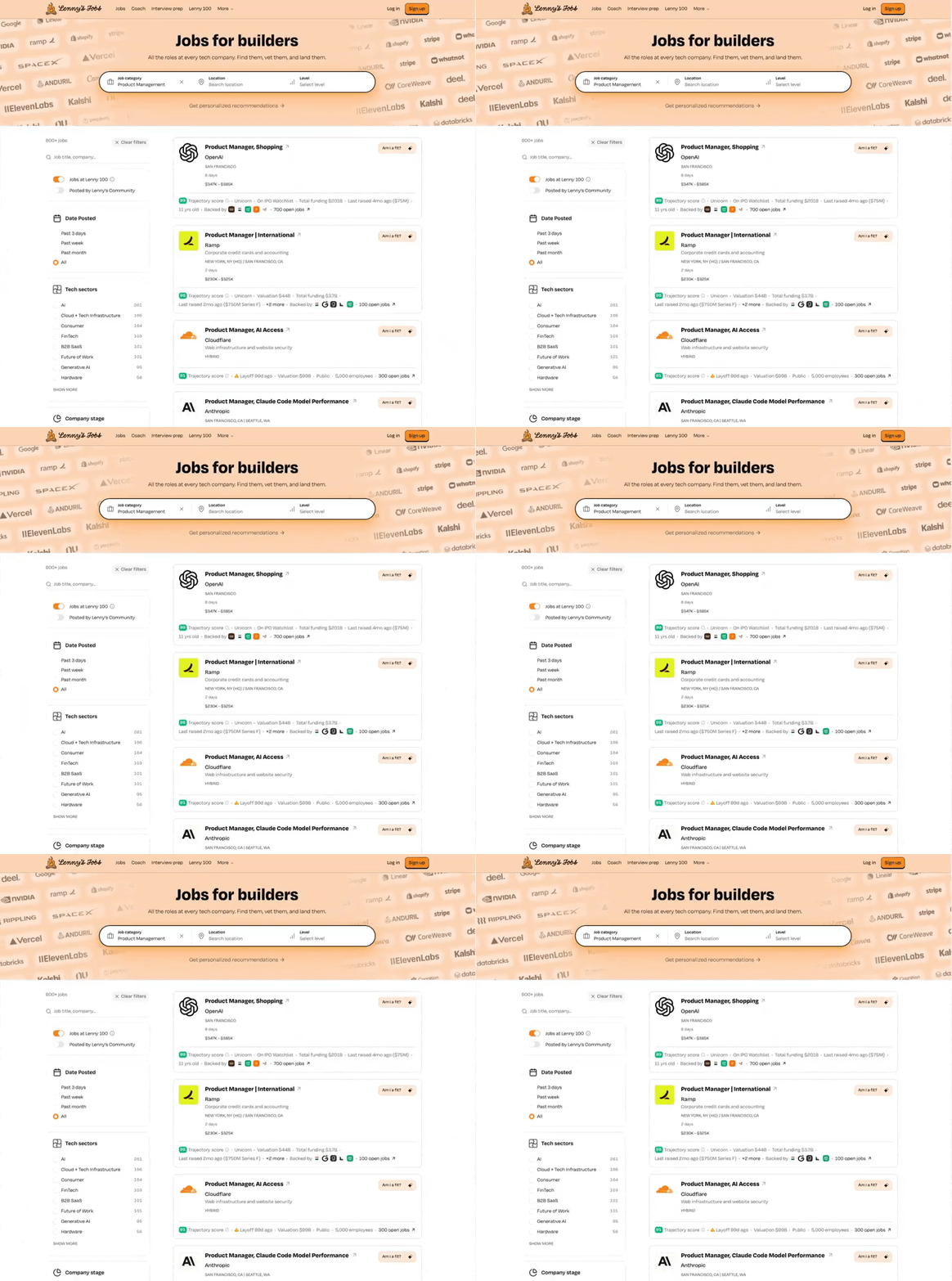
Lenny Rachitsky has launched Lenny’s Jobs for product, engineering, design, growth and marketing roles at selected technology companies. It includes community-sourced vacancies, company data on funding, redundancies and pay, plus tools for assessing fit, preparing for interviews and adapting a CV.
The proposition rests on trust rather than sheer listing volume. Its curated Lenny 100 collection and focus on roles that may not appear elsewhere are intended to help candidates avoid stale adverts and ghost jobs. Browsing is free, while paid newsletter subscribers receive added features such as personalised alerts.

Wispr Flow faces the classic feature-or-company argument
Andrew Wilkinson predicts that Wispr Flow, which turns speech into polished text across apps, will struggle as operating systems improve their own AI dictation. It is a familiar platform risk: a useful standalone tool can lose its market when Apple, Google or Microsoft makes the core function part of the device.
The counterpoint is that built-in dictation still falls short on accuracy, formatting and vocabulary learning. Wispr Flow has room to build deeper habits and better workflows, but the window may be narrow. Its future depends on staying far enough ahead that native microphones remain a poor substitute.

Meta’s advertising machine funds AI but complicates its identity
Chamath Palihapitiya argued that Mark Zuckerberg rarely foregrounds Meta’s advertising business because ambitious engineers would rather join a space, search or AI company. The irony is that advertising gives Meta and Google an immediate way to make money from AI through better targeting and countless live experiments.
That creates a useful tension. Meta needs the cash and data produced by its advertising operation, but recruiting top researchers may require presenting the company as something grander than an ad platform. The old business pays for the new story, even when it is absent from the pitch.


Starlink’s constellation passes roughly 11,000 satellites
SpaceX launched another 24 Starlink satellites from California aboard Falcon 9. Independent tracking placed the constellation at around 10,979 active satellites before the mission, taking the estimated total in orbit to roughly 11,003 if the full batch deployed successfully.
The milestone underlines the scale of Starlink’s lead in low Earth orbit. Counts vary daily as spacecraft launch, manoeuvre and deorbit, but no competing constellation is close to matching its operational footprint.


