
Overview
AI agents took centre stage today, from autonomous research runs and automatic model selection to bots that can watch screens, remember conversations and work with other bots. Pricing came under fresh scrutiny, watermarking became easier to understand, and local hardware kept closing the gap with dedicated machines. Beyond the tools themselves, debate turned to creative work, medical research and what aspiring AI engineers are now expected to learn.
The big picture
Autonomous models make a serious attempt at AI research
Prime Intellect ran 153 autonomous research experiments across 18 frontier models, giving each access to eight H200 GPUs for as long as eight days. Their task was to improve nanoGPT training through optimizer experiments, starting from a shared baseline.
The strongest runs closed 82 per cent of the gap between that baseline and a record developed by human researchers over several months. Strategic experiment choices and custom research tools mattered more than simply running more trials. Prime Intellect has also published traces, scratchpads and infrastructure details, making this a useful look at how machine-led research behaves over long sessions.


Token prices are not as comparable as they look
Price charts usually treat a token as a standard unit. Tibo from OpenAI points out that it is not. Different tokenizers can split identical text into sharply different counts, so a cheaper price per million tokens may still produce a larger bill.
In the example shared, GPT-5.6 Sol used 766 tokens for text that Claude Opus 5 was estimated to encode as 1,170. DeepSeek’s new peak-hour pricing adds another complication, with V4 Flash output rising from $0.28 to $1.32 per million tokens. Cost per completed task is becoming a better measure than the headline token rate.


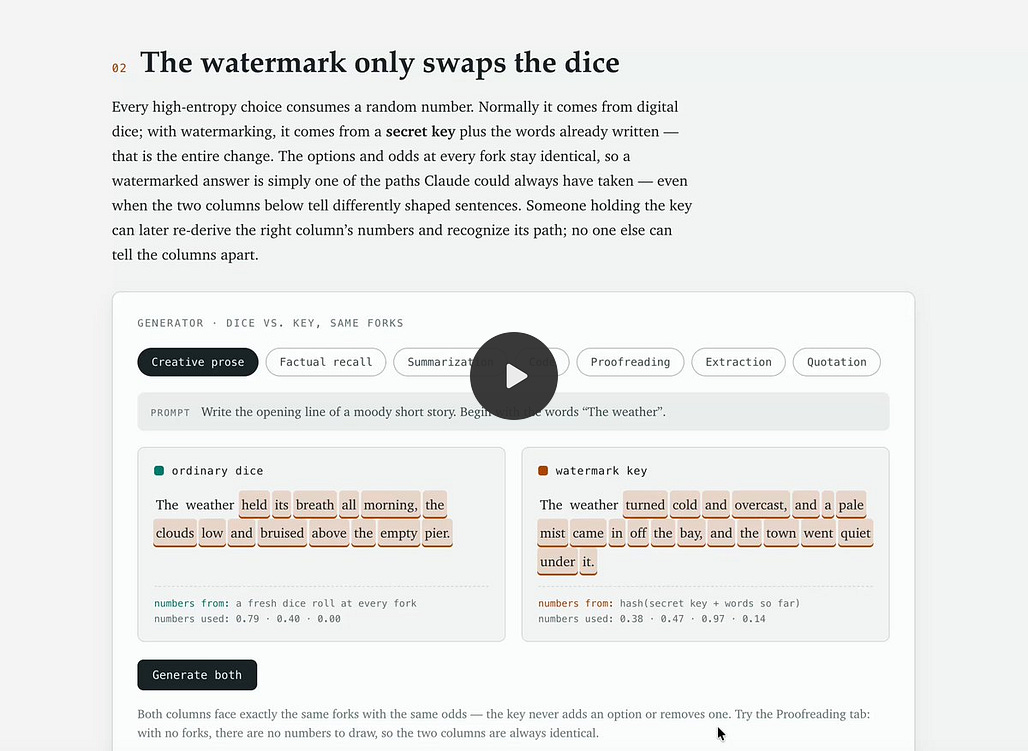
Claude’s watermark changes randomness, not the visible text
Thariq shared an interactive Claude-built explanation of Anthropic’s text watermarking system. Rather than adding phrases, characters or extra tokens, the method uses a secret key to guide token choices when several plausible options are available.
Readers should see ordinary prose, while someone holding the key can test whether those choices follow the hidden pattern. The approach is intended to meet EU AI Act requirements without reducing output quality, though its reliability across edited or shortened text remains an important practical question.


AI products are becoming teams rather than single chat windows
Several announcements pointed in the same direction. Nous Research is testing Hermes Desktop bots with separate memories and skills, plus the ability to message each other. OpenAI is working towards automatic routing, letting sub-agents choose specialist models for coding, security or routine tasks.
Meanwhile, Matt Van Horn’s praise for Grok Bot drew broad attention. He argued that its proactive behaviour and desktop and mobile experience had made his OpenClaw and Hermes setups unnecessary. The emerging contest is no longer just about model quality. It is about which product can organise models, tools and memory into a dependable working system.

Sam Altman sketches an assistant that watches your working day
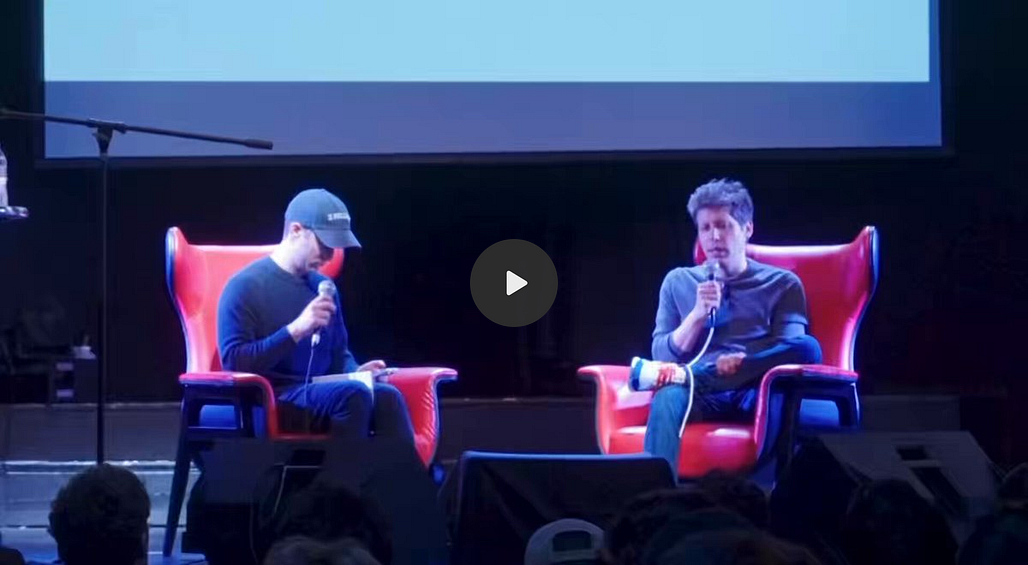
Sam Altman expects a descendant of ChatGPT within six months that can continuously observe a screen, follow meetings and calls, and retain broad context across work and personal life. With permission to access email, documents and Slack, it could catch mistakes, suggest ideas and act without waiting for a fresh prompt.
That could make assistants far more useful, but it also raises immediate questions about consent, workplace surveillance and the storage of sensitive information. The quality of privacy controls may matter as much as the next model upgrade.

Indie games expose the cultural limits of generative AI
Ethan Mollick highlighted an awkward divide in games. Small studios, which often have the least money and staff, can face harsher criticism for using AI than major publishers. Disclosing generative AI use has also been associated with lower sales and fewer reviews, giving developers a reason to avoid it or keep quiet.
Guillermo Rauch approached the creative question from another angle, offering support to founders trying to build a new family entertainment brand around strong stories and values. Both posts reach a similar conclusion: cheaper production does not guarantee public acceptance or lasting cultural work. Audiences still care about who made something, how it was made and what it says.

A high-memory MacBook makes a credible local AI machine
A MacBook Pro with an M5 Max and 128GB of unified memory can deliver local language-model performance close to an NVIDIA Spark in some inference tests. Apple’s high memory bandwidth helps with token generation, while the shared memory pool can hold large quantised models without sending parts elsewhere.
The comparison is workload-dependent. NVIDIA retains the stronger CUDA software ecosystem and can lead on raw speed, but the MacBook offers portability, low power use and offline access in a familiar computer. For developers who want large local models without a separate box, that trade-off is increasingly credible.

Developers turn their attention to removing AI-written code bloat
Dillon Mulroy’s anti-slop project gives coding agents rules for spotting verbose, unnecessary or poor-quality patterns. Paired with another coding skill on GPT-5.6, it produced a pull request that added 503 lines while removing 13,682 from older projects.
A large deletion count is not proof of better software, but the example reflects a growing concern. Coding agents can produce working code quickly while leaving behind duplication and needless abstraction. Tools that review, simplify and delete may become as important as tools that generate.


Dario Amodei puts disease research on an ambitious timetable
Anthropic chief executive Dario Amodei predicted that AI could help cure most human diseases within five to ten years. His case rests on AI accelerating biological research enough to compress decades of laboratory progress into a much shorter period.
It is an extraordinary forecast, not a clinical result. Drug discovery still faces experiments, safety checks, trials, regulation and manufacturing. Amodei’s personal interest is clear, however. His father died from Hepatitis C shortly before curative antiviral treatments became available, and Anthropic is expanding its work in biology and medicine.

The AI engineer’s curriculum keeps expanding
Andrew Ng’s recent skills map, based on more than 10,000 job listings and expert interviews, describes a broad role covering software fundamentals, application deployment, coding agents and product judgement. A widely shared meme captured the understandable reaction from students faced with that list.
A separate two-hour session from Ng offers a practical route into agentic knowledge graphs, moving from a basic agent through loops, graph structures and self-improving systems. It reflects how quickly the field is moving beyond simple prompt chains towards systems with memory, orchestration and repeated actions.