



Overview
AI agents took centre stage today, moving beyond chat into inboxes, developer tools, browsers and even home network settings. Grok Bot opened its public beta, OpenAI brought ChatGPT to Linux, and Gemini passed a billion monthly users. Elsewhere, Anthropic explained its text watermarking plans, researchers debated runaway AI improvement, and eclipse watchers prepared their cameras for today’s spectacle.
The big picture
Grok Bot turns agents loose on everyday work
Grok Bot entered public beta after spreading quickly inside xAI. It signs into existing tools and completes multi-step jobs, from handling support emails and updating CRMs to cancelling subscriptions and preparing podcast research.
Early testers sound unusually enthusiastic. Lenny Rachitsky says he now uses custom agents daily, while Eric Zakariasson collected 100 examples across sales, recruitment, engineering and personal admin. The appeal is not a clever conversation, but returning to find the job finished.


Gemini crosses a billion monthly users
Google says Gemini now has more than one billion monthly users, making it the fastest-growing product in the company’s history and its 14th service to reach that scale. The milestone also puts Gemini close to ChatGPT in reported monthly reach.
Voice is becoming central to how people use the app. Google says 63 per cent of Gemini users speak to it directly, with busy parents especially keen on voice, and more than 60 regional dialects due to arrive soon.


ChatGPT lands on Linux as Codex opens the door to imports
OpenAI has released a preview of its ChatGPT desktop app for Linux, with support for recent Ubuntu, Debian and Fedora releases across x64 and ARM64 machines. ChatGPT Work and Codex can operate alongside local projects and browser workflows, including writing, compiling and checking code.
The desktop app can also import projects, chats, skills and plugins from other AI agents. Optional automatic updates keep imported material in sync, suggesting that portability between competing agent systems is becoming a product requirement rather than a courtesy.

Claude adds invisible marks to generated text
Anthropic is embedding machine-readable watermarks in Claude-generated writing as part of its work under the EU AI Act. The marks are built into the text and may survive copying, pasting and some editing. A detection API is also planned.
Anthropic engineer Thariq is clear about the limits. Short passages, extensive edits and text created by older models may not carry detectable marks, while a positive result should not be treated as conclusive proof of origin. It is a useful clue, not a final verdict.


When a Markdown file starts behaving like a product
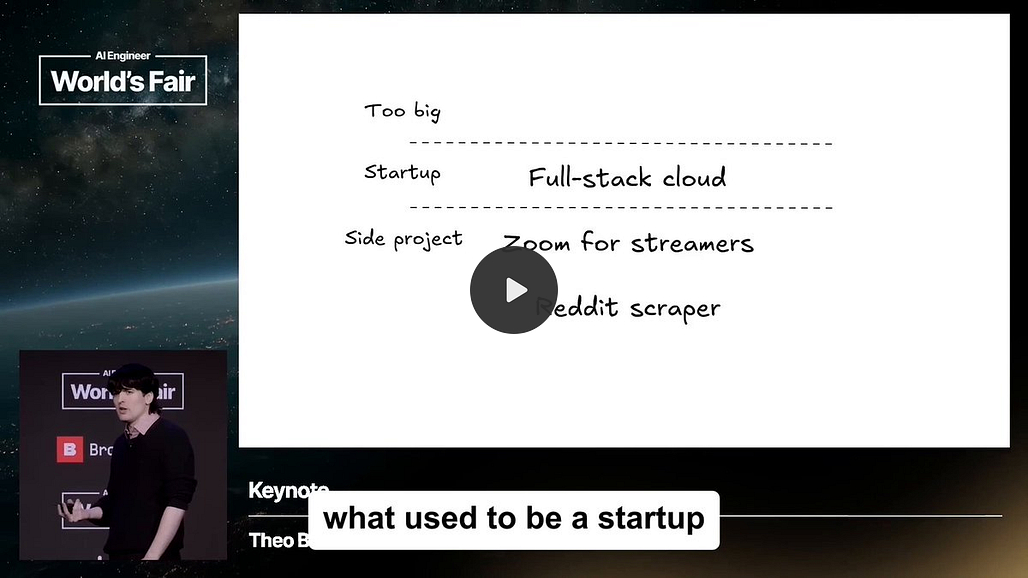
A set of written instructions can now do more than describe software. Give an agent access to tools and a schedule, and a Markdown file can become a small working service that reads information, makes decisions and takes action.
Rohan Paul shared a keynote clip arguing that several products at the AI Engineer World’s Fair could be reduced to this format. That may be an exaggeration, but it captures an important change: building useful software increasingly depends on clear instructions and tool access, not just conventional application code.

The argument over recursive AI improvement gets serious
Dwarkesh Patel and Redwood Research chief scientist Ryan Greenblatt debated whether human-level AI could rapidly improve its own research abilities, leading to huge numbers of systems far beyond human intelligence.
Patel remains cautious about compute limits and shortages of expert training data, but found Greenblatt’s case plausible enough to warrant concern. Their discussion reaches beyond timelines into harder questions about reward hacking, collusion, control and who advanced systems would ultimately serve.

Polished commit messages can still be useless
Martin Casado has noticed a recurring pattern in pull requests: AI-written commit messages often sound professional while leaving the reader confused. Human authors tend to state the actual change and its purpose more plainly.
It is a familiar weakness in technical writing. Fluency can disguise missing context, vague intent or the wrong level of detail. For engineering teams, a rough but specific explanation remains more useful than a smooth paragraph that says little.

Claude becomes the apartment network administrator
DHH gave Claude a local administrator account for his upgraded UniFi network, then asked it to configure radio channels, mesh settings and device roaming across three Wi-Fi 7 access points.
Home networking has long involved dense control panels, trial and error, and knowledge most residents never wanted to acquire. Letting an agent inspect the setup and make targeted changes is a convincing example of AI becoming useful outside documents and chat windows.

Today’s total eclipse rewards preparation
The total solar eclipse crosses Greenland, Iceland and northern Spain today, with partial views across parts of Europe, Canada and the northern United States. NASA’s advice for photographers starts with safety: certified solar filters must remain in place except during totality.
Its experts also recommend manual focus, practising before the event and looking beyond the Sun itself. Landscapes, changing light and unusual shadows may produce better photographs than a tightly cropped disc in an empty sky.


Why difficult tasks can make later effort feel easier
Nicholas Fabiano connected the habit of taking on hard tasks with research into the anterior mid-cingulate cortex, a brain region involved in persistence, effort and goal-directed behaviour.
The broader point is sensible, though the science deserves more care than a motivational slogan allows. Repeatedly choosing meaningful challenges can improve skill, confidence and tolerance for discomfort. What begins as strain may become ordinary through practice.


