



Overview
Today’s feed swung between builders showing what AI can do when it is put to work on real projects, and the messier side of the moment, with security fears, benchmark drama, and big questions about who gets to use which tools. There was also a stray but loud thread of cultural mood, from housing to politics to a bit of existential fatigue.
The big picture
AI is getting baked into daily engineering habits, not as a novelty but as a new layer in the workflow: ports, agents, automations, reporting, and security testing. At the same time, organisations are tightening controls, and the community is arguing about what counts as progress when leaderboards can be gamed and toolchains can sprawl.
A classic RTS, rebuilt for iPhone without emulation
Ammaar Reshi showed a native ARM64 port of the 2003 Command & Conquer: Generals Zero Hour engine running on iPhone and iPad, with proper touch controls for an RTS. The most interesting part is the claim that this is the original engine compiled for mobile, not an emulator, plus the decision to open source the whole thing.
It is a neat glimpse of AI-assisted “software archaeology”, where old code gets a second life on modern hardware, and the work is documented enough for others to pick up.


Stop reading diffs first, ask for an architecture report
Delba’s prompt is a tidy idea: before you review AI-generated code, ask the model to explain what it changed at the system level, with before-and-after modules, dependencies, seams, and key function signatures, ideally diagrammed. It is a push towards reviewing intent and boundaries first, then diving into code only when needed.
If this becomes normal practice, code review starts to look more like design review, with the model doing the admin work of summarising what moved where.


PlanetScale’s agents do the boring maintenance, humans approve
Fatih Arslan shared a handful of AI automations PlanetScale runs in-house: an end-to-end test “sweeper” that hunts flaky tests and tries to find root causes, plus a doc refresher that runs every six hours and opens PRs for humans to review and merge.
The pattern is consistent: let agents generate candidate fixes and explanations, keep a human gate on anything that could break production, and accept that prompts need ongoing tuning because behaviour can vary run to run.

Tooling debate: standard MCPs versus “just call the API”
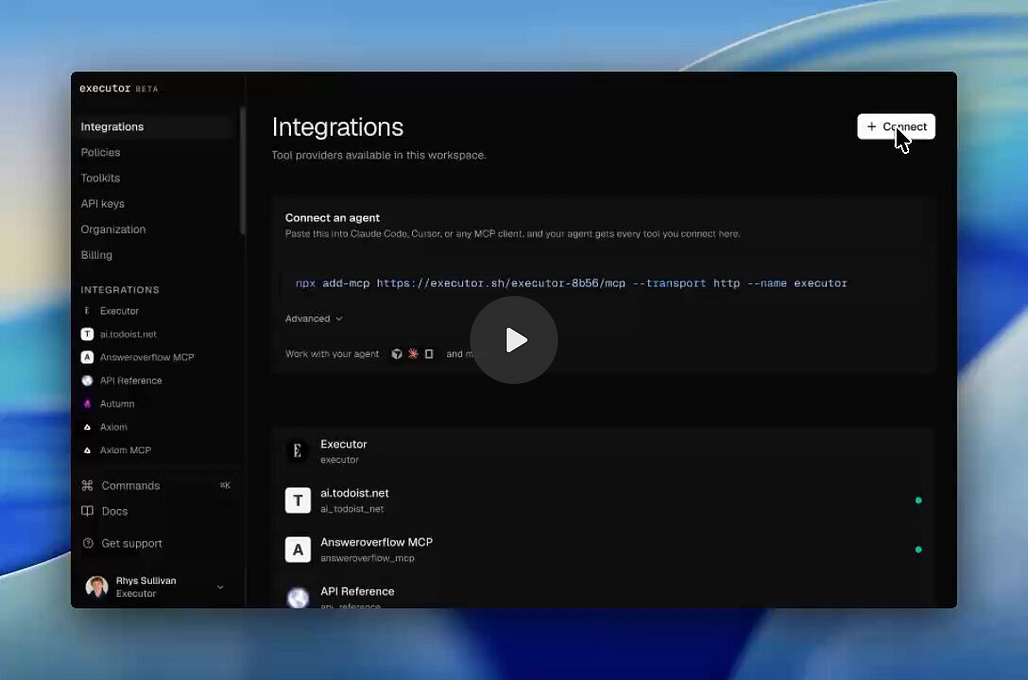
Rhys posted a quick demo connecting an agent to Google Search Console through direct API access, poking fun at the idea you need a dedicated MCP for everything. The pitch is simplicity: OAuth, connect, query live metrics, done.
The trade-off is governance and discoverability. Raw API calls are straightforward for individuals, but standardised tool layers can matter when teams need consistent permissions, audit trails, and a shared catalogue.


An autonomous red-team “hackbot” lands, with big promises and sharp edges
Pliny the Liberator announced T3MP3ST, an open-source platform that turns coding agents into an offensive security setup, complete with a “War Room” interface and multi-agent flows mapped to common attack phases. It is positioned for recon, web testing, code audits, and CVE hunting, with benchmarks and artefacts claimed to back it up.
This is the sort of release that will excite defenders and worry everyone else. The author includes warnings about authorisation and scope, but the point stands: capability is getting packaged and distributed faster than norms can keep up.


Alibaba reportedly bans Claude Code, points staff to an internal tool
TechCrunch reported that Alibaba is banning employees from using Claude Code from 10 July, describing it as high-risk software and directing staff towards an internal alternative. The stated fears centre on security, data, and control.
Whether or not the specific claims hold up, the broader trend is clear: large firms are drawing harder lines around external AI tools, and “which model can touch the codebase” is becoming a board-level question.


OpenAI’s “SuperApp” idea: Codex plus ChatGPT in one place
Mark Kretschmann argues OpenAI is consolidating around a single desktop app based on Codex, folding ChatGPT features into it as migration continues. It is a familiar product logic: fewer surfaces, less duplication, and a single home for general chat plus coding and agent work.
The tension will be whether a unified app can serve both engineers and non-coders without making either group feel like they are living in someone else’s interface.


Benchmarks under fire again, this time GLM-5.2 post-training
Lisan al Gaib questioned GLM-5.2’s sudden leap to the top of a post-training benchmark, arguing it looks like leaderboard hillclimbing rather than progress that would matter in real deployment. The core complaint is familiar: when tests are known and optimisable, scores can become a game.
As more “agentic R&D” benchmarks appear, the community is still arguing about what good measurement looks like, and whether we need more hidden tests, more realistic tasks, or both.


The dependency mess is older than AI, but it is still the same headache
Theo weighed in on the “AI code slop” conversation, saying the problem predates modern models and has existed since npm normalised sprawling dependency graphs. The subtext is that quality decay often comes from not owning the whole system, whether that is transitive packages or machine-written glue code.
The practical takeaway is boring but true: you cannot outsource understanding of your own codebase, no matter how good the tools get.


A viral sigh about debt, capitalism, and war
@omgsidewalks posted a simple lament about being “gifted a planet” and then inventing debt, capitalism, and war, and it struck a nerve in a big way. The replies split as expected, with some calling it naïve and others treating it as a fair expression of burnout with modern systems.
It is a reminder that tech timelines do not exist in a vacuum. People are building faster than ever, but plenty are also tired, angry, or sceptical about what all this progress is for.


