
Overview
Today felt like a tug-of-war between bold automation and the messy realities around it. On one side, new tools promise faster coding, cleaner document parsing, and fresh ways to package media. On the other, there were reminders that org charts, public finances, and basic oversight still set the pace, whether that’s rehiring after layoffs or chasing fraud. Meanwhile, the future-gazing got literal, with talk of datacentres in orbit and robots learning from humans in the gig economy.
The big picture
Two themes kept popping up: AI moving from “assistant” to “operator”, and the growing infrastructure around it, from marketplaces and attribution trails to satellites and, somehow, space cooling. The excitement is real, but so are the second-order effects, like who gets credit for code, who gets cut and rehired, and what happens when software starts directing human labour at scale.
LiteParse makes document wrangling less painful
Jerry Liu introduced LiteParse, an open-source, model-free document parser aimed at agent workflows. The pitch is simple: keep it fast, accurate, readable, and usable on ordinary hardware, without the usual PDF parsing headaches.
If it holds up in the wild, this is the sort of unglamorous tooling that quietly upgrades whole stacks, because better parsing means better retrieval, better summaries, and fewer weird downstream errors that waste days.


Tesla’s case for end-to-end thinking in cars and humanoids
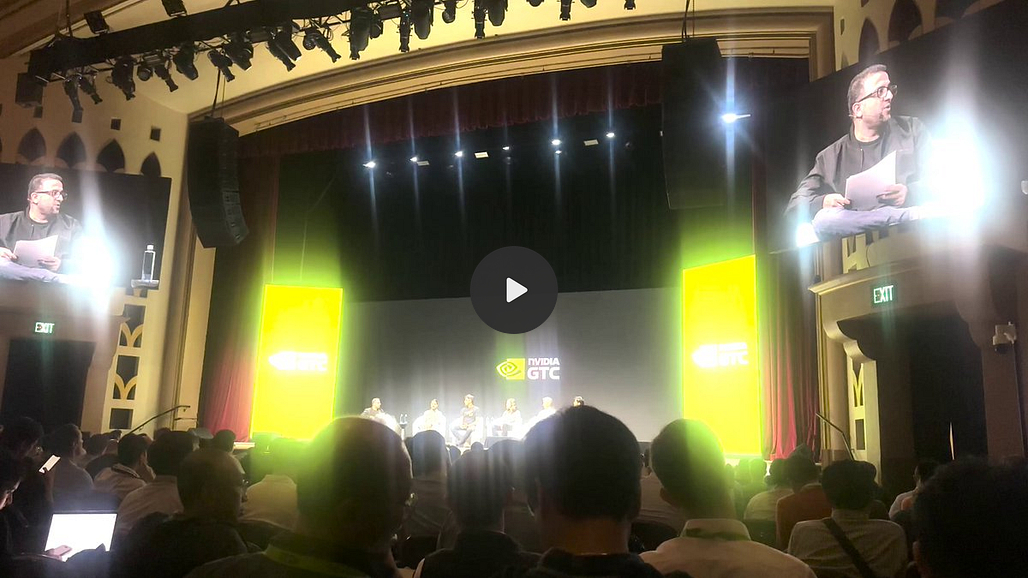
A clip shared by The Humanoid Hub captures Ashok Elluswamy arguing that “hierarchical decision making” still needs to live inside a single decision process. It is a neat framing of the end-to-end bet: planning and control are not separate handoffs, they are parts of the same loop.
The interesting subtext is data. Self-driving has taught Tesla what breaks in the long tail, and the suggestion is that Optimus can inherit those lessons, even if the robot’s body adds more sensors, more joints, and more ways to go wrong.

Google’s always-on coding agent sparks excitement and side-eye
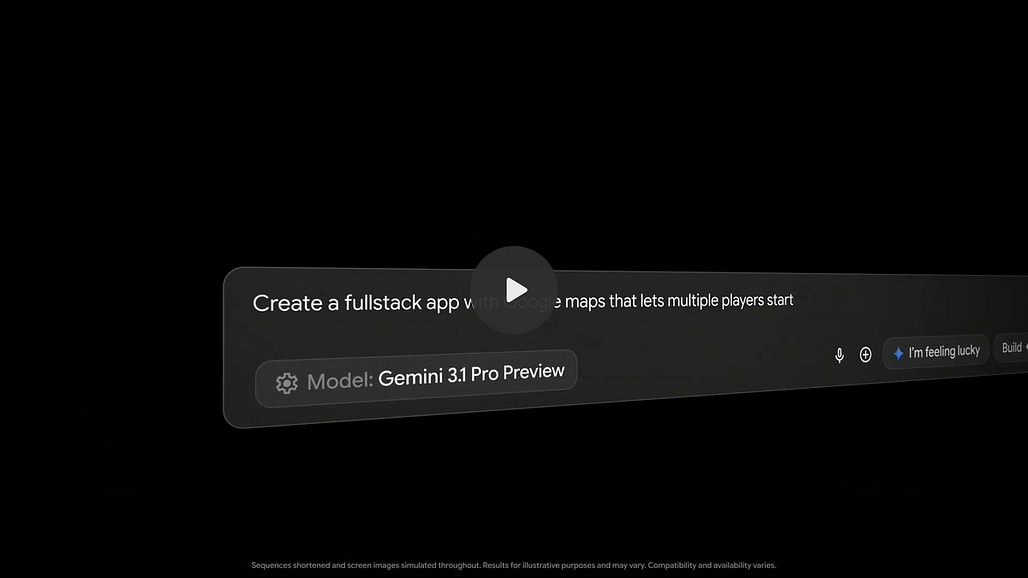
el.cine posted a clip of Google’s AI Studio updates, showing an agent that can keep working while you are away, including wiring up Firebase and building a full-stack demo. The promise is less “autocomplete” and more “wake up to a working prototype”.
It also raises a practical question: as agents take bigger swings, the job becomes choosing the right tasks, reviewing outputs, and keeping a tight grip on product decisions and security. The coding is only half the story.


Cursor stakes a claim with a cheaper, coding-first model
amrit’s all-caps post captured the mood: Cursor says its Composer 2 model beats Claude Opus on a coding benchmark while costing far less. Whether the benchmark maps neatly to day-to-day work, the direction is clear, specialist models are getting good enough to challenge the general heavyweights.
For teams watching spend, this is the start of a more familiar software pattern: price pressure, feature races, and “good enough” models winning by being easier to justify in a budget review.


Who gets credit for AI-written code, and why it matters
Yuchen Jin noticed that Claude Code adds itself as a co-author on git commits, while Codex does not. That tiny default setting changes how visible a tool becomes in public repos, and it also nudges the norms around provenance.
Some developers like the transparency, others see it as noise. Either way, it is a reminder that “attribution” is not a philosophical debate, it is a product choice that shapes behaviour.

ElevenLabs turns music generation into a marketplace
ElevenLabs launched a Music Marketplace inside ElevenCreative, letting creators publish AI-made tracks and earn from usage. The bigger move is packaging generation, licensing, and distribution into a single place, so it is not just “make a song”, it is “make a song you can actually use”.
This kind of marketplace structure tends to snowball if the terms are clear and the catalogue grows. It also puts more pressure on what counts as acceptable licensing and what creators expect to be paid.


NotebookLM goes cinematic for Pro users
NotebookLM announced that Cinematic Video Overviews are now live for all English-language Pro users. The tone was jokey, but the feature is serious, turning your source material into narrated, edited-style video summaries.
It points to a future where “summarise this” is not a paragraph or a slide deck, it is a piece of media you might actually share. The bar for how polished AI outputs should look keeps rising.

DoorDash as the weird middle step towards robots
Matt Shumer flagged a quietly unsettling idea: agents “hiring” humans through DoorDash-style tasks to do things in the physical world. It reads like gig work, but directed by software, and it also generates rich training data about how tasks get done in messy environments.
The clever part is that it scales before robots do. The uncomfortable part is the implied timeline: humans first, then automation once the data and confidence pile up.


Layoffs, quotas, and the predictable rehiring scramble
Gergely Orosz described something many people in tech have seen: layoffs decided high up, quotas to hit, and not enough context to know who is truly essential. The result is “oops” rehiring when critical services wobble and knowledge walks out the door.
It is a blunt reminder that organisational decisions are often more mechanical than strategic, and the clean narrative of “cost-cutting” rarely survives contact with production systems.


From Starlink launches to datacentres in orbit
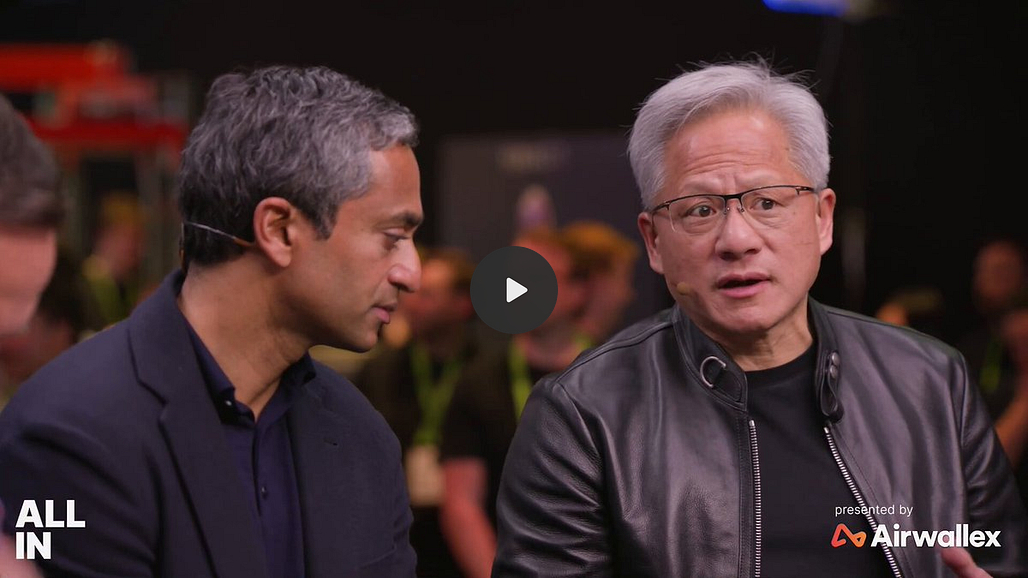
SpaceX confirmed deployment of 29 Starlink satellites, another routine step in a constellation that has become global infrastructure. On the same day, Jensen Huang was quoted talking about orbital datacentres and the brutal physics of cooling in space, where radiation is your main option.
Put together, it is a picture of compute and connectivity creeping off-planet. It sounds distant, but the incentives are familiar: power, heat, cost, and the hunger for more capacity.