



Overview
Today’s posts bounce between big ambition and real-world friction: AI is pushing into maths, maps, video, and software teams, while people argue about what skills will still matter, how companies should wire agents into their systems, and what happens when tools go viral before they are safe.
The big picture
The throughline is acceleration with consequences. The tech is getting more capable in public, but the hard parts are showing up too: security, energy costs, governance inside firms, and the uncomfortable question of who still has an edge when machines can write, see, and generate at scale.
Rivian bets the next decade decides everything
MatthewBerman shares a wide-ranging RJ Scaringe interview that is equal parts product roadmap and worldview. The headline is Rivian’s R2 and a clearer push towards scale, but the subtext is that autonomy, robotics, and EV manufacturing are converging faster than most people are ready for.
Scaringe’s line about the next ten years being the most important in human history lands because it is not framed as hype. It is framed as a race between capability and maturity, whether that is safety, education, or how quickly society adapts.


AI nudges maths forward on Ramsey numbers
demishassabis flags AlphaEvolve pushing bounds on five classical Ramsey numbers, including cases that have not moved in over a decade. That is not a flashy consumer demo, it is the slow, stubborn kind of progress that mathematicians actually notice.
The interesting part is not just the result, but the method: the system is inventing search procedures rather than being handed a fixed recipe. It hints at a future where machines are not only solving problems, but also proposing the tools to solve the next ones.


Inside companies, MCP keeps agents from becoming a mess
GergelyOrosz pushes back on the idea that MCP is “dead”, pointing to Uber running an internal MCP Gateway. In plain terms, it is an argument that standard connectors matter once you have enough services, auth rules, logs, and teams that “just call the API” stops being a plan.
The thread reads like a reminder that enterprise engineering is mostly coordination. If agents are going to touch production systems, companies will want guardrails, observability, and predictable interfaces, not a pile of bespoke glue.


Alex Karp on careers: vocational skills or “neurodivergent” thinking
TBPN posts a clip of Palantir’s Alex Karp arguing that people worrying about their future have two routes: hands-on vocational training, or a kind of non-standard cognition he labels broadly as neurodivergence. It is a provocative framing, and it is also a window into how some leaders are mapping the labour market under AI.
Even if you dislike the binary, the point behind it is clear: routine cognitive work is under pressure, and the advantage moves towards practical skill, judgement, and original problem solving.


Ten years after AlphaGo, the games-to-science pipeline keeps paying off
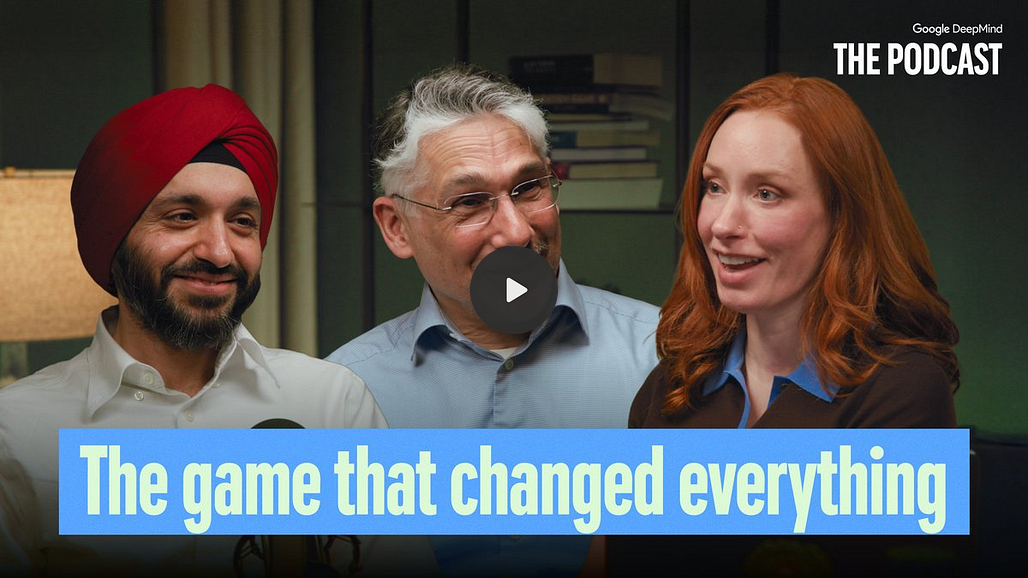
GoogleDeepMind marks a decade since AlphaGo with a podcast chat about how game-playing research became a training ground for systems that now show up in scientific discovery work. It is also a useful correction to the idea that “games were a party trick”.
The lasting lesson is that constrained worlds still teach general lessons: planning, exploration, and learning from feedback. The question now is which “game-like” environments will drive the next jump.

Google AI Studio heads for Android, fast
OfficialLoganK is recruiting to bring GoogleAIStudio to Android before Google I/O, with an aggressive countdown attached. The takeaway is simple: prototyping is moving from desktop to pocket, and teams want developers testing ideas in the context where they will actually be used.
Mobile is also where latency, offline assumptions, and privacy constraints get real. If Google prioritises this now, it suggests they see “build on-device experiences” as a near-term battleground, not a future nice-to-have.

AI code review as a security backstop
garrytan shares a message from a CTO friend praising “gstack” after it spotted a subtle XSS issue during an engineering review. Whether or not the “90% of repos” prediction holds, the pattern is familiar: people adopt tools when they catch problems humans miss under time pressure.
The more interesting angle is cultural. If structured AI reviews become standard, teams may start treating them like tests: not proof of correctness, but a baseline you feel irresponsible shipping without.


Chollet’s complaint: today’s AI still needs humans to pick the patterns
fchollet lays out a blunt bottleneck: modern systems still look like pattern memorisation and retrieval, and someone has to decide what they should memorise via data and environments. Until that loop becomes more open-ended, “autonomy” has a ceiling.
It is a useful counterweight to the product launch noise. Even with astonishing demos, the core training setup is still human-scaffolded, and the hard question is who, or what, chooses the next lesson.

Maps becomes a chat surface with “Ask Maps”
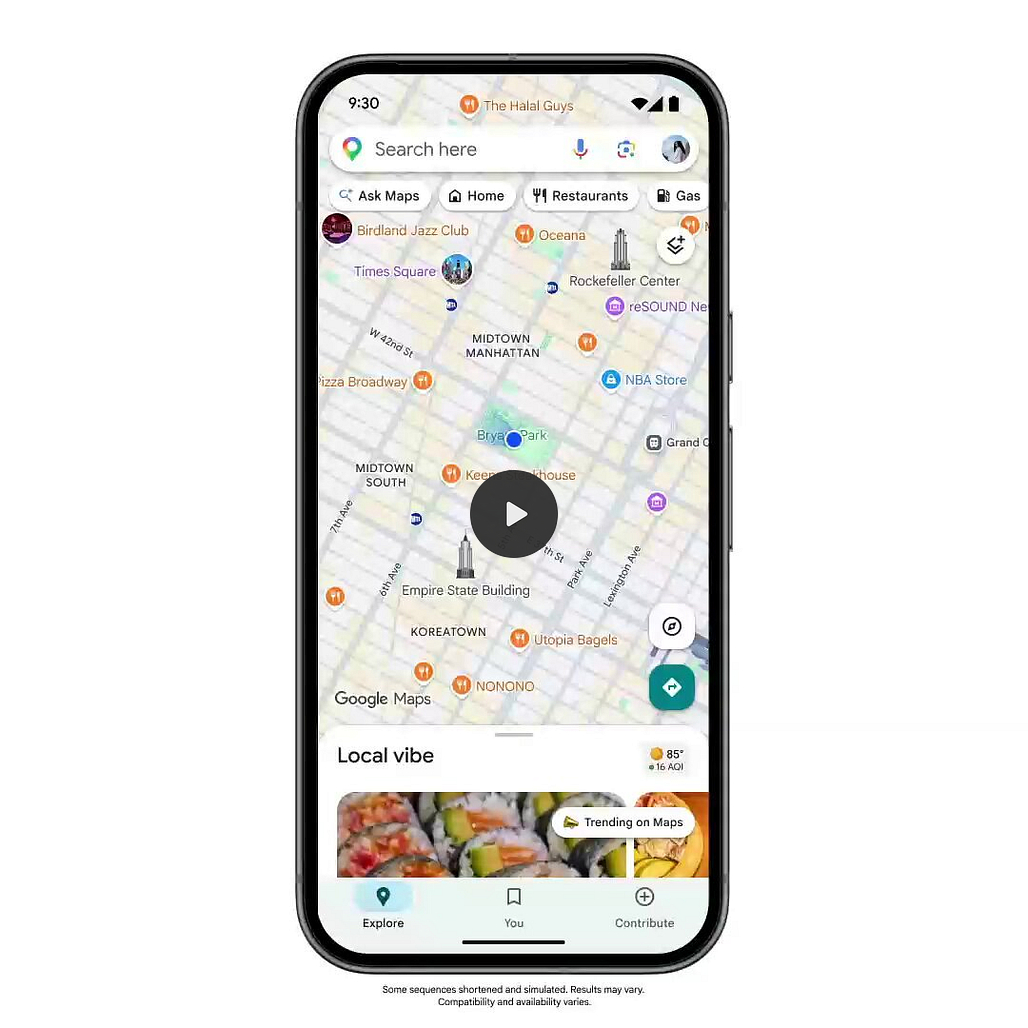
minchoi highlights a Gemini-based “Ask Maps” update, pitched as the biggest change in years. The practical value is not that Maps can talk, it is that it can summarise local, community-sourced detail into a plan you can act on: what to do, when to go, what to avoid.
This is where AI fits best: taking messy text, photos, and tips and turning them into a decision. If it stays grounded in real contributions rather than generic advice, it could become a daily habit.


Video generation gets more production-friendly, and culture reacts
OpenAIDevs rolls out Video API updates using Sora 2, with longer clips, aspect ratios, continuations, batch jobs, and more control over characters and objects. That is less “look what I made” and more “I can run this in a workflow”, which is the point where creative tools start changing jobs.
In the same feed, pmarca’s wide-reach post captures the cultural side: people are not only debating quality, they are debating taste, mood, and what AI-made media does to our sense of meaning.


