



Overview
Today’s feed had a running theme of “who’s watching, and who’s in control”. People compared notes on corporate data hoards, consumer gadgets behaving like surveillance kit, and the awkward reality of automation that still needs humans in the loop. In the background, geopolitics and domestic policy debates kept the temperature up, while culture did its usual thing and found a new status marker to argue about.
The big picture
There’s a growing sense that modern life comes with hidden defaults: tracking that’s hard to fully switch off, products that collect more than you think, and systems that promise autonomy while quietly relying on human backup. Whether it’s privacy settings, robot services, or labour market forecasts, the argument is less about what’s possible and more about what we’re prepared to accept.
Google’s personal archive, hiding in plain sight
Hasan Toor points people to Google’s activity pages and the uncomfortable moment when you realise how far back the records go: searches, locations, YouTube history, even voice clips. The post reads like a practical nudge, but it lands as a reminder that “your account” can double as a long-term diary you did not mean to keep.
It also taps into the wider trust gap: opt-outs that don’t fully opt out, settings spread across multiple pages, and a sense that the burden is on the individual to tidy up what was collected by default.

Your smart TV might be the nosiest device in the room
Palmer Luckey raises the alarm on smart TVs and monitors that capture what’s on screen via automatic content recognition, and how that can turn into a national security headache. The point is simple: people treat a TV like a dumb display, not something that might be sampling pixels and reporting home.
Even if you do not buy the full doom scenario, it’s hard to ignore the basic issue of consent and expectations. If a screen is used in an office, a lab, or anywhere sensitive, the “consumer gadget” label starts looking like a risk.


Tesla Robotaxi expands in Texas, and the hype follows
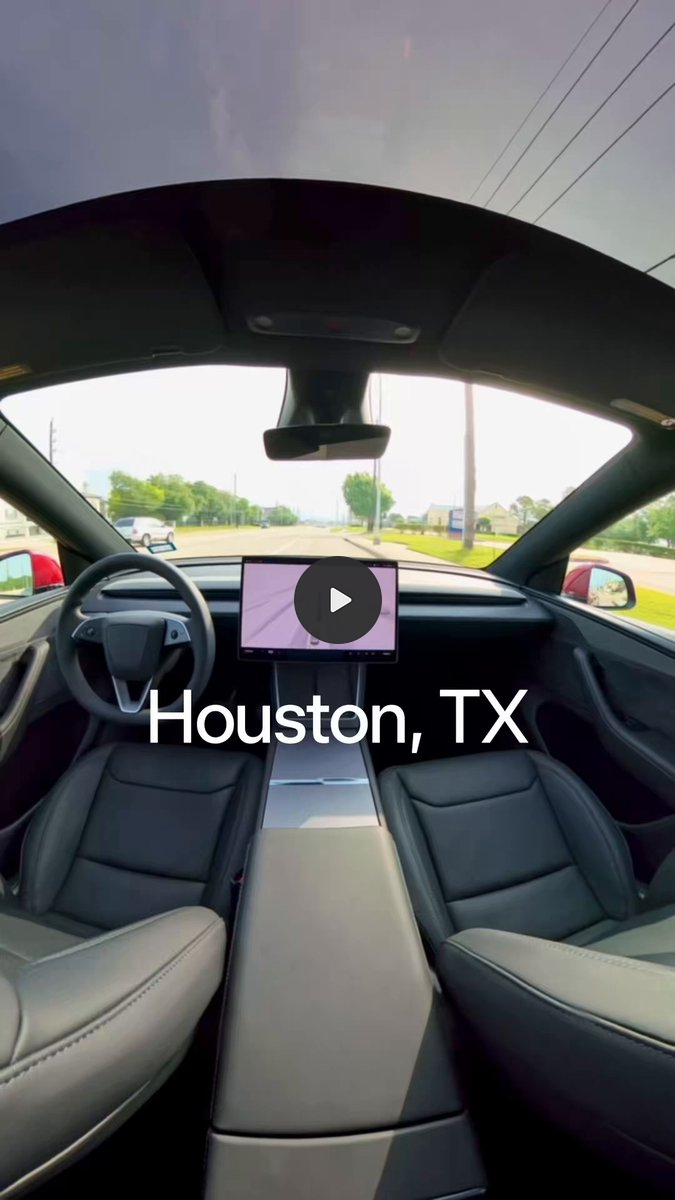
Tesla’s Robotaxi account says the service is rolling out in Dallas and Houston, with a clip showing autonomous driving in suburban settings. The reactions are predictable but telling: excitement, jokes, and the assumption that wider coverage is just a matter of time.
The bigger question is what people will judge it on day-to-day: reliability in boring edge cases, customer support when something goes wrong, and whether “geofenced” becomes a permanent ceiling or a temporary training ground.

Humanoid half marathon: record pace, then a messy finish
Kyle Chan shares footage from Beijing’s humanoid robot half marathon, where an Honor robot put up a startling time, then crashed just metres from the line and needed humans to get it over the finish. It’s a tidy metaphor for where robotics is right now: impressive endurance and speed, plus a stubborn need for intervention at the worst moment.
The spectacle matters because it’s not a lab demo, it’s a public stress test. It makes progress legible, while also showing the gap between “can do it” and “can do it without a team hovering nearby”.


AI jobs debate: Yann LeCun tells everyone to listen to economists
Yann LeCun pushes back on dramatic short-term job loss claims and says AI researchers are not the right people to forecast labour markets. His point is less “everything is fine” and more “talk to specialists who measure this for a living”.
It’s also a useful check on the attention economy: bold numbers travel faster than careful research, and executives get quoted as prophets on topics outside their lane. The post is a reminder that the labour story is usually slower, messier, and more uneven than the hot takes suggest.


The resume tell that set off a framework argument
François Chollet says a deep learning profile listing JAX rather than PyTorch can be a quick signal of candidate quality. Whether you agree or not, it hits a nerve because tools become shorthand for identity: research-minded versus product-minded, theory versus shipping.
Hiring managers will read this as a caution as much as a tip. Framework choices can show taste and training, but they also reflect what a team needed at the time, and what was popular in a given circle.

Internal Meta emails: Zuckerberg on Snapchat content and scrutiny
TechEmails posts a 2022 internal note where Mark Zuckerberg describes logging into Snapchat and criticising the tone of Spotlight and Stories, while also questioning why Snapchat was not taking the same heat Meta was getting over youth content. It’s catty, yes, but it’s also revealing: competitive analysis and regulatory strategy in the same breath.
In the context of litigation over teen harm and addiction, it reads less like casual gossip and more like a snapshot of how leaders think when public pressure is rising: compare peers, spot weaknesses, and keep receipts.


Hormuz tensions: the ceasefire clock is ticking
The Kobeissi Letter reports on a White House Situation Room meeting as Iran’s closure of the Strait of Hormuz collides with an expiring ceasefire. Even without taking every detail at face value, the core issue is clear: chokepoints matter, and the timetable forces decisions fast.
Markets and diplomacy both hate uncertainty, and this is uncertainty with a deadline. That’s the sort of setup where rumours multiply and small moves get read as big messages.

School spending versus results: the fight over what money can fix
Kane posts a sarcastic take on the “just fund it more” argument, pointing to a California chart showing per-pupil spending rising far faster than inflation while test scores fall. It’s the kind of chart that gets used as a blunt instrument, but it does capture a frustration many people share.
The hard part is what comes next: if money is not the only lever, which levers are actually politically possible, and how do you prove they work without turning kids into a policy experiment?


Tattoo removal as a class flex
doomer jokes that rich people getting tattoo removal is a cultural rugpull, with Pete Davidson’s expensive clean-up as the reference point. The punchline is that permanence was part of the pitch, right up until the people with money decided permanence was optional.
It’s also a small story about how trends age: what looked rebellious becomes normal, then gets edited away when the social meaning changes. The price tag just makes the lesson easier to see.


