



Overview
Today’s feed had a clear theme: faster, more autonomous tools are arriving everywhere, from PDF parsing and coding agents to local-first personal assistants. In parallel, the AI business story keeps swelling, while hardware teasers hint at a fresh push for Windows laptops that can run serious AI on-device. There was also a notable thread running through trust and accountability, in biology policy, in markets, and in how we judge talent.
The big picture
We’re watching two races at once. The first is speed and autonomy, where software keeps removing friction (parse that document, run that tool call, generate that clip) and doing it locally when possible. The second is power and control, who gets access to the strongest models, how open models compare, and how institutions respond when the stakes move beyond chat into biology, finance, and hardware platforms.
PDF parsing hits “did that just happen?” speed
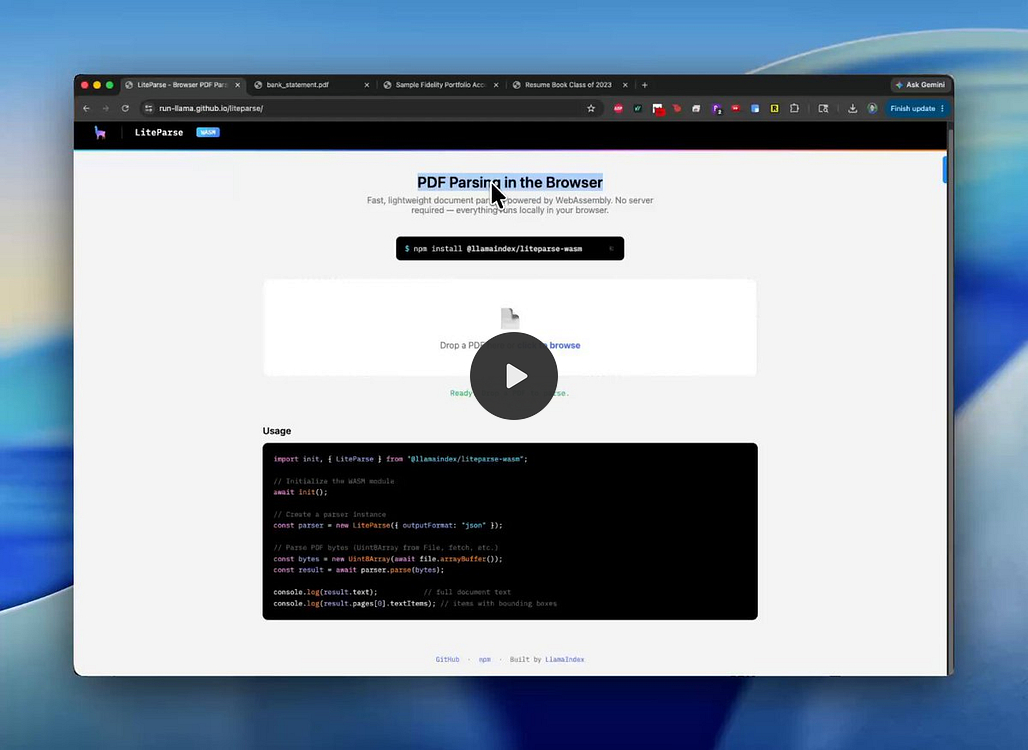
Jerry Liu posted a demo that looks like a magic trick: complex PDFs turning into structured text in the browser in fractions of a second. Under the hood it’s a Rust rewrite running via WebAssembly, and the point is simple, document ingestion is turning into a solved problem for many agent workflows.
It also nudges the market away from “which model?” and towards “which plumbing?”, because clean, fast inputs are what makes downstream tools feel sharp.


Cursor gives coding agents a longer leash, with guardrails
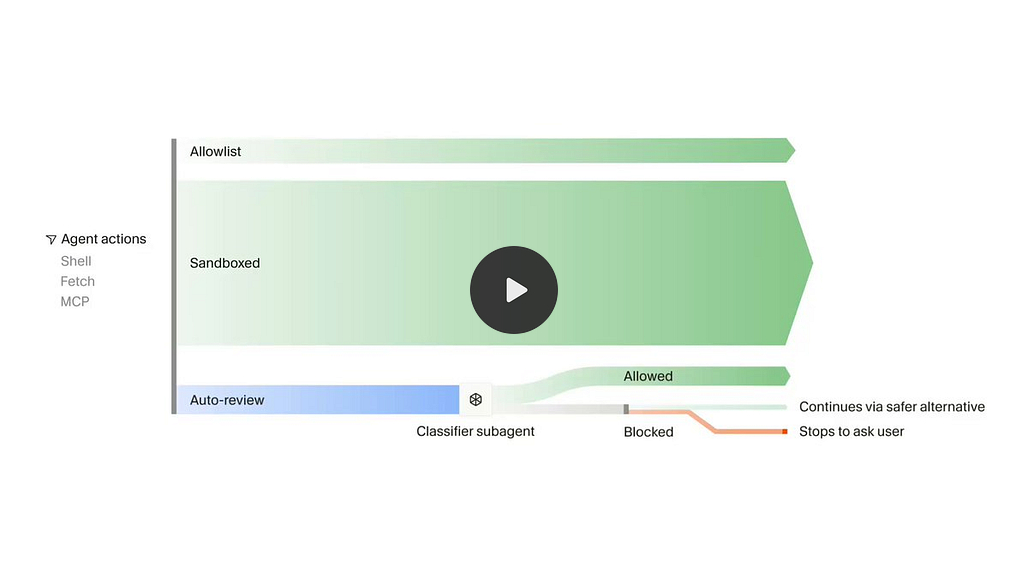
Cursor’s new Auto-review mode is about reducing the constant “are you sure?” interruptions while still keeping a safety layer for risky actions. The interesting detail is the classifier subagent routing, it suggests a future where your IDE is managing autonomy levels per action, not per session.
For teams, this is the difference between an agent that feels like a helper and one that feels like a colleague who can actually get on with tasks.

Local-first personal AI gets a serious push with OpenJarvis on Ollama
Ollama announced OpenJarvis support, positioned around Stanford work on “Intelligence Per Watt”. The pitch is familiar but still compelling: useful agent behaviours (briefings, research with citations, local coding) while keeping the centre of gravity on-device.
Local-first is starting to feel less like a hobbyist preference and more like a practical default for anyone who cares about privacy, latency, or just not being blocked by cloud limits.


The “company brain” idea keeps coming back, now with versioning and permissions
Dhravya Shah’s Supermemory launch frames internal knowledge as something you can version, permission, and hook into any agent. The Git-like angle is telling: organisations want provenance and rollback, not just a chat box that claims to remember things.
If this category works, it will be because it respects real business constraints: access control, audit trails, and the boring reality of where data lives.


OpenAI puts biodefence front and centre with Rosalind
OpenAI announced Rosalind Biodefense and expanded trusted access to GPT-Rosalind for select US government and allied partners. The emphasis is defensive progress, preparedness, modelling, response, with access controls rather than broad release.
This is also a reminder that “AI policy” is no longer abstract. As models get stronger in life sciences, who can use what, and under which rules, becomes a primary product decision.

NVIDIA posts coordinates and the internet fills in the rest
NVIDIA AI dropped “A new era of PC” plus Taipei coordinates, and that was enough to set off days of speculation ahead of Computex. The running theory is an ARM-based laptop SoC story, with Microsoft and Arm nearby in the background.
If this lands, it is not just a chip launch. It is a bet that on-device AI will be a core selling point for mainstream laptops, not a niche feature hidden in settings.

Humanoid robotics talent war, with cash on the table
Brett Adcock announced a $100m employee tender at Figure, giving staff a chance at liquidity while the company stays private. In deep-tech, this is both a retention tool and a recruiting message: you can join the mission without betting your entire financial life on an IPO date.
It also hints at confidence, you do not run a tender like this if you think the story is about to stall.

Anthropic at a trillion, and the conversation turns surreal
Polymarket posted that Anthropic’s private valuation has passed $1T. Whether you treat it as market signal or hype-cycle noise, it captures the mood: AI firms are being priced like they are new platform companies, not software vendors.
The tricky part is that valuations now move faster than public understanding, which makes the next year as much about trust as it is about capability.

Open-weight models: still chasing by months, not years
Epoch AI revisited the gap between open-weight and proprietary models and put a number on it: roughly four months behind since the start of 2026. That’s not “caught up”, but it is also not a permanent chasm.
The subtext is that open ecosystems can still matter even if they are second, because speed of iteration, cost, and deployability often beat raw leaderboard status.


The tiniest fine, the biggest trades, and a familiar accountability problem
Unusual Whales reported Trump was fined $200 for months-late disclosure of stock trades worth hundreds of millions, per the Washington Post. The fine size is what made the post travel: it reads less like enforcement and more like an admin fee.
It’s a sharp example of how rules can exist on paper while incentives point elsewhere, especially when the numbers involved are this large.


