


Overview
Today had two clear threads: big platform players pushing agent tooling and new model families into the workplace, and a wider cultural buzz around compute scale, space hardware, and sports moves. Microsoft’s Build ripple ran through several posts, while OpenAI and Weights & Biases focused on getting from demos to systems you can actually run, inspect, and improve.
The big picture
AI is settling into its next phase: not just model launches, but the surrounding kit to ship agents, observe them in production, and keep them from breaking. At the same time, the conversation about scale is getting less abstract, with people squinting at keynote slides to estimate training compute, and others pointing to studies where model outputs beat human experts in blind tests.
Microsoft unveils seven MAI models, with reasoning and cost front and centre
Mustafa Suleyman used the stage to introduce a full spread of MAI models, led by MAI-Thinking-1 for reasoning and software engineering tasks. The pitch is control and performance, plus an end-to-end story that runs from custom silicon to private tuning for enterprise agents.
The subtext is hard to miss: Microsoft wants to be judged not only as a distribution channel for other labs’ models, but as a frontier lab with its own stack and its own benchmarks.


Windows 11 gets more Linux-like for developers, with new terminal ideas on the way
Microsoft Developer laid out a set of Windows 11 updates aimed at reducing setup pain: Coreutils are now generally available, WSL is pushing further into containers, and developer configurations promise a one-command machine setup. It reads like Microsoft trying to make Windows feel less like “the machine you have to work around” and more like the machine you can just work on.
There’s also an experimental “Intelligent Terminal” concept, which hints at how quickly AI assistance is moving from editor plugins into the rest of the workflow.

OpenAI’s Codex “Sites” aims at internal apps you can share as a link
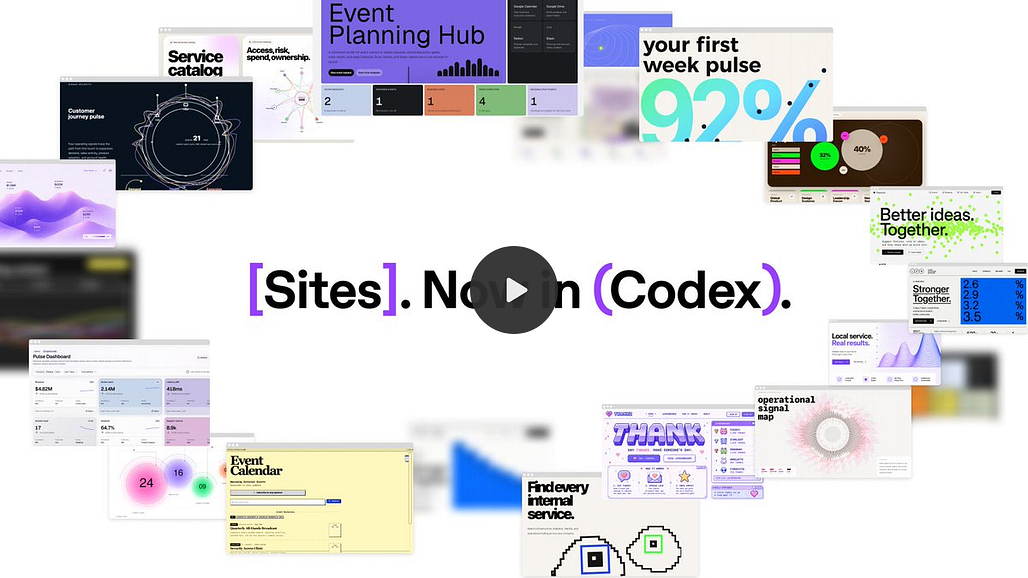
OpenAI is pushing Codex beyond code suggestions into something closer to rapid app creation. “Sites” turns plans and notes into an interactive website or app your team can click through and share via a URL, starting with Business and Enterprise.
It’s a bet that the next wave of software inside companies is built by the people who need the tools, not only by engineering teams, with guardrails and access control doing the heavy lifting.

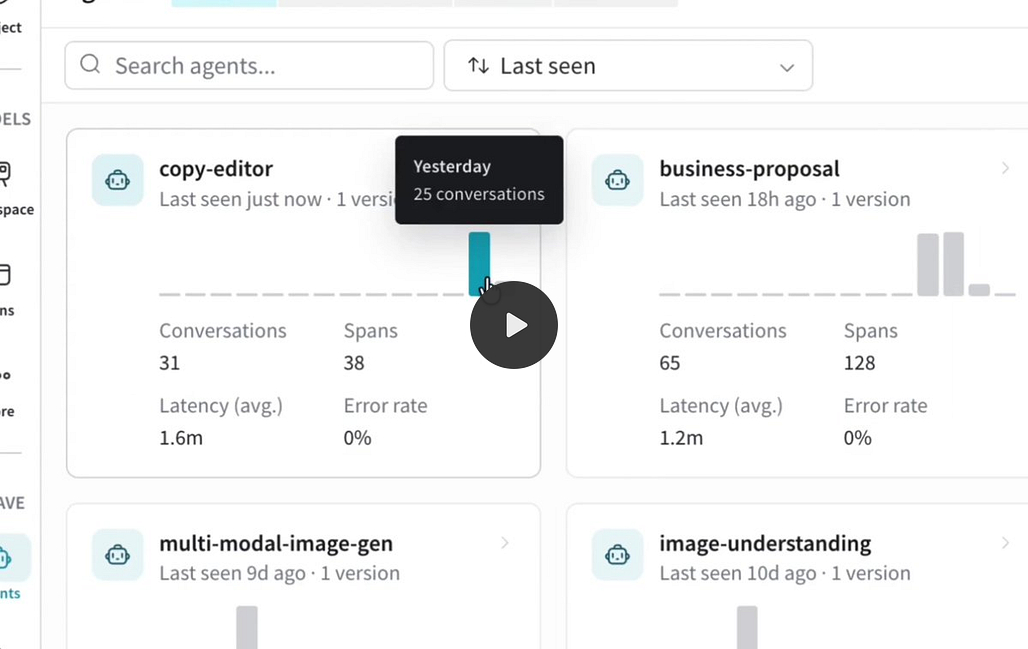
W&B Weave update: watching agents across millions of traces, not just a single run
Weights & Biases announced a new Weave release focused on end-to-end observability for production agents. The promise is simple: detect failure modes from live traffic, turn them into evals, then use that loop to prevent regressions.
This is the less glamorous side of agents, but it’s where teams win or lose trust. If you cannot explain what happened across a messy session, you cannot improve it, and you definitely cannot ship it.

“Did they just leak it?” Compute gossip circles a Claude Mythos estimate
Two posts fed the same storyline: a Microsoft slide that appears to place Anthropic’s Claude Mythos at around 6.1×10²⁷ training FLOPs, plus the inevitable community reaction about whether that number should have been on a public chart at all.
Even if it is only an estimate, the appetite for these numbers is telling. People are treating training compute like a box office figure, a shorthand for what tier a model belongs in, and how fast the frontier is moving.


Stanford study: law professors prefer Gemini 2.5 Pro over peer-written answers in blind tests
Andrew Curran shared a Stanford result that will make a few legal educators sit up: professors preferred Gemini 2.5 Pro to human peer answers in blind pairwise comparisons on contracts questions. The interesting part is not “AI beats humans” as a headline, but that the evaluation is built around judgement where there is no single neat ground truth.
If this style of study becomes normal, we may end up with clearer ways to measure quality in fields where scoring has always been fuzzy, and where confidence and clarity matter as much as raw correctness.


DeepMind hires for quantum simulation work tied to an autonomous lab
Brendan McMorrow posted an open role for a physicist or materials scientist to build first-principles quantum simulations that will be tested in an autonomous lab. The compelling bit is the closed loop: simulation, prediction, physical test, back into the system.
This is where “AI for science” starts to feel less like a conference track and more like an engineering discipline, with throughput, data curation, and real-world validation as the job.


NASA’s Roman Space Telescope launch gets closer, and the public hype ramps up
NASA is nudging people to mark their calendars for the Roman Space Telescope launch later this year, highlighting its wide-field view and the mix of big-picture surveys with fine detail. There’s also a free poster download pitched as a phone wallpaper, which is a neat way to make a serious mission feel personal.
Roman’s science goals are weighty: dark energy, exoplanets via microlensing, and deep Milky Way surveys. The post is light, but the telescope is anything but.


Jensen Huang in Taiwan, treated like a rockstar, according to Lex Fridman
Lex Fridman posted about spending the day with NVIDIA CEO Jensen Huang in Taiwan, talking with engineers and eating night market food. The image is simple: mango shaved ice, big crowd energy, and a reminder of how celebrity and industry leadership are colliding in the AI hardware era.
There’s also a cultural thread here. Huang’s roots in Taiwan make the reception feel different from standard tech-conference fanfare, more like homecoming mixed with national pride in a global supply chain story.


Manchester United close in on Éderson, with a long contract on the table
Fabrizio Romano reports that Éderson is set to sign for Manchester United through June 2030, with an option to extend to 2031. If it lands, it is a statement of intent and a sign of how early the club wants to get its midfield work done this summer.
Fans will read the length of the deal as confidence in his fit and durability, and as a hint that this rebuild is meant to stick, not patch holes for a season.


Haaland posts “First WC loading!” as Norway look ahead to 2026
Erling Haaland’s post is pure mood: a stylised image in a Norway shirt, calm pose, and the World Cup trophy hovering like a promise. Norway qualifying has already lit a spark, and Haaland is leaning into the idea that this is just the start.
It is also a reminder that international football still cuts through everything else online, even on a day dominated by models, tools, and keynote slides.


