
Overview
Today’s feed had a clear through-line: software is getting cheaper to make, but harder to defend. Builders are racing towards agent teams and distributed research, while the market sorts out what is disposable (thin SaaS) versus what stays stubbornly hard (deep enterprise systems). Meanwhile, the physical world kept pace, with fresh glimpses of the Tesla Semi, a reminder that robotics precision is no longer a lab trick, and a messy debate about what gets attention online, from self-driving slip-ups to made-up “news”.
The big picture
AI is pushing two opposing truths at once. It lowers the barrier to shipping new tools, which means more software, more clones, more “good enough” products. At the same time, it raises the bar for trust, distribution, data access, and real-world integration, the stuff that does not fit neatly into a prompt. The result feels like a sorting hat for companies: some will be copied in a weekend, others will take years and still need relationships, compliance, and serious engineering.
Software gets a long tail, and the middle starts to look wobbly
@naval argues we are heading towards a world where software proliferates like music and video, with mega-aggregators at the top and countless niche tools underneath. The interesting part is not that more people can code, it is that coding stops being the bottleneck. Taste, trust, and distribution start to matter more than the ability to write the thing.
https://x.com/naval/status/2030679094623707600
“Vibe coding” will copy the easy bits, but the hard systems are still hard
@tbpn shared a clip with Palantir co-founder Joe Lonsdale making a blunt distinction: low-end SaaS built cheaply and sold hard looks exposed, while $100M-plus systems are not going to be replaced by a weekend of prompts. You can disagree with the exact line he draws, but it captures a real anxiety in the market: some categories were priced as if they had moats, when they mainly had a head start.
https://x.com/tbpn/status/2030659940675981326
The “AI agency” repo is the new startup fantasy, with familiar bottlenecks
@gregisenberg pointed to a GitHub repo that spins up an agency-style set of AI “employees”, with separate agents for engineering, design, marketing, and product. It is an intoxicating idea because it feels like skipping the hardest part of building a team.
The early reality check is also familiar: handoffs cost time and money, context gets lost, and coordination becomes its own job. Still, the direction is clear, people want workflows, not just chat.
https://x.com/gregisenberg/status/2030680849486668229
Karpathy’s vision: research agents as a community, not a single brain
@karpathy sketched the next step for autoresearch: thousands of agents running experiments asynchronously, more like a research community than a lone PhD student. It is a useful framing, because it highlights where today’s tools still feel cramped. Git repos and linear threads were not designed for swarms of parallel scientific guesses.
If this model works, the competitive edge moves from “who has the best model” to “who can organise the most productive exploration without collapsing into noise”.
https://x.com/karpathy/status/2030705271627284816
The Science Fiction Decade, said plainly
@pmarca dropped a short line that matched the day’s mood: the 2020s are the “Science Fiction Decade”. It lands because so many once-weird ideas are now normal headlines: robots, AI copilots, autonomy, bio-tech, space manufacturing.
The harder question is what society does when the gap between “possible” and “ready” becomes the main source of tension.
https://x.com/pmarca/status/2030775445004681267
Tesla Semi interior: practical design, surveillance by default
@SawyerMerritt shared a first look at the production-ready Tesla Semi interior, and it is packed with details that look designed by people who watched drivers work: windows you can reach, storage you can use, screens where your hands already are.
It also reinforces a quieter trend in transport: more cameras, more monitoring, more software watching the human. For fleets, that is safety and insurance. For drivers, it is another layer of being measured at all times.
https://x.com/SawyerMerritt/status/2030669776318603282
Robotic precision goes viral, and the surgeon talk gets louder
@iAnonPatriot posted a clip of a surgical robot operating on an egg without cracking it, the sort of demo that is half magic trick, half proof of capability. It is easy to scoff, but precision at this level is the point: controlled force, stable motion, repeatability.
The hype leap is “robots replace surgeons”. The more immediate reality is surgical teams that change shape, with automation taking more of the fine motor work and humans taking more of the judgement and responsibility.
https://x.com/iAnonPatriot/status/2030837528954048517
Autonomy debates, and the accusation of selective outrage
@cb_doge shared dashcam footage of a Waymo incident near light rail tracks, framed as a media double standard: if it were Tesla, it would be wall-to-wall coverage. Whatever you think of that claim, it gets at a real dynamic. Autonomy stories are often treated as morality plays, picked up or ignored depending on who people want to blame.
The uncomfortable truth is that every autonomy system will have edge cases, and the public is still deciding what “acceptable” looks like when software makes mistakes in public.
https://x.com/cb_doge/status/2030801361819066703
Blue ticks and fake layoffs: the misinformation incentive problem
@GergelyOrosz called out a viral, fabricated layoff story that pulled in millions of views. It is not just about one post, it is about the incentives: fear spreads fast, detail makes it feel true, and a paid badge can be mistaken for credibility.
This is the darker twin of “AI makes content cheap”. When anyone can generate plausible narrative at speed, the scarce resource becomes verification, and platforms are not built to reward it.
https://x.com/GergelyOrosz/status/2030758465183097204
A small stat with a grounding effect: $1m revenue is rare
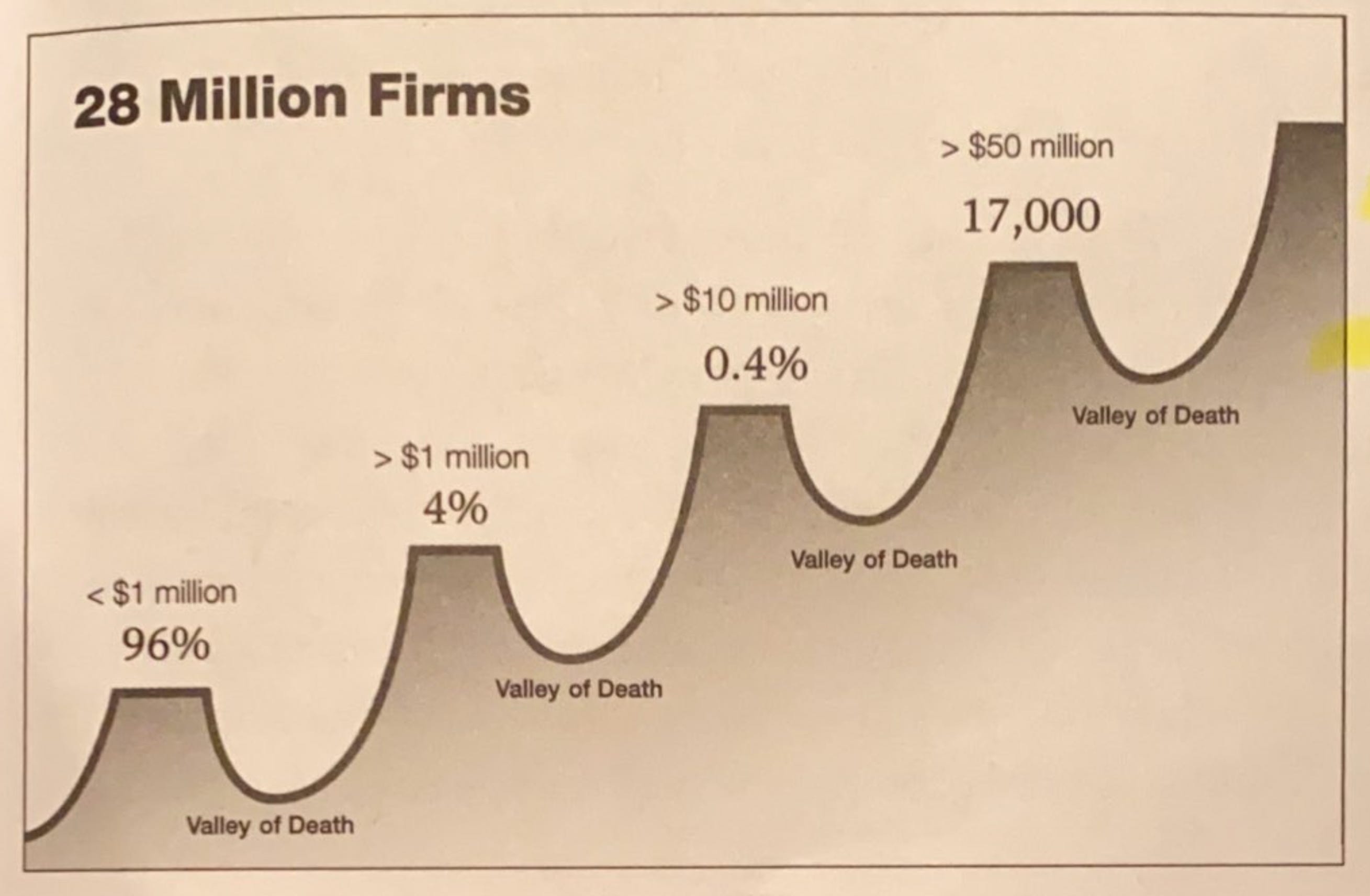
@agazdecki reminded founders that only 4% of startups reach $1m in revenue. It is a simple post, but it lands on a day full of “agents can do everything” optimism. Shipping is not the same as selling, and adoption is not the same as retention.
If AI makes building cheaper, it may also make competition noisier. That could make the 4% feel even more hard-earned.
https://x.com/agazdecki/status/2030772679612174473