



Overview
AI products are becoming more useful, more connected and more exposed to real-world risks. Anthropic is responding to enterprise privacy demands while preparing for a huge public offering, OpenAI and Google are adding new research and creation tools, and developers are treating agents as full applications. Elsewhere, SpaceX tested a key Starship manoeuvre, while stories about fake experts and unrestricted local models raised fresh questions about trust and safety.
The big picture
Anthropic gives enterprises control of frontier-model data
Anthropic plans to let customers using Mythos-class models keep required data within their own cloud infrastructure from this autumn. Anthropic will retain none of it, giving regulated businesses more control over privacy and compliance while preserving the additional safety checks required for advanced models.
The change follows criticism of Anthropic’s earlier 30-day retention rule. Boris Cherny said the company developed the new approach with customers over several months, reflecting the growing importance of data sovereignty in enterprise AI contracts.


Claude Academy opens free AI courses to everyone
Anthropic has launched Claude Academy, a free collection of courses, tutorials and live sessions for beginners, regular Claude users and development teams. Lessons cover Claude.ai, Claude Code and the Claude Platform, alongside broader guidance on deciding what to delegate and how to check AI output.
The launch attracted the day’s largest response by a wide margin. It also shows Anthropic investing in education alongside model releases, with a focus on practical use rather than prompt tricks alone.


Agents are starting to look like complete applications
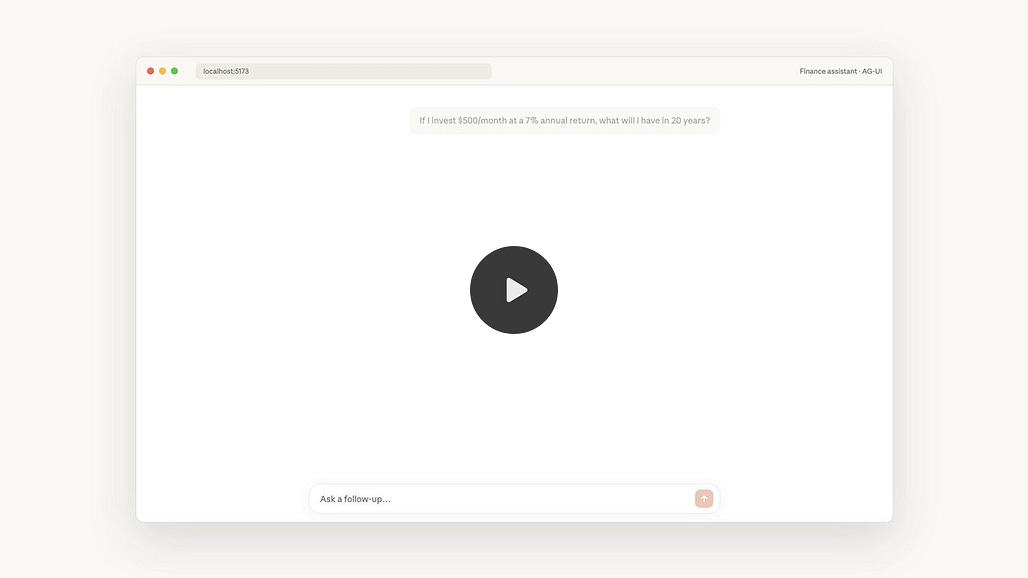
Anthropic’s new developer cookbook connects Claude Managed Agents with CopilotKit’s open AG-UI protocol. It lets developers send text, tool calls, shared state and interactive components from hosted Claude sessions into interfaces built with frameworks such as React.
The idea matches Matt Palmer’s view of chat as a thin client, an agent as the server and services such as GitHub or Sheets as the database. Instead of building every screen first, developers can place an agent behind a focused interface and let it manage the work.

Exa brings live web research into ChatGPT and Codex
OpenAI developers introduced an Exa plugin that gives ChatGPT Work and Codex access to more than 100 billion websites, papers, documents, company records and people profiles. Its search and retrieval tools return cited, structured material suited to multi-step agent tasks.
The plugin can be installed directly inside Codex, reducing the need to leave a coding session for current documentation or external research. Reliable retrieval remains a core requirement for agents expected to do more than work from their training data.


ChatGPT Sites becomes a shared building space
ChatGPT Sites now lets teams add editors and build small websites, games and internal tools together. Codex handles the underlying Git and deployment work, while collaborators describe changes and review the result through ChatGPT.
The discussion also surfaced a practical question about how these projects should be organised. Peter Yang asked whether Codex threads stretching beyond 200 pages lose coherence. OpenAI-linked replies suggested long-running project threads can still work, although separate task threads or an orchestrator can make complex work easier to manage. Usage limits remain a common complaint.


Google gives readers more control over what appears
Google is adding controls for preferred publishers across Search, Discover and Google News. Chosen sites can appear more often in Top Stories, AI Overviews and AI Mode, while Discover will accept natural-language requests such as eco-friendly kitchen renovation ideas.
Android users will also be able to create daily audio news briefings around selected topics, with source references included. The immediate response showed the other half of the problem: readers also want simple ways to reduce the presence of sources they dislike.

Anthropic reportedly prepares a record-sized IPO
Anthropic is reportedly considering a public filing as soon as late August, with an IPO possible before the end of 2026. Bloomberg’s reporting suggests the company wants to match or exceed the $86.2 billion raised by SpaceX, placing a potential Anthropic offering close to $100 billion.
The ambition rests on rapid Claude revenue growth and strong investor demand for AI firms, despite the heavy costs of training and serving frontier models. If the plan proceeds, Anthropic could reach public markets ahead of OpenAI.

SpaceX tests Starship’s route home
SpaceX completed a single-engine static fire designed to reproduce the deorbit burn required on future Starship orbital missions. The manoeuvre is needed to slow the vehicle and begin a controlled return from orbit, making the ground test an important technical checkpoint.
The test arrived alongside striking analyst projections for SpaceX, including an average five-year revenue estimate of 2,090 per cent growth. Those forecasts depend on aggressive expansion across Starlink, launches and compute infrastructure, so the range of possible outcomes remains broad.


Fake AI experts expose a weakness in professional networks
Chris Bakke shared an unverified account of someone using voice agents and false CVs to conduct expert-network calls paying up to $1,500 an hour. If accurate, the scheme exploits a market built around clients trusting that the person speaking has genuine industry experience.
Voice quality is improving faster than many verification systems. Expert networks may now need stronger identity checks, employment evidence and disclosure rules, rather than relying on a convincing conversation and a polished résumé.

An unrestricted local model renews the guardrail debate
Polymarket highlighted a developer’s claim that an unrestricted Qwen 3.8 27B model running locally on a Mac immediately supplied instructions for producing methamphetamine. The demonstration involved an altered model with refusal behaviour removed, so it should not be treated as representative of the standard release.
Even so, local models make central moderation harder because safeguards can be modified after download. The post tied the example to a prediction market giving US AI safety legislation a 12 per cent chance of passing by the end of 2026, though betting odds are not a policy forecast in any formal sense.


