


Overview
Today’s feed had two strong threads running through it: AI getting both bigger and more practical, and institutions trying to catch up, whether that’s regulators writing crypto rules, or governments nudging chip supply chains. Alongside that, we got a reminder that the internet can turn any offhand CEO comment into a mass behavioural experiment, plus a few bright distractions, from star nurseries to humanoid robots making beds.
The big picture
The vibe is acceleration with friction. Models are pushing into longer, more autonomous work, robots are starting to coordinate without being babysat, and founders are already arguing about what the right interface should look like. At the same time, outages, system prompts, and politics keep poking holes in the neat story that “bigger equals better”.
A trillion-parameter ‘thinking’ model arrives with a cost dial
Ant Ling’s team is pitching Ring-2.6-1T as a production-minded reasoning model, with an adjustable “thinking effort” knob to trade off depth against latency and token spend. The message is clear: it’s not just about raw scores, it’s about giving teams control over how much brainpower gets spent per task.
It also reads like a shot across the bow at the benchmark crowd, namechecking results and hinting at open weights soon. The free API trial angle suggests they want developers to try it in real agent workflows, not just admire charts.


Robots making a bed, together, without a shared script
Brett Adcock posted a deceptively simple demo: two Figure humanoids tidying a room and making a bed in under two minutes. The interesting part is the claim that it’s one learned vision-language-action policy running onboard, with coordination happening through observation, not explicit robot-to-robot messaging.
If that holds up, it’s a quiet step towards robots doing “normal” household collaboration, where the hard bit is not a rigid plan, it’s coping with squishy objects and a partner who is also moving things around.


How long can an AI stay on task? The horizon debate heats up
Lisan al Gaib pointed at METR-style time horizons for Claude Mythos Preview, suggesting at least 16 hours, but with a massive confidence interval because there are not enough long-horizon tasks to measure cleanly. This is the awkward phase of evaluation where the headline number matters, yet the dataset is still catching up to what people are trying to infer.
In other words, the appetite for “agentic” claims is outpacing the boring work of building reliable tests for long, messy jobs.


“Agents, not apps”, but not chat-first either
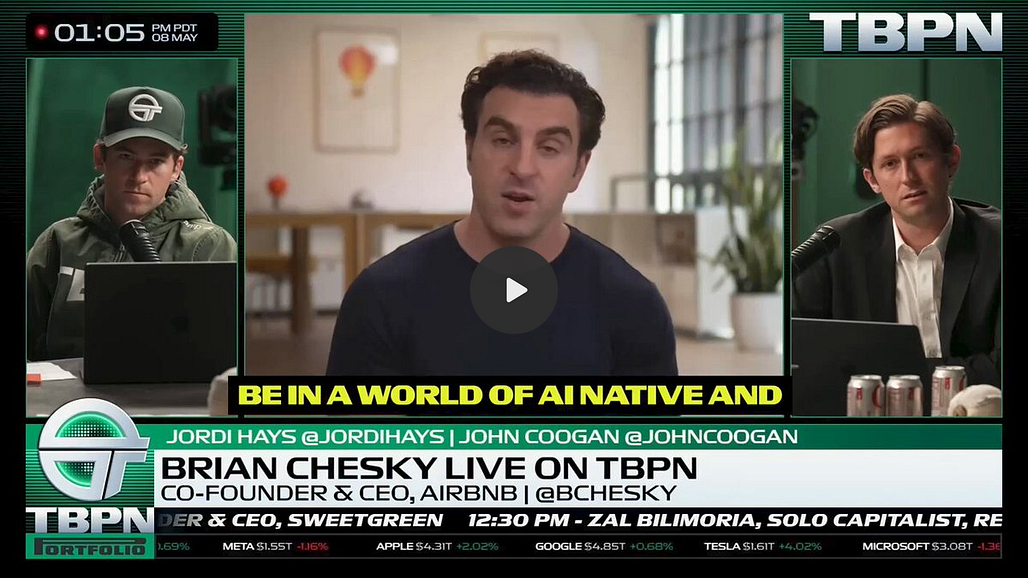
TBPN clipped Brian Chesky arguing that chatbots are the wrong interface for travel and e-commerce. His point lands because travel shopping is visual and comparative, you want to scan photos, maps, filters, and constraints, not negotiate everything in a text box.
The subtext is that the agent future might look less like a clever messenger and more like a new kind of interactive storefront, where language is present but not dominant.

The system prompt is the product, whether you can see it or not
Theo’s reminder to “always read the system prompt” cuts to the core of the sponsored-recommendation panic. If the model is instructed to favour a business outcome, then what looks like bias can be policy, hidden in plain sight.
As more AI gets embedded into shopping and discovery, “what was the model told to do?” becomes as important as “what can the model do?”


AGI discourse: bold claims meet the developer eye-roll
Two ends of the same argument showed up: ℏεsam calling Claude Opus “AGI” off the back of a playful deception screenshot, while ThePrimeagen amplified a sceptical take that hype often comes from people without deep expertise.
The tension is familiar now: models are clearly capable of surprising behaviour, but pinning that to grand labels tends to generate more heat than clarity.


US crypto market structure inches forward with a scheduled vote
Watcher.Guru flagged a Senate Banking Committee vote date for the Crypto Clarity Act. After years of “regulation by enforcement” complaints, anything that draws a line between SEC and CFTC oversight is going to be treated like a meaningful milestone.
It’s also a reminder that crypto’s next leg is likely to be decided as much in committee rooms as it is on exchanges.

Politics meets silicon: Trump reportedly nudges Apple towards Intel
Jukan shared a WSJ nugget claiming Trump told Tim Cook, “I like Intel”, pushing Apple towards using Intel’s foundry capacity. If Apple becomes a serious customer, it’s a major confidence signal for Intel’s manufacturing revival, and for the broader US goal of reducing dependence on TSMC.
The detail that sticks is how personal and direct industrial policy can get when chips are treated as national strategy, not just components.


“Burritomaxxing” turns portion anxiety into a public experiment
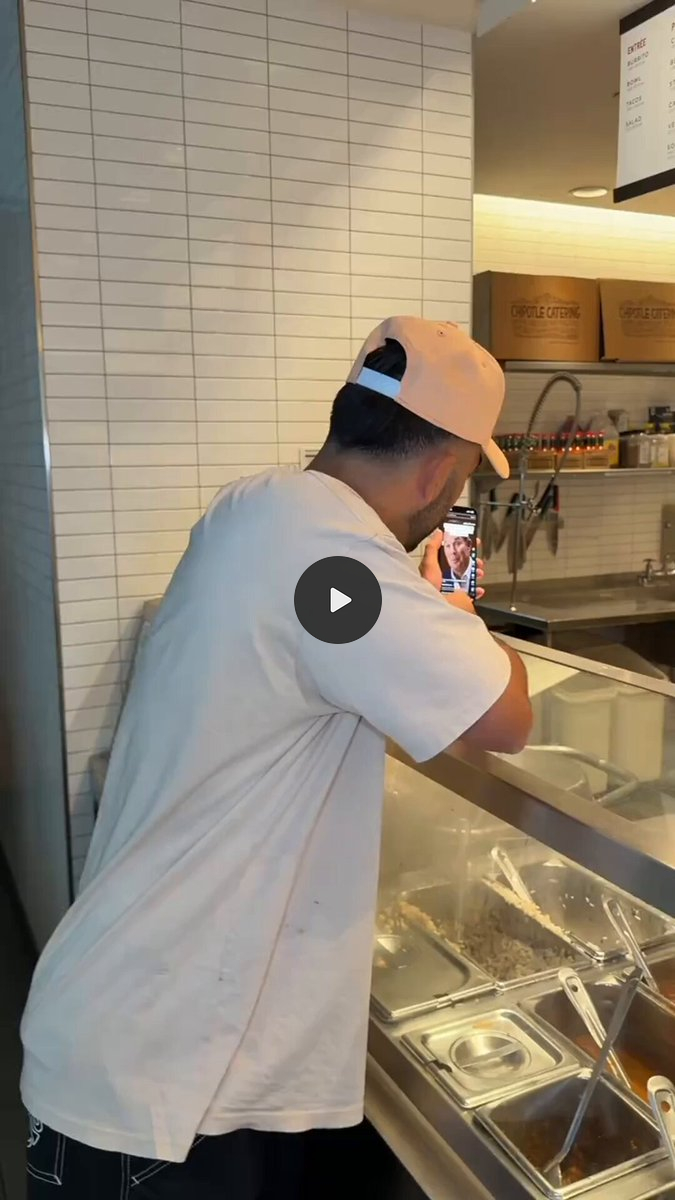
HustleBitch captured the new trend: customers repeatedly asking for “just a little more” at Chipotle after the CEO implied extras are there for the asking. It’s funny until you picture the staff on the line dealing with a queue of people treating lunch like a stress test.
This is how the internet works now, a single quote becomes a game, and the “game” becomes a policy problem.

A cosmic palate cleanser: a star nursery in infrared and X-ray
NASA posted a composite view of the Cat’s Paw Nebula using Webb and Chandra, with different wavelengths revealing different parts of the story. The dusty clouds look warm and soft in infrared, while X-rays pick out hot, young stars buried in the mess.
It’s a useful reminder that the world is always richer when you stop insisting on a single way of seeing it.


