



Overview
Today had a clear theme: smaller, faster models and more practical tooling are pushing AI from “impressive demo” into daily work. We saw a new OpenAI release aimed at coding and agents, developers swapping notes on how to make assistants more reliable, and a wave of “bring your own data” moves, from newsletters to live market feeds. Underneath it all sat the same question: if the tools keep improving, what still makes a specialist product or a human craft worth it?
The big picture
AI is becoming less about a single model and more about the surrounding system: context windows, agent features, safety guardrails, data connectors, and benchmarks that still mean something. The winners look like the people who can package knowledge into reusable parts, and the platforms that can route requests, host ecosystems, or supply trusted data. The hype is still loud, but the interesting work is increasingly operational.
OpenAI ships GPT-5.4 mini, with speed as the headline
@OpenAI dropped GPT-5.4 mini across ChatGPT, Codex, and the API, pitching it as coding-first, good at computer use, and comfortable with multimodal inputs and subagents. The standout claim is pace: roughly twice as fast as GPT-5 mini, which is the sort of improvement you feel immediately when you are iterating on code or running agent loops.
It also hints at a broader pattern: “mini” no longer means “toy”. If small models keep closing the quality gap while staying cheap and quick, teams will start designing around responsiveness rather than raw capability.


How Anthropic engineers package reliability, not prompts
@trq212 shared a detailed look at “Skills”, modular folders of scripts, configs, references, and checks that extend a coding assistant beyond plain text instructions. The point is simple: if you want consistent results, you need structure, not inspirational prompting.
The most useful bit is the taxonomy, from runbooks to verification scripts, and the advice to hide complexity until it is needed. It reads like a playbook for teams who are tired of brittle assistants and want something repeatable.

Model routing hits absurd scale as OpenRouter crosses a quadrillion tokens
@deedydas noted OpenRouter passing 1 quadrillion tokens a year, then did the more important follow-up: what that means in money once you account for fees. The scale matters because it shows a growing middle layer, developers who do not want to bet on a single provider and would rather route across many.
It is also a reminder that “how much is processed” and “how much is earned” are different stories. Usage can be huge while margins stay thin, which pressures these platforms to win on trust, uptime, and choice.


Local model work gets a friendlier front end
@ClementDelangue gave a nod to Unsloth Studio, an open-source web UI aimed at training and running models locally, with claims of speed and lower VRAM use. The appeal is obvious: more people want to experiment without renting a GPU box in the cloud for every idea.
If the tooling keeps getting easier, “local first” stops being a niche hobby and starts looking like a normal option for teams working with sensitive data or tight budgets.


Lenny opens his archive for builders, in clean Markdown
@lennysan is releasing his newsletter archive and podcast transcripts as AI-friendly Markdown, plus an MCP server and repo access for subscribers. This is the opposite of “train on my content without asking” and more like “here is the dataset, go make something useful”.
It is also a neat sign of the times: writers are starting to treat their back catalogue as developer material. Expect more creators to offer structured dumps, not just PDFs and paywalls.


Startups can survive platform giants, even when the giant ships the feature
@GergelyOrosz pushed back on the idea that top labs will wipe out startups by default, using Google Flights as the cautionary tale in reverse. Google entered, the market did not die, and specialists kept growing by focusing on details, support, and local needs.
It is a healthy reminder for the current AI moment: a general tool can be good, but “good for everyone” is not the same as “right for a specific workflow”.


Google shows off Nano Banana 2 use cases, and it is not just pretty pictures
@googleaidevs rounded up examples of Nano Banana 2, with creators using it for detailed edits, scene recreation, and practical outputs like map-style previews and infographics. The interesting part is how quickly image tools are turning into general UI utilities, not just art generators.
When speed gets close to “instant”, people stop treating it as a special activity and start using it like spellcheck or search.

Benchmarks are catching up, with Kaggle prizes for cognitive tests
@OfficialLoganK is pushing a Kaggle competition to build better benchmarks for cognitive capabilities, with $200K in prizes. The framing is telling: existing tests are getting saturated, so the community needs new ways to measure learning, attention, metacognition, and social reasoning.
It is hard work, but it matters. Without tests that stay challenging, progress becomes an argument about vibes and cherry-picked demos.

Live market data plugs into Claude via an MCP server
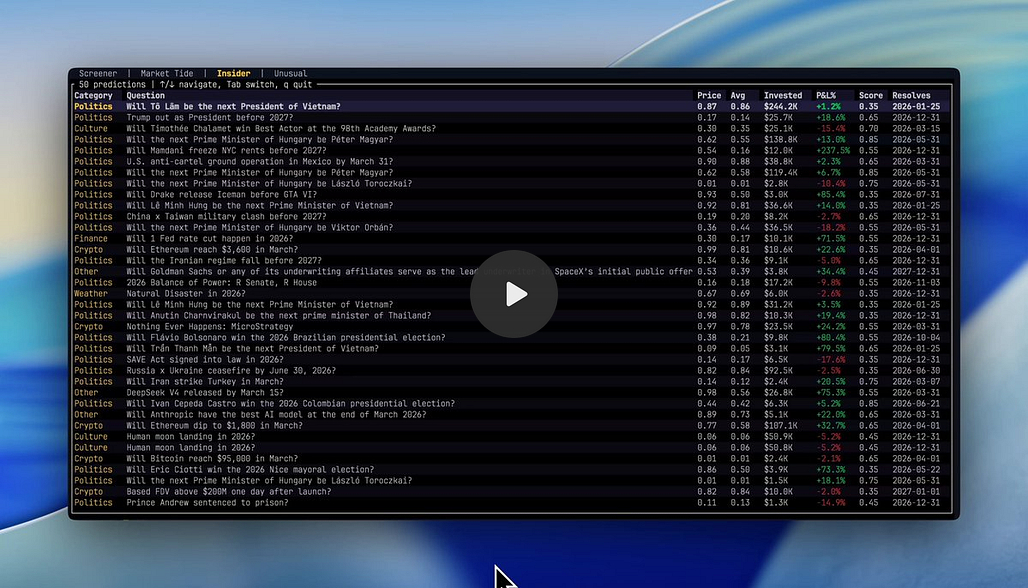
@unusual_whales announced an MCP Server that streams structured options, equities, and prediction market data into AI tools like Claude. This is the “agents need feeds” story in plain form: models are only as useful as the data they can pull, safely, on demand.
It also raises the obvious tension: making it easier to build trading bots is exciting, but it also lowers the bar for people to automate risky behaviour. The tooling is moving faster than the norms.

Security becomes a feature as agents move onto your desktop
@emollick praised Claude Cowork Dispatch for covering most of what he wanted from OpenClaw, while feeling less likely to do something catastrophic with your files. That is the agent era in a sentence: capability is great, but trust is the product.
As assistants get persistence and system access, the “default safe” option will usually beat the clever but sketchy alternative, even if the sketchy one moves faster.


