



Overview
Today’s feed swings between big hardware and fast-moving AI. NASA is back on the pad with Artemis II fuelling tests, SpaceX keeps the launch cadence ticking, and Starlink’s footprint in Zimbabwe is turning into real national infrastructure. Meanwhile, the software world is in a sprint: Google’s Gemini 3.1 Pro is getting people excited about creative code and simulations, OpenAI is making ChatGPT coding more hands-on, and the wider ecosystem is pumping out new tools for browsers, video, product imagery, and even autonomous red teaming.
The big picture
The theme is compression, time, cost, and friction all dropping at once. Creative work that used to mean specialists and budgets is being squeezed into prompts and templates. Security tools are being automated in ways that raise eyebrows. And across it all there’s a steady drumbeat: the winners are the people who can ship, test, and iterate quickly, whether that’s rockets, networks, or code.
Artemis II fuelling rehearsal moves from checklist to reality
NASA’s second cryogenic tanking test is the sort of unglamorous milestone that matters: loading propellant, hunting leaks, and proving the ground systems can do it reliably. It is the final stretch stuff that decides whether “soon” becomes “scheduled”.
With Artemis II set to be the first crewed mission of the programme, these rehearsals are also a quiet confidence builder. If fuelling goes smoothly, the rest of the launch flow starts to look less hypothetical.


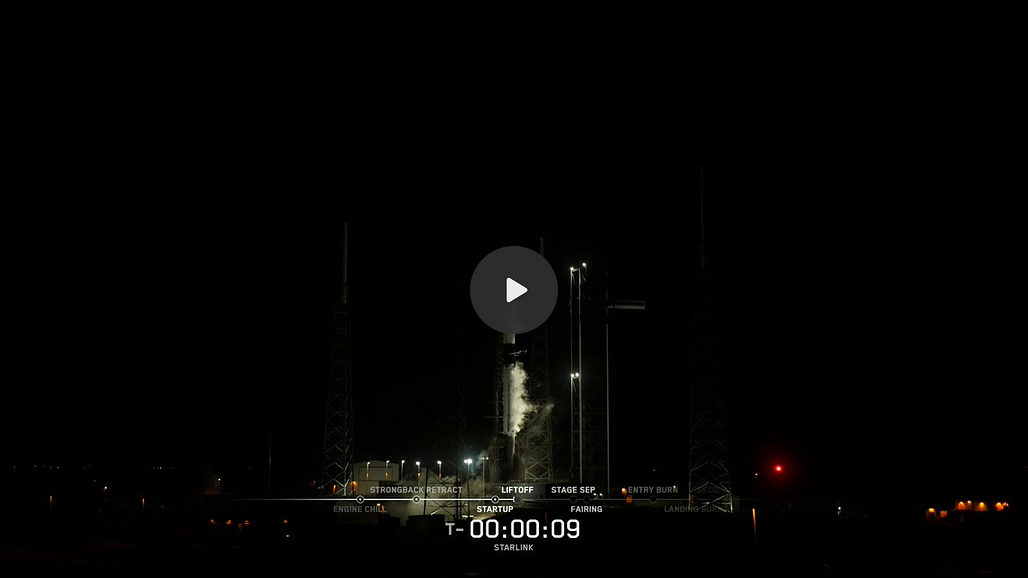
Falcon 9 does what Falcon 9 does: another night launch, another landing
SpaceX posted a simple “Liftoff!”, but the subtext is the machine-like rhythm: 29 more Starlink satellites up, booster back down, and the whole thing looking routine in the best way. When launches become normal, the argument moves from “can we?” to “what do we build on top of this?”
It also reinforces the gap between flashy announcements and operational delivery. Space is still hard, but repetition is the cheat code.

Starlink becomes core internet infrastructure in Zimbabwe
The claim that Starlink is now providing 80% of Zimbabwe’s international bandwidth is startling, not just as a business headline but as a reminder of how quickly connectivity can reconfigure when legacy options are weak. 50,000 customers in a year is not a niche, it is a structural change.
The detail about 8,000 units going to schools also hints at the next phase: once households are connected, institutions follow, and expectations for uptime and access start to rise.


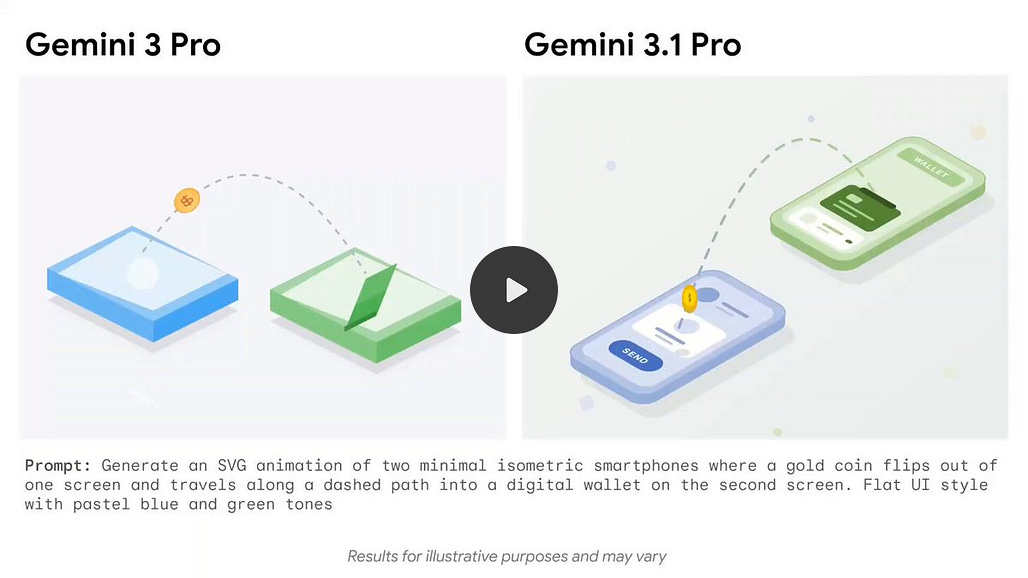
Gemini 3.1 Pro has people talking like a small update was a big jump
A side-by-side comparison of Gemini 3 Pro versus 3.1 Pro is doing the rounds, with the newer model producing cleaner, sharper vector art and smoother animation. For designers, it reads like fewer prompt contortions and more dependable outputs.
It is also a good reminder that “.1” releases can still change workflows, not because the headline benchmark moved, but because the day-to-day feel got better.


A hard test for AI code: a believable 3D ocean
Deedy’s thread is a great example of how people are testing models now: not with riddles, but with tasks where getting a single parameter wrong breaks the whole thing. The claim is that Gemini 3.1 Pro produced workable Three.js code for an ocean simulation with the right mix of graphics techniques and shader thinking.
Whether you call it photorealistic or not, this is the kind of progress that makes “prompt to prototype” feel less like a demo and more like a tool.


OpenAI makes Code Blocks feel more like a mini IDE inside ChatGPT
OpenAI Developers is pushing a practical upgrade: write, edit, and preview code in one place, with split-screen review and full-screen editing. It is the sort of interface change that sounds small until you realise how much time gets lost bouncing between chat, editor, and browser.
The replies also show a familiar tension: people want new features, but they also want stability and predictable product decisions.

Claude Code frustration boils over after regressions
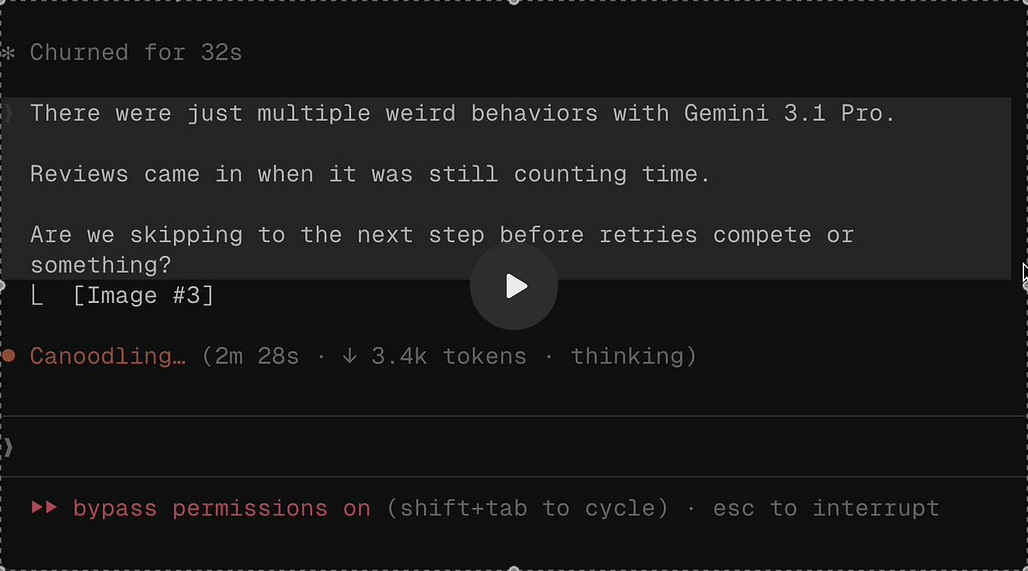
Theo’s complaint is straightforward: stalled UI cues, missing “thinking” feedback, and long runs that look like nothing is happening. That kind of uncertainty is poison for dev tools, because you cannot tell if you should wait, retry, or abandon the attempt.
An Anthropic engineer response in-thread suggests a technical cause, but the bigger takeaway is reputational: if a coding assistant feels unreliable for even a week, people start shopping.

Pomelli turns a single product photo into a campaign, and that changes the baseline
Google Labs is positioning Pomelli’s “Photoshoot” as a shortcut from one image to multiple polished product shots. The pitch is obvious: small businesses get studio-style outputs without booking time, space, or kit.
The creative debate is also obvious: it lowers the cost floor for imagery, but it also risks a flood of samey, synthetic visuals where brand distinctiveness is harder to protect.


Autonomous red teaming goes open-source with PentAGI
PentAGI is being shared as a multi-agent system that can plan and run penetration testing with minimal human input. The excitement is real, because even partial automation can speed up the boring parts: recon, enumeration, reporting.
The worry is just as real. Tools like this can tighten security when used responsibly, but they can also lower the barrier for misuse, and “zero human input” is rarely what you want in a high-stakes environment.

Comet on iOS: the browser becomes the assistant
Aravind Srinivas says Comet iOS is close, with pre-orders open and Perplexity woven into the browsing experience. The idea is not a chatbot next to the web, but help embedded into each page, ready for quick context and actions.
If it lands, the competition is not just other browsers, it is the habit of browsing alone. Mobile is where that habit is strongest, which is why this release matters.


