
Overview
Today’s posts put AI’s promises next to some harder questions: who controls more capable models, what happens to jobs, and how much automation can we trust? A reported $44 billion cybersecurity deal leads the business news. Elsewhere, SpaceX reports a launch-pad record, Bill Ackman warns about borrowing costs, and Reachy Mini opens its hardware designs to builders.
The big picture
unusual_whales reports a $44 billion CrowdStrike deal for Zscaler
According to @unusual_whales, CrowdStrike is buying Zscaler in an all-stock transaction worth roughly $44 billion. The reported terms give Zscaler shareholders 1.135 CrowdStrike shares per share, valued at about $260.41, a roughly 34% premium.
The account describes it as the largest cybersecurity acquisition ever. If confirmed and completed, it would bring two major security suppliers under the same roof. Customers would have reason to watch product overlap, pricing and whether a larger supplier means fewer meaningful choices.

OpenAI calls for shared limits on model training
Jakub Pachocki says OpenAI is sharing more about its pretraining progress to help establish common safety thresholds. His “Perplexity and Intelligence” argument proposes limits based on perplexity, a measure of prediction error, alongside other measurements. Sam Altman also backed the call for common limits.
This is a proposal for industry agreement, not evidence that agreement exists. The difficult questions are which measurements deserve that role, what crossing a threshold would require, and who gets to judge whether further training is safe.


Polymarket relays a report about Amodei’s view of AI unemployment
Citing The Wall Street Journal, @Polymarket says Anthropic chief Dario Amodei suggested immersive video games could pacify people left jobless by AI and help prevent political unrest. The supplied post offers a second-hand summary, not the full remarks, so the wording and context deserve care.
Even with that caveat, the underlying question is serious. Entertainment does not replace income, purpose or political representation. Any credible response to large-scale job losses needs to address those needs directly.


SpaceX reports a 32-hour launch-pad turnaround
SpaceX says Falcon 9 launched NROL-136 from California’s pad 4E just 32 hours after USSF-317 departed from the same pad. The company calls it its fastest turnaround between launches from a single pad.
The record concerns ground operations, not reuse of the same rocket. Preparing a pad for another flight that quickly is still a substantial operational milestone, particularly for customers seeking frequent access to orbit.


Bill Ackman warns the Fed about tighter financial conditions
Bill Ackman argues that the Federal Reserve risks another mistake on 9 December. His example is SpaceX, which he says recently raised secured debt at 8.259%, compared with below 6% on an earlier unsecured bond offering.
That is a striking comparison, though different financing terms can affect the rates. Ackman’s broader point is that the cost of borrowing for businesses can tighten conditions beyond what the headline policy rate alone suggests.

Justin Kim announces open hardware files for Reachy Mini
Justin Kim says the Reachy Mini team is open-sourcing the robot down to its circuit boards. The release includes three custom PCB designs, editable CAD files, wiring details and assembly information.
That gives builders more than software access. They can inspect the physical design, modify components and understand how the machine fits together. Manufacturing and assembly still take work, but the plans make experimentation more accessible.


PolymarketMoney reports unmanned production at 15 P&G sites
@PolymarketMoney claims Procter & Gamble can now run production periods without humans at 15 sites, with more planned. The post does not specify which facilities, how long those periods last, or which tasks still need staff.
Those details matter. Running a production line unattended for a period is different from operating an entire factory without people. Maintenance, replenishment and handling faults remain important parts of the picture.

Nikita Bier questions businesses that profit from customer inertia
Nikita Bier offers a deliberately exaggerated diagnosis: forgotten subscriptions and cash left in low-interest accounts keep businesses afloat. His thought experiment asks what happens when people delegate subscription cancellations and cash management to AI agents.
The useful point sits beneath the joke. An agent that regularly checks bills and compares returns could make inaction less profitable. Giving software permission to cancel services or move money, however, requires clear limits and reliable checks.

Brian Chesky explains why replacing a founder is difficult
Brian Chesky argues that founder chief executives often carry a second job: chief product officer. They understand how the product was built and have the authority to rethink it.
His succession warning is practical. Appointing a new chief executive does not automatically replace that product knowledge or judgement. Boards need to decide where those responsibilities will sit, rather than assume they come with the title.

Sawyer Merritt shares a multi-stop Tesla FSD V15 drive
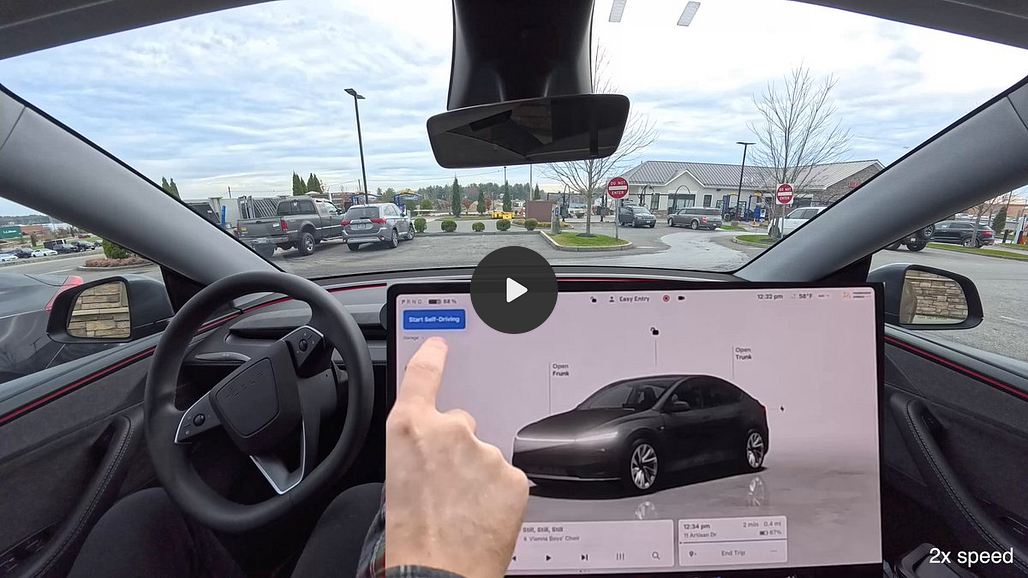
Sawyer Merritt posted footage described as a daytime drive using Tesla FSD V15, covering several destinations and a parking garage. Such trips offer a more varied demonstration than a straightforward stretch of road.
A selected video can show how a system behaves on that journey, but it cannot establish reliability across conditions or prove readiness for unsupervised driving. Interventions, supervision requirements and broader testing remain essential context.