



Overview
Today had a strong infrastructure feel: AI systems are moving deeper into robotics, security research, scientific code, agent runtimes, and the tools that surround everyday development. At the same time, the governance argument sharpened, with lab staff calling for a slower pace on frontier models while others pushed back in favour of open access. The practical thread running through it all was cost, control, and who gets to build with the next generation of systems.
The big picture
World Labs shows how generated worlds could train real robots
Fei-Fei Li shared early work from World Labs on R2S2R, a real-to-sim-to-real system that turns a single physical robot task into many controllable simulations. The point is not just to make convincing virtual scenes, but to create training grounds where robots can practise, fail, and improve before touching hardware again.
The demos show close alignment between real and simulated robot actions, from opening boxes to handling objects. If this approach holds up across more tasks, it could make robotics training less tied to expensive trial-and-error in the physical world.

Claude Mythos finds weaknesses in post-quantum cryptography research
Anthropic’s Claude Mythos Preview reportedly found a mathematical weakness in HAWK, a NIST post-quantum signature candidate, after years of human review had missed it. It also produced a faster attack on a reduced 7-round version of AES-128, though the full production version of AES is not affected.
The sober reading is that deployed encryption is safe, but cryptanalysis may be entering a new phase. These runs were costly, around $100,000 each in compute, but they show that frontier models can now contribute to specialist mathematical work in ways that deserve close attention.


MCP goes stateless in its biggest release so far
ClaudeDevs announced MCP 2026-07-28, a major update to the Model Context Protocol. The headline change is that MCP is now stateless, which makes remote servers easier to deploy across serverless, edge, and load-balanced setups.
The release also gives first-class status to extensions, including MCP Apps for sandboxed interactive interfaces, Tasks for long-running async work, and stronger enterprise authentication. With hundreds of servers already in Claude’s directory, MCP is looking more like common plumbing for AI tools and data access.

AI lab staff call for a slower pace on frontier models
More than 1,100 employees across OpenAI, Anthropic, Google, Meta, and other labs have backed a petition asking the US to support international methods for deliberately pacing frontier AI development. The concern is that model progress could move beyond human understanding or control before governance catches up.
The signatories include senior names such as OpenAI Chief Scientist Jakub Pachocki and Anthropic figures including Jared Kaplan and Chris Olah. It is a striking moment because the call is coming from inside the labs, not only from outside critics.

The access debate around superintelligence heats up
David Sacks amplified Mark Zuckerberg’s argument that the defining issue around superintelligence is access: whether it remains concentrated in a handful of institutions or becomes broadly available. His framing puts central control, rather than open access, at the centre of the risk conversation.
This sits in direct tension with the pacing petition. Some people inside labs want more brakes and international guardrails, while others argue that concentration itself is the danger. Expect this divide to keep shaping the politics of AI safety.


GitHub gives maintainers a practical security checklist
GitHub posted a useful thread for open-source maintainers who want to improve project security without becoming security specialists. The advice is refreshingly concrete: add a SECURITY.md file, turn on private vulnerability reporting, use secret scanning with push protection, enable Dependabot, add CodeQL scanning, and protect the default branch.
None of these steps solves supply-chain security on its own, but together they reduce obvious weak spots. For small projects, this is the kind of quiet maintenance work that can prevent painful incidents later.

OpenAI shows coding agents doing real scientific engineering
OpenAI shared a field report on coding agents in scientific computing, with examples from life sciences. The work ranges from routine software upkeep to GPU-native systems and full redesigns, which is where agents start to look less like autocomplete and more like junior engineering help under close supervision.
The key caveat remains human ownership. Researchers still need to define the question, check the results, and maintain the work over time. The gain is that more of the implementation burden can move off their plate.


Fish Audio brings fresh pressure to the voice AI market
Machina highlighted Fish Audio’s S2.1 Pro launch, positioning it as a serious challenge to ElevenLabs. The pitch is voice cloning from short clips, text-based emotion control, language switching mid-conversation, and open-weight models for local experimentation.
There is an important catch: replies note the weights are research-only and not cleared for commercial use. Still, the demo points to how quickly high-quality voice models are spreading beyond closed platforms.


AI spending tools become their own startup category
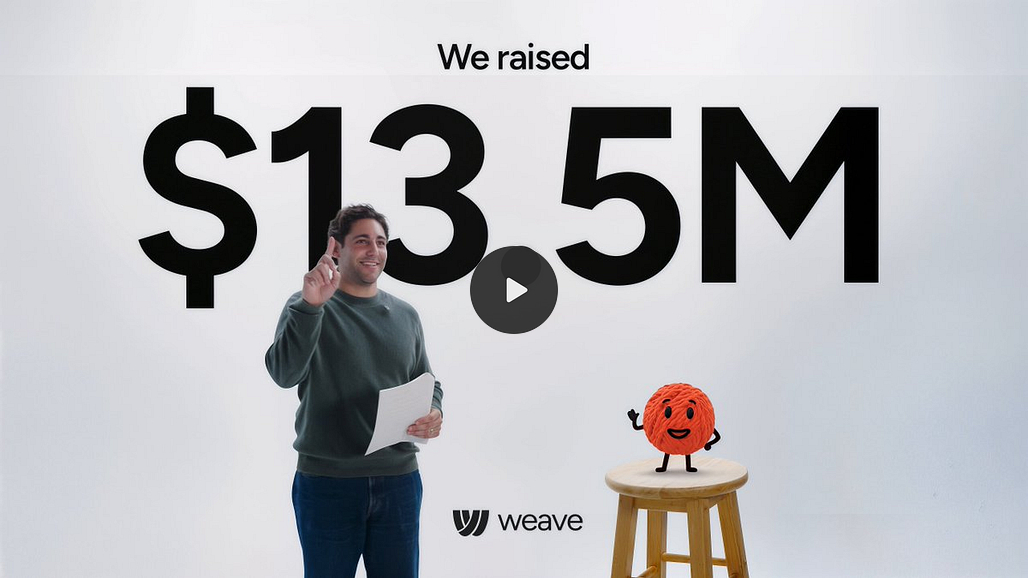
Adam Cohen announced Weave’s $13.5 million Series A, led by Standard Capital, with a pitch aimed at engineering teams watching token bills climb. Weave tracks prompts through to production, scores AI impact on quality and efficiency, and helps route work to cheaper models where possible.
It lands in the same broad mood as Nous Research discounting GPT-5.6 Terra and Luna through OpenRouter: companies want more model choice, better cost control, and clearer proof that AI spend is producing useful work.

Falcon 9 stands ready for the NROL-95 mission
SpaceX posted Falcon 9 vertical at pad 40 in Florida ahead of the NROL-95 mission for the National Reconnaissance Office and the US Space Force. The launch is targeted for 30 July at 3:09 a.m. ET, with booster recovery planned at Landing Zone 2.
The payload fairing also brought some personality: a mission patch with a cartoon ferret mascot and the slogan “WE ARE THE CHAMPIONS”. Classified payloads rarely give much away, so sometimes the patch does the talking.


