



Overview
Today’s posts put the promise of AI next to its practical risks. OpenCode’s breach exposed third-party API keys, with customers reporting drained balances. Elsewhere, Odyssey showed a simulated fruit fly navigating generated worlds, Tim Sweeney reflected on what AI could take off programmers’ plates, and SpaceX prepared 32 payloads for launch. The recurring question: what can we build faster without losing sight of the costs?
The big picture
OpenCode warns customers to revoke exposed API keys
OpenCode says attackers accessed a legacy Console system being retired, exposing third-party API keys belonging to 1.4% of Console customers with linked providers. Matt Johansen shared the breach notice, and Max Weinbach reported that his OpenAI and Anthropic balances had been drained, with some unauthorised Google usage too.
The immediate task for affected customers is to revoke and replace keys through the providers’ own dashboards, not just remove them from OpenCode. Check recent usage, update any apps that rely on those keys, and set spending limits. According to the supplied breach details, local CLI installations without cloud-stored keys were not affected.


Odyssey puts a simulated fruit fly brain inside Odyssey-3
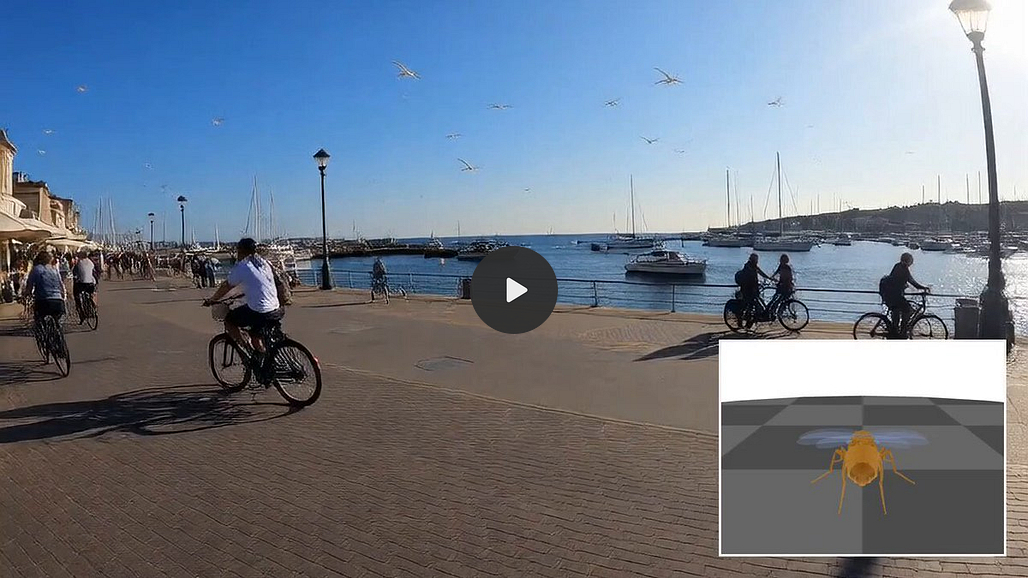
Odyssey shared a demonstration of a simulated fruit fly brain controlling flight through environments generated by its Odyssey-3 world model. The clip shows the insect navigating a sunny marina, with the company describing its behaviour as autonomous.
The interesting part is the connection between the brain simulation and its surroundings: visual input from a generated world feeds into a neural model that produces movement. It is a striking experiment, though a short demonstration does not establish how faithfully either the behaviour or the environment matches reality.

Tim Sweeney makes the case for AI-assisted programming
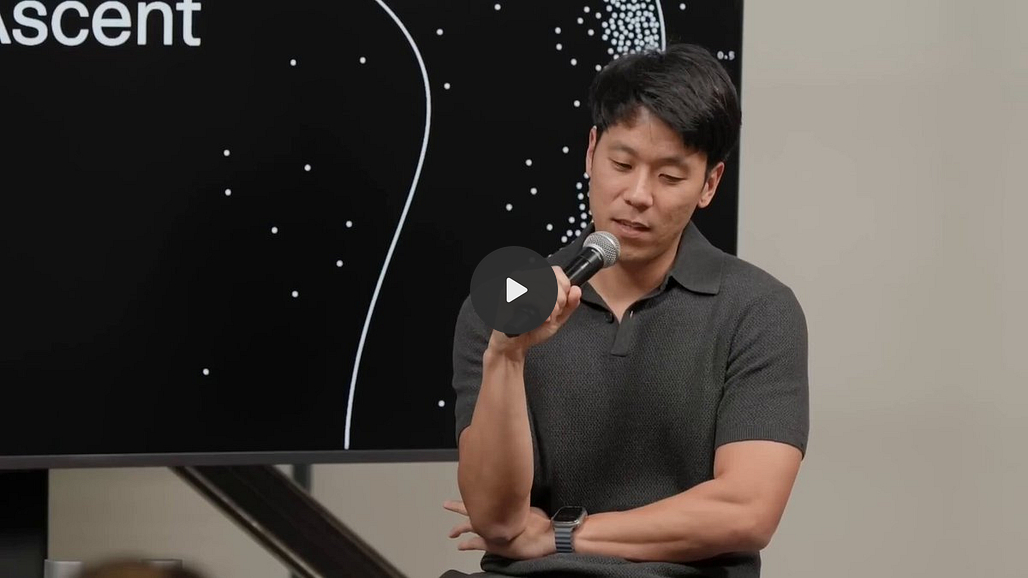
Looking back at Unreal Engine 1, Tim Sweeney estimates that 30% of his time went into hard technical problems, from texture mapping to networking. The remaining 70% was routine typing and refactoring, work he argues AI can now take on reliably.
His argument is broader than saving keystrokes. Sweeney sees instructions expressed through documents, art and plans becoming another layer of programming abstraction. The useful test is not whether writing code feels the same, but whether developers can produce better games and engines with fewer repetitive tasks.

Neuralink’s DJ Seo explains Musk’s aggressive deadlines
Neuralink president DJ Seo describes Elon Musk’s demanding schedules as an engineering exercise: start with an “all-green-light” timeline, then ask which delays are genuine constraints. Seo claims 80-90% of typical delays turn out to be assumptions rather than necessities.
That is a useful challenge to inherited processes, not a universal law of project management. Asking why a step takes six weeks can expose wasted time. It cannot make a physical limit or a safety requirement disappear.


SpaceX packs 32 payloads for Bandwagon-5
SpaceX has enclosed 32 payloads inside Falcon 9’s fairing ahead of the Bandwagon-5 rideshare mission. Launch is scheduled for 19 October from Florida, with the booster expected to make its 19th flight.
The cargo includes small satellites and re-entry vehicles. Shared launches give customers a route to orbit without booking an entire rocket, though each payload still needs to work within the mission’s shared timetable and destination.


Bolt opens free weekend access for Builders Week
Bolt.new is offering free access over 17-18 October, alongside a competition with a $10,000 grand prize and submissions due on 20 October. Its browser-based app builder generates code from natural-language descriptions.
For anyone trying it today, a small, working product is a better target than an ambitious demo with unfinished basics. Judging includes implementation, design and impact, so there is reason to spend time testing the result rather than simply generating more features.


Tom Cunningham explains a demand slump in a sentence
Economist Tom Cunningham, posting as @testingham, offers a compact market parable: households expect bad weather, so they plan to buy less, but refuse to accept lower prices for their own crops.
Each household’s caution makes sense on its own. Across the whole market, it means fewer transactions when prices stay fixed. The story gives a plain-language account of how weak demand and sticky prices can leave willing producers with goods they cannot sell.

Jon Erlichman tallies a decade of standout tech returns
Jon Erlichman’s retrospective puts Nvidia at the top of a striking list: he calculates that $7,800 invested ten years ago would now be worth $1 million. His corresponding figures are $12,800 for AMD, $19,500 for Micron, $25,300 for Shopify and $37,000 for Tesla.
These are selected winners, not a repeatable investment recipe. The figures capture extraordinary growth, but leave out the uncertainty of choosing those companies in advance and holding through steep falls.

Peter Diamandis argues for optimism grounded in evidence
Peter Diamandis says he reads more than 100 stories a week, including negative coverage, and treats optimism as a conclusion he must keep checking against evidence. After four decades following technology, he says he has never been more excited about the future.
The strongest part of that position is its willingness to be tested. Today’s mix of inventive experiments and a costly security breach leaves room for enthusiasm, provided it comes with scrutiny rather than replacing it.


