
Overview
Today’s feed is full of AI moving closer to the places where real work happens: calendars, health records, whiteboards, voice calls, job training and company memory. Around that, the bigger fight is still about money and compute, with Chinese models, US capex, new chips and infrastructure choices all pulling on the same thread.
The big picture
Agents are starting to hand back finished work
Andrew Ng announced OpenWorker, an open-source agent built to do more than chat. The pitch is simple: ask it for a customer brief, a report, a calendar fix or an alert triage, and it works across files and tools to produce something usable.
The wider pattern is clear too. Nous Research is adding whiteboard skills to Hermes, while Jack Dorsey is talking about Buzz as a social workspace for agents. The agent layer is moving from prompt boxes into shared workspaces, local tools and approval-based action.

ChatGPT moves into health records
OpenAI has started rolling out Health in ChatGPT for people in the US. It can connect to Apple Health and supported medical providers, then show timelines, labs, medications, activity data and other records in the sidebar.
The careful part matters here. OpenAI says health data needs permission, gets extra encryption, and is not used for ads or model training. The feature is meant to help people understand records and prepare for appointments, not replace a clinician.


Claude’s voice mode gets more useful
Claude’s Voice mode now runs on more capable models and can use connected tools during a conversation. That means people can talk through a problem while Claude checks things like email or calendar, instead of switching back to typing when the task gets practical.
It is also expanding across more languages, including Spanish, French, Hindi and Japanese, and is rolling out in public beta across mobile, desktop and web. Voice is becoming less of a novelty and more like a normal way to use an assistant.


The China AI argument gets sharper
Several posts circled the same question from different angles: how much should US labs worry about Chinese open models? David Sacks pushed back against “Kimi Panic”, arguing American frontier models are still ahead and that over-regulation would be the bigger risk.
At the same time, quotes from DeepSeek’s Liang Wenfeng pointed to China’s compute limits and the need for continual learning beyond current model methods. ZeroHedge added the financial angle, warning that cheaper Chinese models could put pressure on the huge compute commitments sitting under the US AI boom.


AI spending is now a balance sheet story
ThePrimeagen framed Alphabet’s negative free cash flow as a bet on future earnings, comparing it with Netflix’s old content spend. The core idea: heavy AI data centre capex can look ugly today while still setting up future products and revenue.
That debate is turning up everywhere. Microsoft is trying to show that smaller specialised models can improve products like GitHub Copilot and Excel, while investors keep asking when the vast AI spend turns into visible returns.


The hardware race is getting less predictable
Gabriel pointed at Etched’s new funding and called it the “final boss of inference”, with Jane Street and SK Hynix among the names drawing attention. The company is trying to build specialised inference systems across chips, racks and software.
Another post noted Anthropic using Claude to bring up AMD MI355 GPUs with ROCm quickly, which hints at a wider change in the hardware market. If AI tools make non-NVIDIA platforms easier to work with, CUDA’s moat gets tested in a more serious way.


Mark Cuban thinks job simulators are next
Mark Cuban’s prediction was practical: open models could drive job simulators that teach employees through realistic company scenarios. He compared it with training tools for pilots and racing drivers, where software can recreate many cases before someone meets them in real life.
His bigger point is about company memory. If businesses do not capture what employees know before they leave, training new people in an AI-heavy workplace will get harder, not easier.

HEY gets faster by moving closer
DHH said 37signals added a San Jose data centre for HEY, bringing the service up to four. The result was a 100ms roundtrip cut for California, with smaller but still useful gains for Australia and Japan.
It is a plain reminder that infrastructure still comes down to physics. Put servers closer to people, and the product feels better without any grand reinvention.


Google’s SpaceX stake looks enormous
Polymarket highlighted a disclosure that Google owns about $94.1 billion in SpaceX stock, roughly a 6% stake. That comes from a much smaller investment made years ago, now transformed by SpaceX’s public market valuation.
The number also sits neatly beside the current AI infrastructure conversation. People are already speculating about orbital data centres, but even without that, Google’s SpaceX position is now a major asset in its own right.

ISS research keeps paying back to Earth
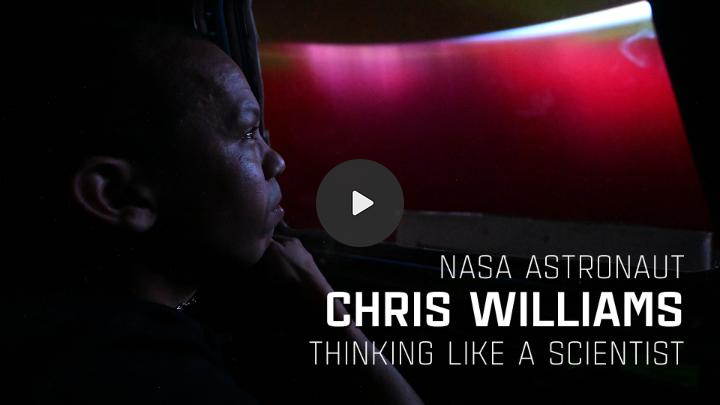
NASA highlighted astronaut Chris Williams’ eight months aboard the International Space Station, where he worked on research tied to cancer treatments, materials, semiconductors and future missions.
The details are a good counterweight to the space finance headlines. Microgravity research can still sound abstract, but protein crystals, targeted drug materials and station power upgrades are the kind of work that connect orbit to practical outcomes back home.