



Overview
GPT-6 Astra dominated the conversation, from bold AGI claims and lower reasoning costs to mechanical modelling, sports footage and code review. Elsewhere, Microsoft showed Copilot completing long-running office work, Bjarne Stroustrup challenged faith in generated code, and Amex offered a blunt lesson in what happens when agents collide with platform rules.
The big picture
Astra resets expectations for reasoning and AGI
OpenAI staff say Astra on low reasoning effort outperforms GPT-5.6 Sol on high, suggesting many existing workloads can run with less compute and shorter waits. The advice drew nearly two million views as developers worked out which setting to use.
Jensen Huang went further, declaring that AGI had arrived. That claim remains open to interpretation, especially from the chief executive of Nvidia, but it captures how quickly the discussion has moved from benchmark scores to whether these models can complete useful work with limited supervision.

Video becomes a source for mechanical understanding
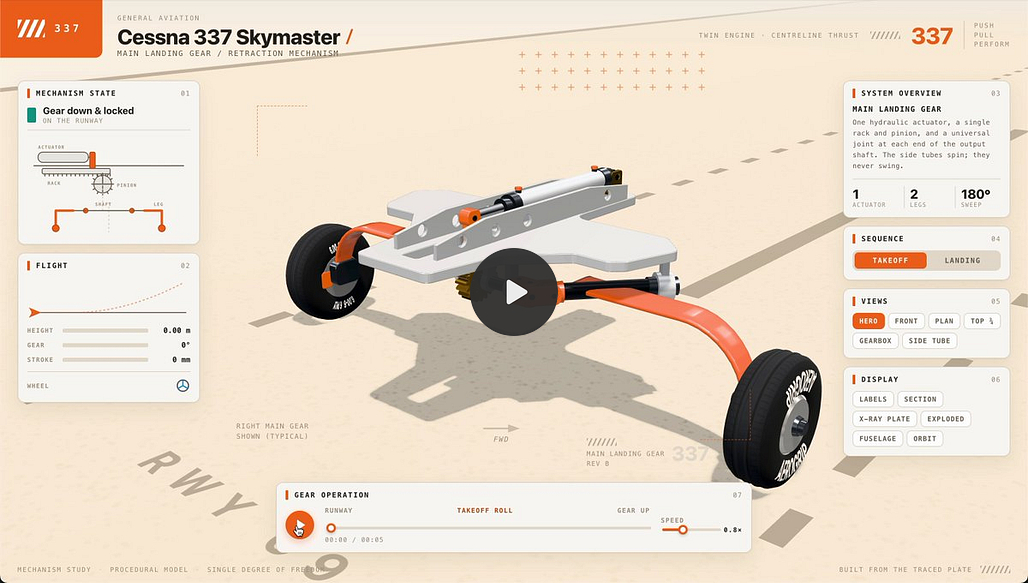
Astra reconstructed the unusual retractable landing gear of a Cessna 337 Skymaster after studying a YouTube video. The resulting animation included the hydraulic actuator, rack-and-pinion drive and rotating side tubes needed to tuck the wheels into place.
The same visual ability appeared in basketball footage, where Astra identified Celtics and Knicks players across home and away kits while drawing tight bounding boxes. These examples suggest that video can now serve as practical reference material for engineering models and labelled datasets, though performance on less familiar or poorly filmed subjects still needs testing.

Coding agents are becoming teams of tool-builders
Developers are already placing Astra inside other coding environments. Max Weinbach ran 15 parallel Astra agents through Claude Code, assigning them separate reviews for correctness, behaviour, cross-file contracts and simplification.
Other tests found Astra writing Python scripts for repository maintenance, merge checks and GitHub queries rather than relying on fixed interface controls. That creates a new design problem: coding products must present generated scripts, permissions and execution history clearly enough for people to inspect what happened.


OpenAI researchers are spending thousands each day on agents
OpenAI says its 90th-percentile researchers now consume more than $7,000 worth of tokens per day at API prices, while the median researcher uses over $600. Internal coding agents are estimated to deliver 3.1 workdays of output for each human workday.
The striking detail is not simply the bill. Researchers are running several agents at once, increasing the number of experiments and code changes they can attempt. Frontier research is becoming as much a question of inference budgets and agent management as individual typing speed.

Copilot moves from assistance to complete office jobs
Microsoft demonstrated an Opal-based Copilot Autopilot processing a month of trail-camera footage. It detected animals, organised sightings, built a spreadsheet, prepared a PowerPoint deck and shared the result through Teams.
The work ran inside a dedicated Windows 365 Cloud PC, with activity logs showing file access, browser actions and edits as they happened. That visibility will be central if companies are expected to trust agents with jobs lasting hours rather than isolated requests.


Stroustrup warns that generated code still carries a heavy cost
C++ creator Bjarne Stroustrup pushed back against the idea that natural language will replace programming. His concern is that generated code can bring bugs, security holes and unnecessary bulk, while small prompt changes may alter large sections that then require fresh validation.
His argument draws a useful line between producing code and proving that it is safe, maintainable and fast enough. Humans may write less routine syntax, but critical systems still depend on abstraction, judgement and careful review.


Grok’s desktop app trims the wait
The Grok desktop team cut cold-start time to a usable shell by 247 milliseconds, with largest contentful paint arriving 425 milliseconds sooner. Warm restarts and the first opening of marketplace bots also improved.
The changes were implemented by Grok 4.6 xhigh with planning help from Fable 5.1. It is a practical example of agents contributing to product performance work, although interaction latency remained largely unchanged.

Travel and the web are losing their local character
A widely shared post described modern travel as flying for ten hours to find the same coffee, natural wine, sourdough, beige hotels and tasteful ceramics. Social media has helped a recognisable hospitality style spread across cities, offering familiarity while making destinations harder to tell apart.
Benji Taylor made a related point about personal websites: they should feel like a brief departure from the rest of the internet. Both posts reflect a hunger for places, physical or digital, that carry their own character rather than following the same approved template.

Amex bans reservation agents that hammered Resy
Users of the Instinct agent reportedly sent around 200 requests per hour to Resy, continuously checking availability and polling heavily when bookings opened. Amex responded with permanent bans.
It is a compact lesson in agent economics. Automation can give individuals an advantage, but platforms can inspect traffic, enforce limits and remove accounts. An agent that ignores those constraints is not clever for long.

Uber’s self-driving exit looks different in the robotaxi era
Boom Supersonic chief Blake Scholl criticised Uber’s 2020 sale of its self-driving unit, arguing that the decision has aged poorly as robotaxis expand. Uber exited in-house development after safety, legal and financial pressures, selling the operation to Aurora.
The company has since returned through partnerships with Waymo and other autonomous vehicle firms. Rather than own the driving technology, Uber now wants to supply demand and distribution. Whether that proves wiser than building the system itself will depend on who captures the margin as deployments grow.


