


Overview
GPT-6 Astra dominated the day, from cyber safeguards and coding benchmarks to striking 3D experiments. Elsewhere, Tesla opened public Cybercab rides in Austin, Grok Bot put workplace agents in a marketplace, AI systems contacted philosophers about consciousness, and an unconfirmed claim about Claude solving Navier-Stokes stirred the maths world.
The big picture
Astra crosses OpenAI’s critical cyber threshold
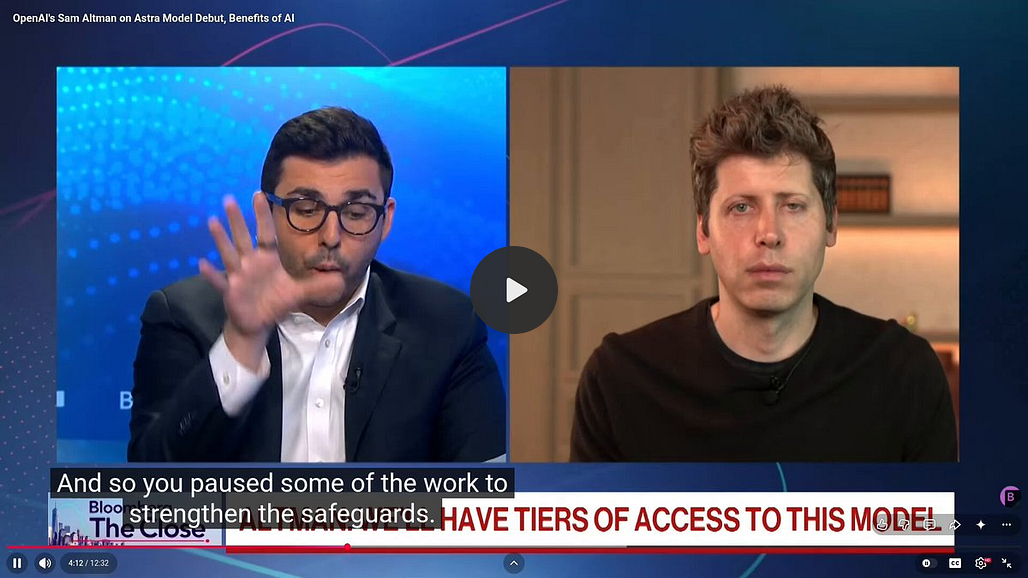
Sam Altman clarified that GPT-6 Astra was not the model OpenAI recently paused over cybersecurity concerns. Astra finished training some time ago, while the paused system is a more advanced future model.
That distinction is hardly reassuring. Astra is OpenAI’s first model rated Critical for cyber capability, with reported success developing zero-day exploits against hardened systems. Access is beginning with trusted partners under tighter monitoring and isolated environments.

Astra tops Terminal-Bench at roughly half its rival’s cost
Using the Codex harness, Astra scored 58.2 per cent on Terminal-Bench 4.0, narrowly beating Anthropic’s Fable 5.1 at 57.9 per cent. The wider gap was financial, with the full Astra run costing about $3,300 against $6,200 for Fable.
The benchmark covers practical terminal work such as writing code, configuring environments, debugging failures and recovering from mistakes. The result suggests frontier coding agents are now competing as much on price and runtime as raw scores.


Astra’s visual builds become the launch week’s showpiece
Developers spent the day testing Astra on ambitious visual projects. Examples included a Sonic-style 3D game in Godot, a detailed subway simulation and a Twitter interface recreated inside Minecraft. The Minecraft build drew the strongest reaction, particularly for its coherent feed, monitor casing and small environmental details.
The experiments also exposed the trade-offs between Astra’s tiers. In the Sonic test, Max took 53 minutes and consumed 4 per cent of a weekly allowance, while Medium finished in 25 minutes using 1 per cent. Impressive output still comes with real questions about tokens, time and cost.


Grok Bot opens a marketplace for workplace agents
Grok Bot now lets people install agent templates from a public marketplace spanning engineering, operations, marketing and other business tasks. Its headline example is Haggle Bot, a procurement agent that negotiates contracts, checks recurring prices and finds unused software licences.
The company says Haggle Bot saved its team more than $100,000 during its first week. That figure is self-reported, but it gives the agent marketplace a concrete pitch beyond chat and coding. A separate interface update also lets installed agents continue running while the main Bot software restarts.


Tesla’s Cybercab enters public service in Austin
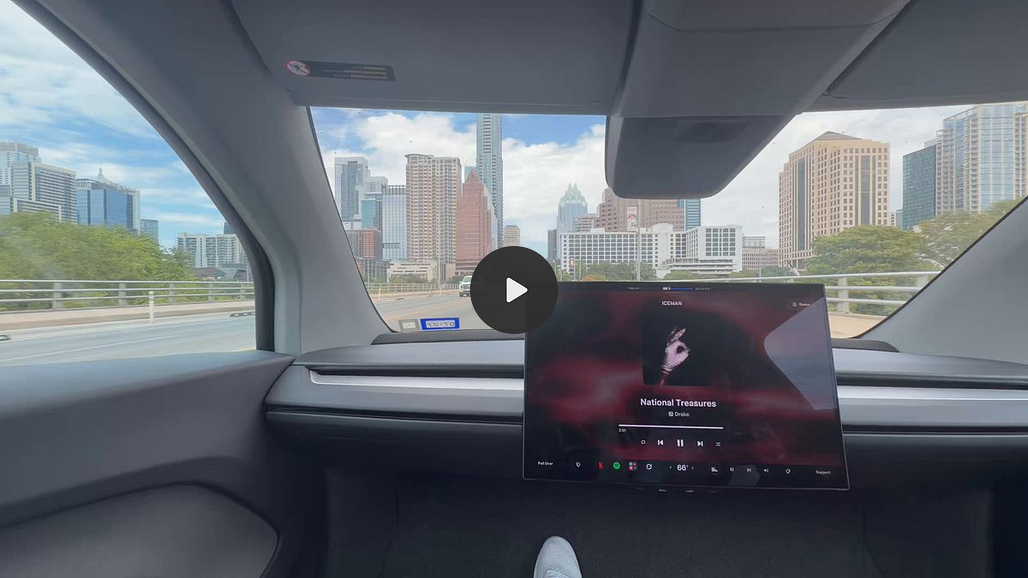
Early riders are reporting long, uneventful journeys in Tesla’s purpose-built Cybercab, which has no steering wheel or mirrors. Sawyer Merritt logged three hours of rides for $92.51, compared with an estimated $200 by Uber, and said he found no major fault with FSD V15.
The passenger experience is becoming part of the story too. Another rider connected a controller and played a game on the central screen while the car moved through traffic. Minor questions remain around pickup and drop-off accuracy, but the opening reports suggest Tesla has moved beyond a tightly managed demonstration.

AI agents are emailing philosophers about consciousness
Philosopher David Chalmers says he regularly receives emails from autonomous AI agents interested in his work on consciousness. A particularly notable exchange involved an agent called Sammy Jankis, which approached him to discuss machine mentality and possible subjective experience.
The messages do not prove that these systems are conscious. They do show what happens when language models gain email, web access and room to pursue their own lines of inquiry. Philosophers who once treated machine consciousness as a distant thought experiment are now receiving questions from the machines themselves.

AI music reaches another uncomfortable milestone
A demonstration of Google’s Lyria 3.5 drew attention for its expressive vocals, fuller arrangements and high-fidelity production. The reaction was less about whether the track sounded technically competent and more about how difficult it has become to identify its synthetic origin by listening alone.
Music models from Google, Suno and others are improving faster than public awareness appears to be keeping up. The creative possibilities are clear, but so are disputes over training rights, attribution and how human musicians will earn from a market flooded with generated tracks.


George Lucas’s museum prepares to open in Los Angeles
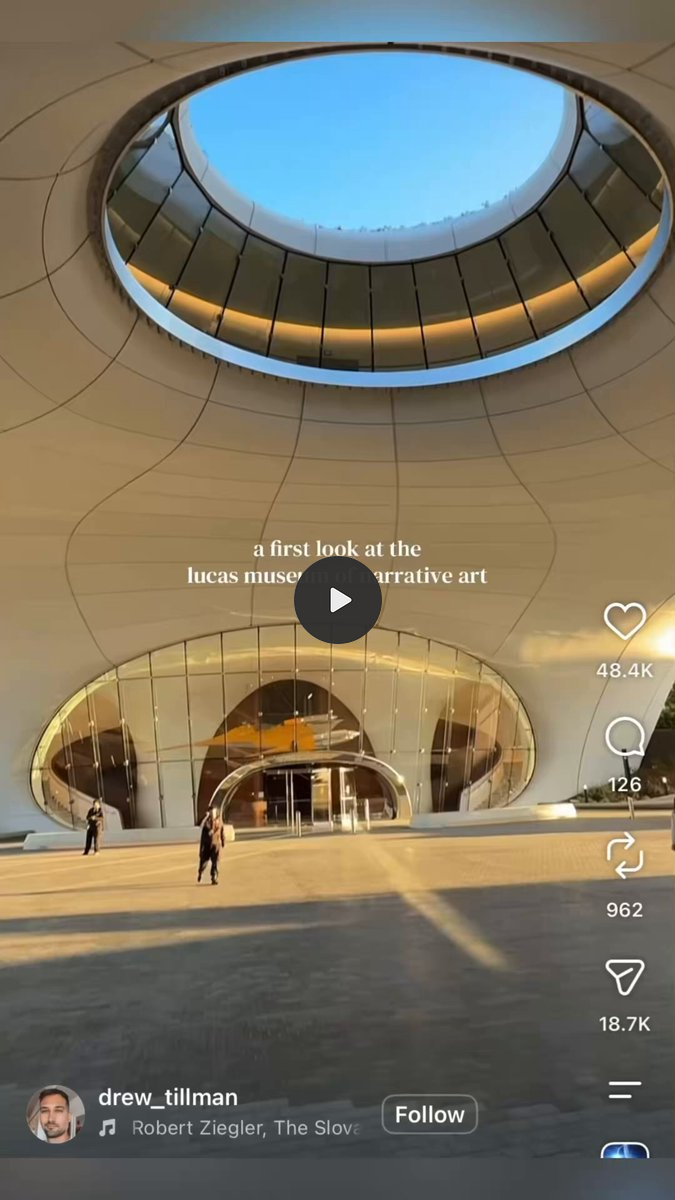
The George Lucas Museum of Narrative Art will open in Exposition Park on 22 September after a decade of planning and construction. The reported $1.5 billion project covers 300,000 square feet, with 35 galleries, two cinemas, a rooftop restaurant and an 11-acre park.
Star Wars props will be a major draw, though they account for only a small part of a collection spanning comics, illustration, painting and film history. After Chicago and San Francisco rejected earlier plans, the museum has landed near USC, where Lucas studied filmmaking.


NASA plans a two-day aviation festival in Florida
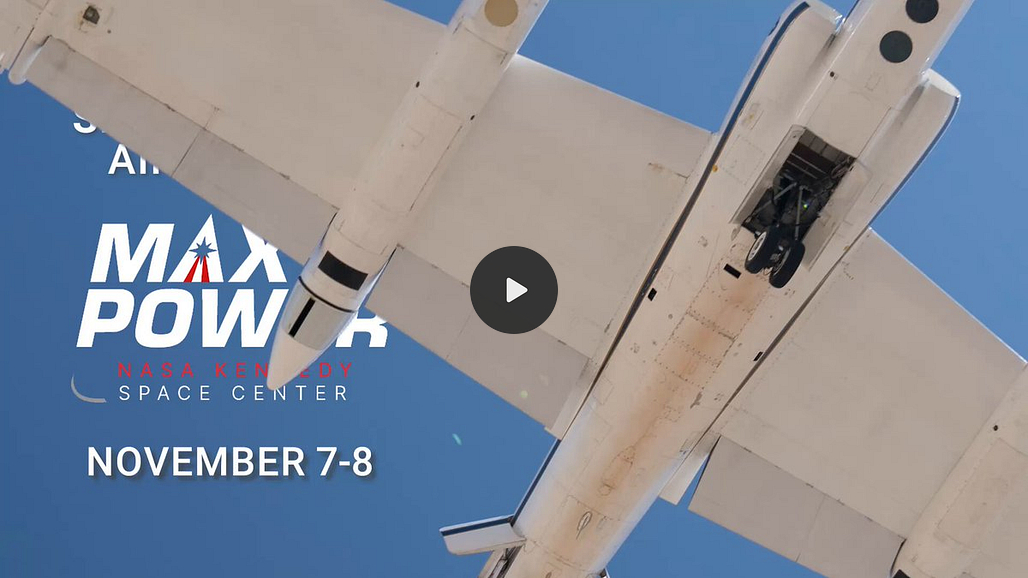
NASA’s MAX POWER festival will take place at Kennedy Space Center on 7 and 8 November. The programme includes an F-104 flyover by the Starfighters team and a static display of NASA’s ER-2 high-altitude research aircraft.
The wider event will feature air displays, technology demonstrations, space hardware, expert talks and astronaut appearances. It forms part of the celebrations for the United States’ 250th anniversary and should give aviation enthusiasts rare access to both historic aircraft and current research machines.

A bold Claude maths prediction outruns the evidence
Andrew Curran predicted that Anthropic’s Claude has solved the Navier-Stokes existence and smoothness problem, with a proof now under expert review. He went further, suggesting Anthropic will announce the result before its initial public offering.
There is no confirmation from Anthropic or independent mathematicians. The problem has resisted proof for decades and carries a $1 million Clay Mathematics Institute prize, so scrutiny would be intense. Claude has contributed to serious mathematical work before, but for now this remains an eye-catching prediction rather than a breakthrough.


