



Overview
AI competition centred on lower prices, faster coding and agents that can act beyond a chat window. Anthropic launched Claude Opus 5.5, OpenAI introduced GPT-6 Sol and Luna, and Tesla brought hands-free assistants deeper into its cars. Elsewhere, researchers linked ADHD with disrupted body clocks, healthcare costs drew scrutiny, and a viral Stanford image revived concerns about AI-edited advertising.
The big picture
Claude Opus 5.5 puts price and speed at the centre
Anthropic says Claude Opus 5.5 matches Fable 5.1 across most tasks while costing 40 per cent less to run than Opus 5 and producing output more than 30 per cent faster. Claude Code users also received higher session limits, lower usage costs and a temporary reset for Pro, Max and Team plans.
An internal test gave both models the job of porting HAProxy from C to Rust. Both passed nearly all its tests, but Opus 5.5 finished in 9.5 hours rather than 12 and cost 51 per cent less. It is a useful example of where the model race is heading: not just stronger benchmarks, but more work completed for each pound spent.


Ten Claude agents find and verify a new graph algorithm
Vals AI gave ten Opus 5.5 agents 15 hours to devise a faster shortest-path algorithm and prove it in Lean. After 733 messages, the agents produced C-HD, which improves published asymptotic bounds for certain graph densities.
The result deserves both interest and restraint. The proof is formally checked, but the gain applies within a specific mathematical range, comes with large constants and has not produced demonstrated speed gains on real graphs. Even so, the experiment shows how agent teams can combine mathematical exploration with machine-checked verification.


OpenAI answers with GPT-6 Sol and Luna
Sam Altman announced GPT-6 Sol and Luna, claiming gains over the 5.6 family in reasoning, coding, computer use, alignment and general work output. He also said prices have been cut in half per token, with still lower costs when measured by completed task.
With Anthropic making similar claims on the same day, cost per useful result is becoming as important as raw model capability. Independent testing will be needed to establish how Sol and Luna compare across sustained coding, research and computer-use jobs.

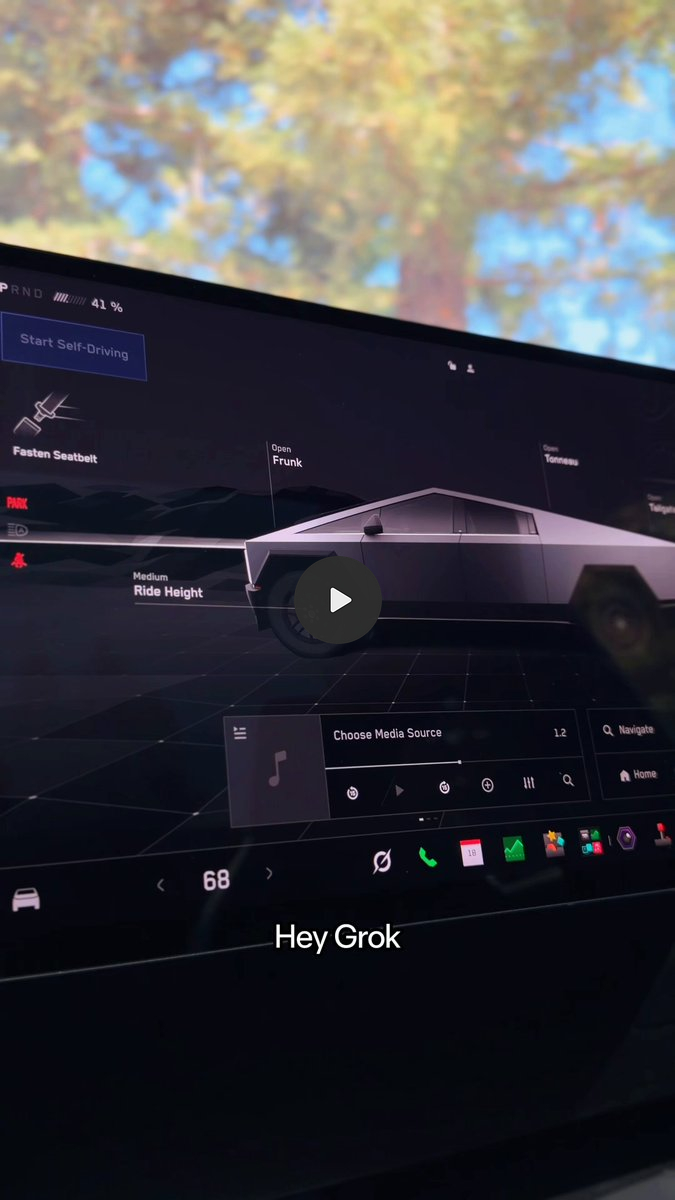
Grok starts handling tasks from inside Tesla cars
Tesla has expanded Grok with Connectors, letting drivers manage email, calendars, files, chats and tasks by voice. Its demonstration shows Grok checking travel plans, confirming calendar availability and summarising an itinerary without requiring the driver to use a phone.
Early access also includes Grok Bot, which can place online orders and carry out connected tasks through the existing voice interface. Broader access is planned, though some functions initially require a SuperGrok Heavy subscription. The convenience is clear, but permissions and purchase confirmation will matter when an assistant can reach personal accounts from a car.

DigitalOcean offers an idle-aware home for coding agents
DigitalOcean Managed Agents has entered public preview, offering hosted runtimes for Claude Code, Codex and LangGraph agents. Sessions can pause when idle, resume in under a second and retain their memory and filesystem between runs.
The service also supports checkpoints, access to more than 16,000 tools through a governed endpoint, and a choice of over 75 open and proprietary models. It targets a practical problem for developers: keeping long-running agents available without paying continuously for unused infrastructure.

A paper reframes ADHD through the body clock
Nicholas Fabiano and Brandon Luu argue that circadian disruption may be central to many cases of ADHD. Their paper brings together findings on delayed melatonin onset, high insomnia rates, evening chronotypes and altered cortisol and clock-gene rhythms.
The proposal does not mean every case of ADHD is a sleep disorder. It does suggest that clinicians should check sleep timing and circadian health more routinely. Fixed wake times, morning bright light, reduced evening light and carefully timed low-dose melatonin are among the approaches discussed, all of which should be considered with suitable medical guidance.


X Numbers creates a new route for private contact
X has begun rolling out X Numbers, unique numeric IDs that allow people to message or call each other without mutual follows or accepted requests. Numbers can be shared selectively, with incoming contact routed through the platform’s encrypted inbox and existing filters.
The feature gives people a contact detail tied to X rather than a personal phone number. Its success will depend on access controls and spam prevention, since removing the follow requirement also lowers the barrier for unwanted contact.

Mark Cuban says healthcare costs pose the nearer jobs threat
Mark Cuban argued that rising employer healthcare costs will cause more people to lose jobs, or never be hired, than AI will in the near term. Forecasts for 2027 put employer health plan increases at roughly 8 to 9.5 per cent, with annual costs per employee expected to pass $19,000.
Those expenses rarely stay confined to benefits budgets. Employers can respond through slower hiring, lower wage growth, reduced coverage or smaller teams. Cuban’s point is not that AI poses no labour risk, but that a familiar and less fashionable cost pressure is already influencing employment decisions.

Scientific research keeps becoming more computational
François Chollet revisited his 2021 prediction that most scientific fields would become branches of computer science through simulation, large datasets and machine learning. Five years on, the claim looks less provocative as computational methods take a larger role in biology, chemistry, medicine and materials research.
That does not make domain expertise secondary. Models and simulations still depend on sound experiments, good measurements and researchers who understand the subject. What has changed is that programming and data work are becoming standard scientific tools rather than specialist additions.


A viral Stanford image raises questions about synthetic advertising
A satirical post drew more than 1.6 million views after amplifying accusations that Stanford had used AI to alter students’ race, gender and body type in promotional material. The accompanying synthetic cafeteria scene exaggerated the idea by presenting a conspicuously curated group of students.
The post itself does not establish the full provenance of the original images, so the underlying claims need careful verification. Still, the reaction points to a wider concern: institutions can now rewrite documentary-looking photographs with little visible trace, making disclosure and source records more important.


