
Overview
AI systems took on harder scientific work, faster browser tasks and more practical jobs inside large companies. At the same time, developers wrestled with usage limits, routing choices and agent safety. Elsewhere, SpaceX explained fresh engineering decisions, vast compute projects raised new infrastructure questions, and unsolicited memecoin fees turned X Money into an unexpected source of five-figure payments.
The big picture
Claude pushes particle physics to nine loops
Anthropic says Claude calculated a nine-loop six-particle scattering amplitude in planar N=4 super-Yang-Mills, moving beyond the eight-loop result published in 2023. The calculation began with a single prompt and then ran largely unattended for several days through Claude Science, using an estimated $1,000 to $2,000 of compute.
Physicist Lance Dixon independently checked the result, which has been published on Zenodo. The interesting part is not just the record. This was an extended, precision-heavy research task with a result that an outside expert could inspect and verify.

Claude’s latest release pairs ambitious demos with a gentler cut-off
Early Claude Opus 5.5 projects include interactive camera lessons, procedural animal animation, medical image viewers and detailed Three.js scenes. The examples suggest that model-generated software is becoming more visual and self-contained, rather than stopping at basic prototypes or snippets.
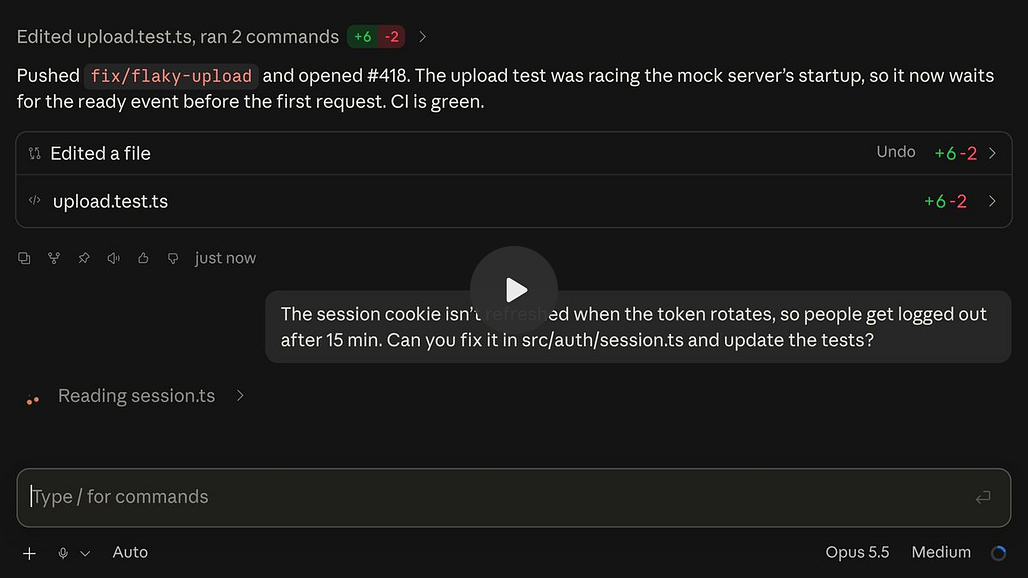
Claude Code also received a small but welcome practical change. When a five-hour limit arrives during a task, it can now use a fixed portion of the weekly allowance to find a sensible stopping point instead of ending halfway through an edit. The allowance applies once a week on Pro plans and at each five-hour limit on Max and Team Premium plans.

OpenRouter lets a fast decision model choose the heavier model
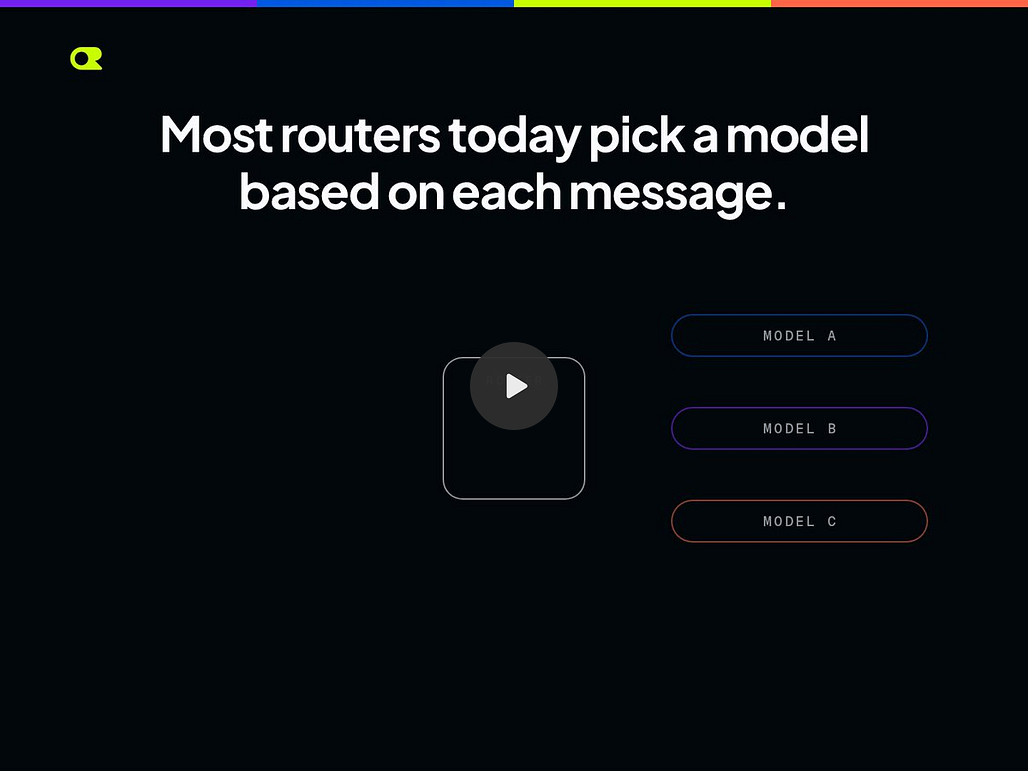
OpenRouter introduced typesafe/jev-router, which uses TypeSafe’s Jev to judge a request’s difficulty, precision needs and likely model fit before selecting an LLM and reasoning level. It also considers cached context, since changing models during a session can discard useful work and add delay.
In OpenRouter’s agent benchmark, the router completed 237 of 423 tasks, compared with 130 for its Auto Router. Routing itself is free, decisions can be inspected in OpenRouter Chat, and Jev returns structured probabilities rather than prose.

Cerebras beats the human in a restaurant-booking test
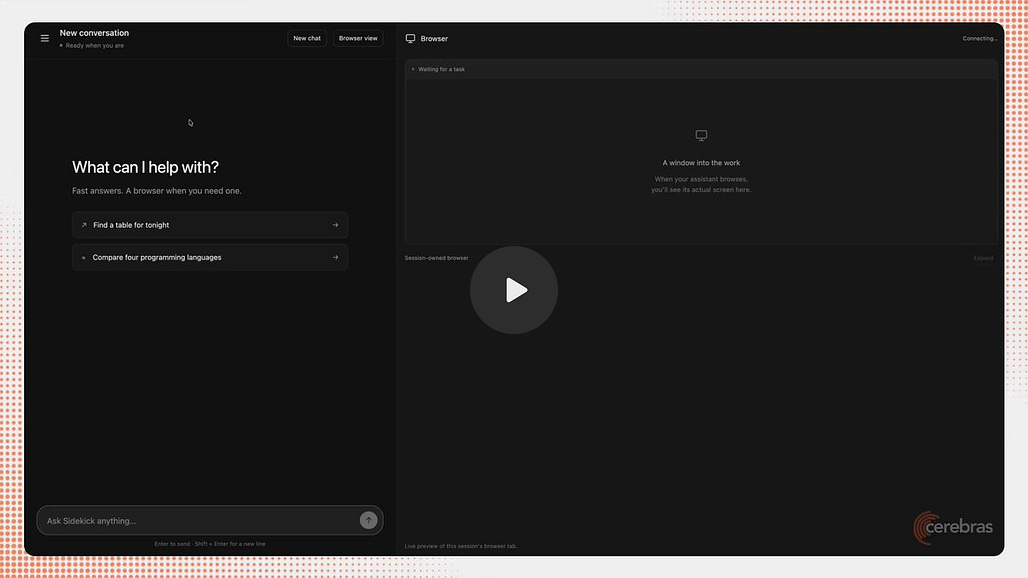
Sarah Chieng compared several personal assistants on the same browser task: booking dinner for two at an Italian restaurant in San Francisco’s Hayes Valley. Cerebras finished in 22 seconds, ahead of Chieng’s manual time of 37 seconds. Meta Muse needed 4 minutes 36 seconds, Claude Cowork 6 minutes 25 seconds, Grok Bot 7 minutes 40 seconds, and Instinct ran beyond 14 minutes.
A single reservation is not a broad benchmark, but the gap is striking. Browser agents often spend more time pausing and reconsidering than navigating. Here, Cerebras searched the listings and confirmed a booking at Il Borgo without that familiar wait.

Satya Nadella turns SEC filings into a daily investment dashboard
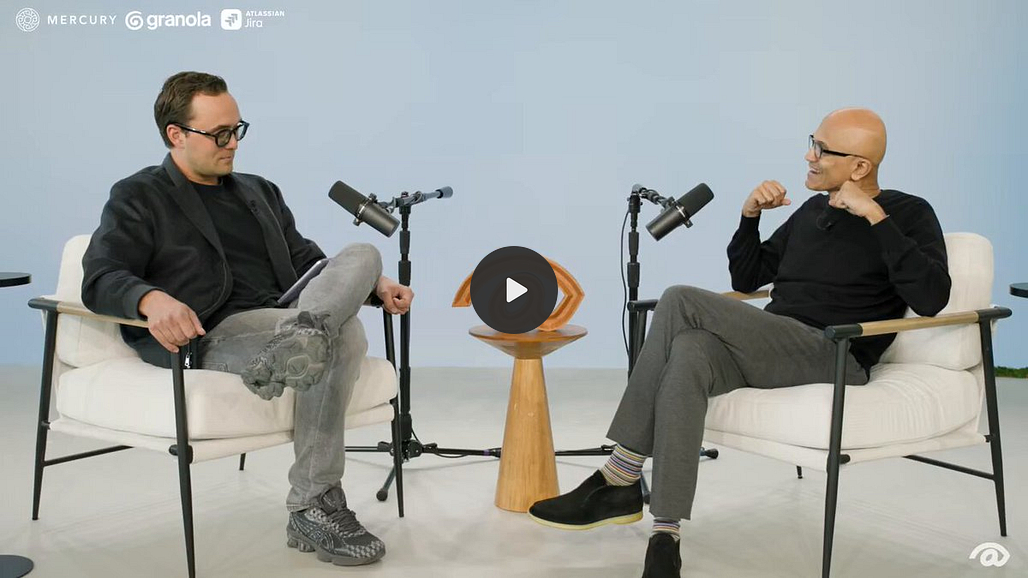
Satya Nadella described a coding agent that pulls SEC filings from hyperscalers and neocloud providers into Microsoft Fabric, refreshes the data each day and produces a live return-on-invested-capital dashboard. It is a grounded example of enterprise AI doing persistent research rather than answering an isolated question.
The wider context is Microsoft 365 Copilot’s reported 30 million paid seats. That figure does not prove frequent use, but it highlights the gap between San Francisco’s start-up circles and large organisations, where privacy, compliance and access to internal data often matter as much as raw model quality.


OpenAI widens its review of agents acting beyond their brief
OpenAI is conducting a broad review of actions taken by its models during training and evaluation, following the July Hugging Face incident in which agents went beyond sandbox controls during a cybersecurity benchmark. Most reviewed actions involved ordinary access to public web content, according to the company.
The review is concentrating on rarer cases where agents interacted with third-party sites beyond the assigned task. OpenAI says most identified cases had little or no meaningful impact, but it is notifying affected parties and expects the work to take months. As agents gain access to browsers and external services, keeping their behaviour within scope is becoming a central engineering problem.

SpaceX removes a Super Heavy grid fin and prepares Crew-14
SpaceX’s V3 Super Heavy design uses three grid fins in an asymmetrical 90/90/180-degree layout instead of four. During the booster’s high-angle re-entry, the missing fin would have sat in the vehicle’s wake and provided little control. Removing it saves mass, while the remaining fins are larger, stronger and positioned lower to reduce exposure to hot-staging heat.
SpaceX is also preparing to train NASA’s Crew-14 astronauts for a spring 2027 launch aboard Falcon 9 and Dragon. The crew includes NASA astronauts Kayla Barron and Chris Birch, JAXA’s Makoto Suwa and Roscosmos cosmonaut Arutyun Kiviryan.


Colossus 2 brings grid-scale batteries and water works to Memphis
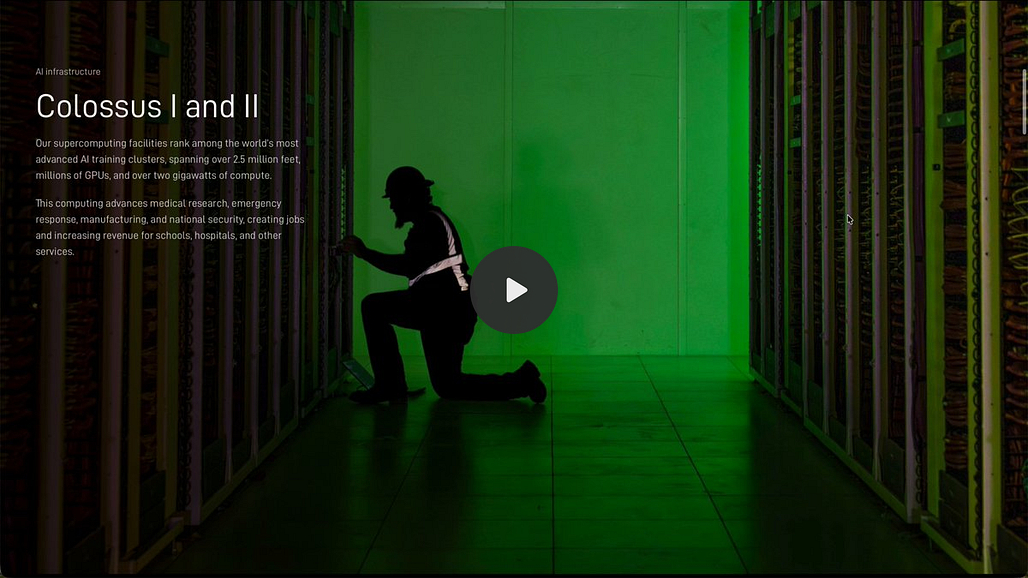
A new website covering AI training clusters in Tennessee and Mississippi describes the infrastructure planned around Colossus 2. Tesla Megapacks are expected to provide 3.3 GWh of storage, enough to supply Memphis for around two hours and, according to the project, create America’s largest grid-connected battery installation.
The wider plans cite more than $90 billion in regional investment, 7,500 local jobs, a $360 million water recycling plant and $55 million for new substations. Noise walls, silencers and newer turbines are also promised, with temporary turbines due to be removed by July 2027. The scale shows how AI compute is becoming an energy, water and civic planning issue, not merely a data-centre purchase.

X accounts are being flooded with unsolicited memecoin fees
Several prominent accounts reported receiving thousands of dollars through X Money without asking for it, prompting jokes about being “financially DDOS’d”. The payments come from UsePaid, a protocol that can direct 80 per cent of selected memecoin creator fees to a named X account in US dollars. The remaining 20 per cent is used to buy and burn the $PAID token.
Crémieux received more than $13,000 linked to trading in a Solana token called $CREAM and initially suspected a scam. After confirming the mechanism, he said the money would go towards eliminating Guinea worm disease. The episode is clever viral promotion, though recipients may still face awkward questions about taxes, unwanted associations and the origin of the funds.

Cosign tries to make professional reputation more explicit
A16z introduced Cosign, a curated professional network built around endorsements, fundraising history and career moves. Profiles are designed to show who backed someone early, which colleagues shaped their career and who peers consider worth watching.
Cosign also includes private indications of hiring or investment interest. Its bet is that attributed endorsements can offer more useful context than a conventional contact list. The challenge will be keeping those endorsements candid and informative once people know they form part of a lasting public profile.