



Overview
AI moved further into everyday work, from Salesforce records and company dashboards to iOS development, voice assistance and overnight code maintenance. Elsewhere, a new wearable revived the debate over AI hardware, autonomous labs showed how models can guide physical research, and disrupted Saudi oil exports brought a sharp reminder that geopolitics still sets the wider economic mood.
The big picture
Claude and ChatGPT move deeper into company data
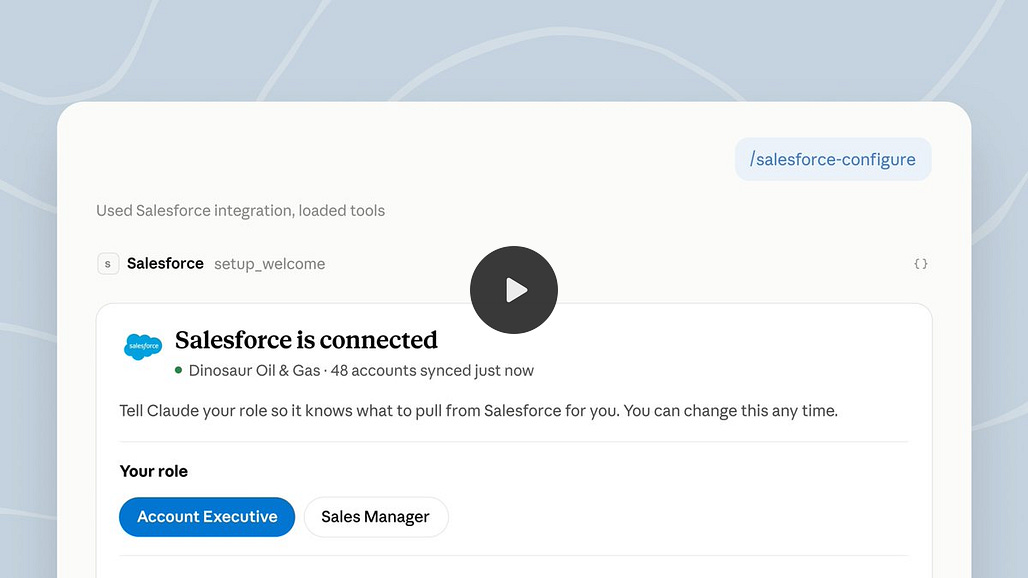
Claude’s Salesforce integration is now in beta, giving sales teams conversational access to accounts, opportunities and pipeline data. Its 37 pre-built skills cover call preparation, deal reviews, forecasts and record updates, all under existing Salesforce permissions.
OpenAI is pursuing a similar path with ChatGPT Work, connecting tools such as Power BI, Tableau, ClickHouse and Redshift. The common idea is clear: business assistants are becoming places where staff inspect data, build dashboards and take approved actions, rather than simply draft text.

Devin gets a Mac as coding agents take on longer jobs
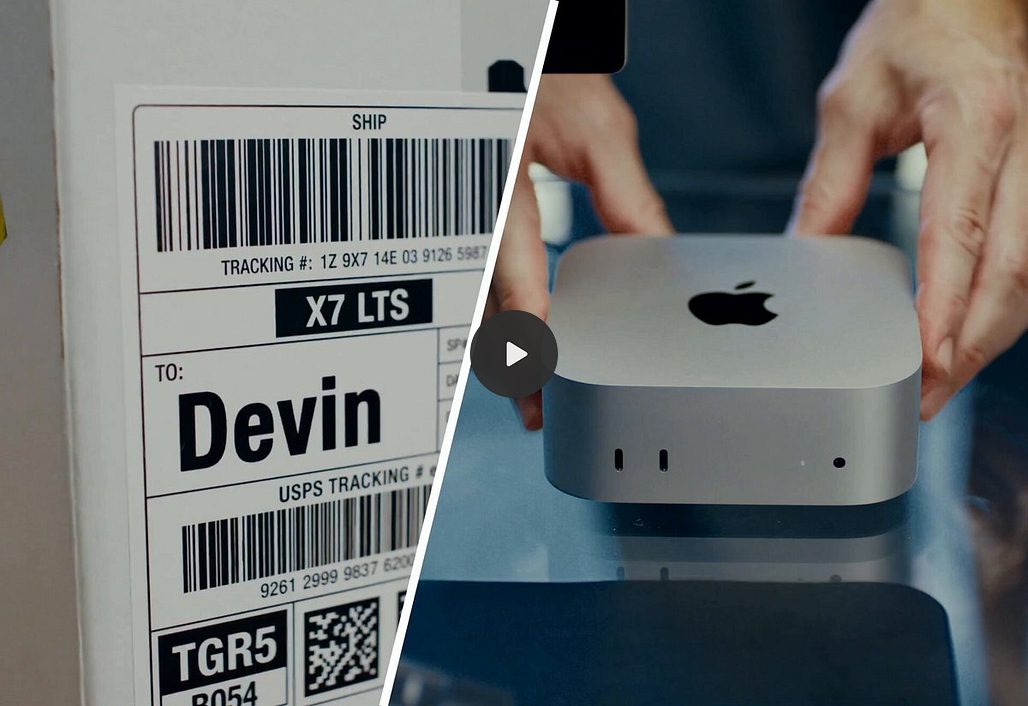
Cognition has given Devin access to a persistent Mac cloud machine, allowing it to build and test iOS apps in Xcode, use the Simulator, record the result and send a TestFlight link through Slack. The demo makes the hand-off tangible: a request goes in, a working app comes back ready to try.
That sits alongside another practical pattern described by SpaceXAI engineer Lingxi Li, whose bots inspect a monorepo overnight and prepare code-cleanup pull requests for morning review. Coding agents are starting to occupy the quiet hours when conflicts are rare and longer maintenance jobs can run without disrupting a team.

Gemini’s new audio models can talk, see and reason in real time
Google introduced Gemini 3.8 Live and Gemini 3.8 Live Extended Thinking, both designed for live voice conversations with interruptions, camera context and support across 97 languages. The standard model prioritises speed for tasks such as repair guidance, while Extended Thinking narrates progress through larger, multi-step projects.
The plumbing demonstration points to a useful role for voice AI: watching what someone is doing, checking measurements and offering the next instruction without demanding constant screen input. Rollout is beginning across Search Live, the Gemini API and Google’s subscriber products.


OpenArt ranks creative models by the work they can actually do
OpenArt Arena replaces broad claims about the “best” image or video model with blind assessments by creative professionals. Models are ranked across film, advertising, animation, editing and motion design, recognising that leadership in generation does not guarantee strength in editing or production work.
Early rankings put ByteDance’s Seedance 2.5 ahead in several video categories, while Alibaba’s Wan 3.0 performs strongly in editing. For images, Seedream 5.0 Pro and GPT Image 2 sit near the top. Category-based comparisons should prove more useful than a single overall score.


Jev takes a different route to dependable tool use
Jev, developed by TypesafeAI founder Diogo Almeida, does not produce answers through conventional token-by-token generation. It instead makes parallel, type-safe probabilistic decisions aimed at structured outputs, tool calls and software automation.
The company reports zero errors on selected structured-output and tool-use benchmarks, alongside large gains in speed and cost. Those claims need independent testing, but the narrower design is notable. Jev is not trying to replace a general chatbot, it is built for cases where an automated system must return a valid decision or action every time.


Persona bets that AI belongs on the wrist
After selling Cal AI, Zach Yadegari has returned with Persona, a wristband for voice-based assistance. A flick activates it, after which it can handle jobs such as ordering food or arranging a calendar based on learnt preferences.
The company promises a three-day battery, water resistance and no sale of personal data. The central question is whether a wristband offers enough convenience over phones, watches and earbuds to earn a permanent place on the body. Persona’s answer is an interface built around quick, intentional activation rather than another screen.

Autonomous labs turn materials research into a learning loop
Dwarkesh Patel’s visit to Periodic Labs highlighted why materials synthesis may suit AI-guided experimentation. Each physical run produces data that can improve the choice and design of the next experiment, allowing the lab to explore promising paths in greater depth.
Periodic is pairing robotics with Periodic Neon, a trillion-parameter model trained further on laboratory data. Its stated targets include superconductors, magnets and semiconductors. The compelling part is not just the model, but the closed loop between prediction, physical testing and fresh evidence.


Nadella puts public permission beside AI progress
Satya Nadella used an All-In Summit discussion to focus on broad access to AI’s benefits, community consent, safety and control. The conversation also covered guardrails, competition with China, capital spending and the economic pressure facing frontier laboratories.
His framing reflects a growing problem for large technology companies: technical capability alone does not guarantee public acceptance. New systems also have to earn trust from the workers, customers and communities expected to live with them.


Saudi oil disruption raises pressure on European buyers
Saudi Arabia cancelled some September crude cargoes to Europe after drone attacks damaged the East-West pipeline and halted loadings at Yanbu. That route is especially important while passage through the Strait of Hormuz remains disrupted.
Brent crude moved close to $108 a barrel, while some physical European cargoes traded above $120. Buyers including Poland’s Orlen are seeking replacement supplies from the North Sea and other markets, adding fresh cost pressure across transport, industry and energy.

Stripe profiles turn public pages into payment destinations
Stripe’s public profile pages can now display a Pay button when the owner adds a payment link. @levelsio also noted that personal details may be filled in automatically, making it important to review and hide information that should not appear publicly.
The feature is modest, but it hints at a broader payments layer where people, businesses and software agents can locate an identity and send money with little setup. Privacy controls will matter just as much as convenience if these profiles become widely used.


